€6–€25 for Amber Collars in Lithuania, and What Raises the Price

A gintarinis antkaklis (amber collar) typically runs €6 to €25 at general retailers, but authentic Baltic amber collars with proper clasps and documented sourcing sit closer to €19.95 to €25 or more. Basic strands from marketplace sellers hit the low end; polished beads, leather straps, and safety clasps from specialist sellers like Baltic Secret push the price higher, but they’re worth checking before you buy the cheapest listing you find.
TL;DR:
- Lower-priced collars around €6 to €12 primarily use small, unpolished beads with basic clasps, making them less durable and suitable for indoor pets or temporary use.
- Mid-range collars from €19.95 to €25 typically feature polished Baltic amber beads, stronger straps like leather or nylon, and documented Baltic sourcing, offering better safety and authenticity.
- Larger raw beads and safety screw clasps increase the price, especially when verified sourcing from the Kaliningrad region is included, adding value for safety-conscious buyers.
- Collar price variations often depend on bead size, raw versus polished amber, clasp type, and documented origin, with unverified claims potentially indicating inferior quality.
- For outdoor pets or high-tick exposure areas, amber collars should complement veterinary treatments rather than replace proven parasite preventatives.
Table of Contents
- How Much Does an Amber Collar Actually Cost?
- What Actually Drives the Price of an Amber Collar?
- How Do You Choose the Right Amber Collar?
- Do Amber Collars Actually Work Against Ticks and Fleas?
- Where Should You Buy an Amber Collar?
- Why Trust Baltic Secret’s Amber Collars
- When Is an Amber Collar Worth the Money?
- See Current Amber Collar Prices and Options
- Sources
- FAQ
How Much Does an Amber Collar Actually Cost?
Price bands for amber collars split into three rough tiers, and knowing which one you’re looking at saves you from either overpaying for basic beads or underpaying for something that won’t hold up.
At the low end, roughly €6 to €12, you’re getting simple bead strands: smaller beads, thinner cord, and a basic clasp that does the job but won’t survive rough handling. These show up often on general marketplaces rather than specialist shops, and price aggregators tracking Lithuanian listings put the floor around €6.29.
The mid-range, €12 to €40, is where most well-made pet collars land. Expect polished Baltic amber beads, adjustable nylon or leather straps, and sturdier fastening. This is the band where Baltic Secret’s own amber collars for dogs and cats sit, starting from 19.95 €, with leather-strap versions from 22.95 € to 23.95 € depending on the color and finish.
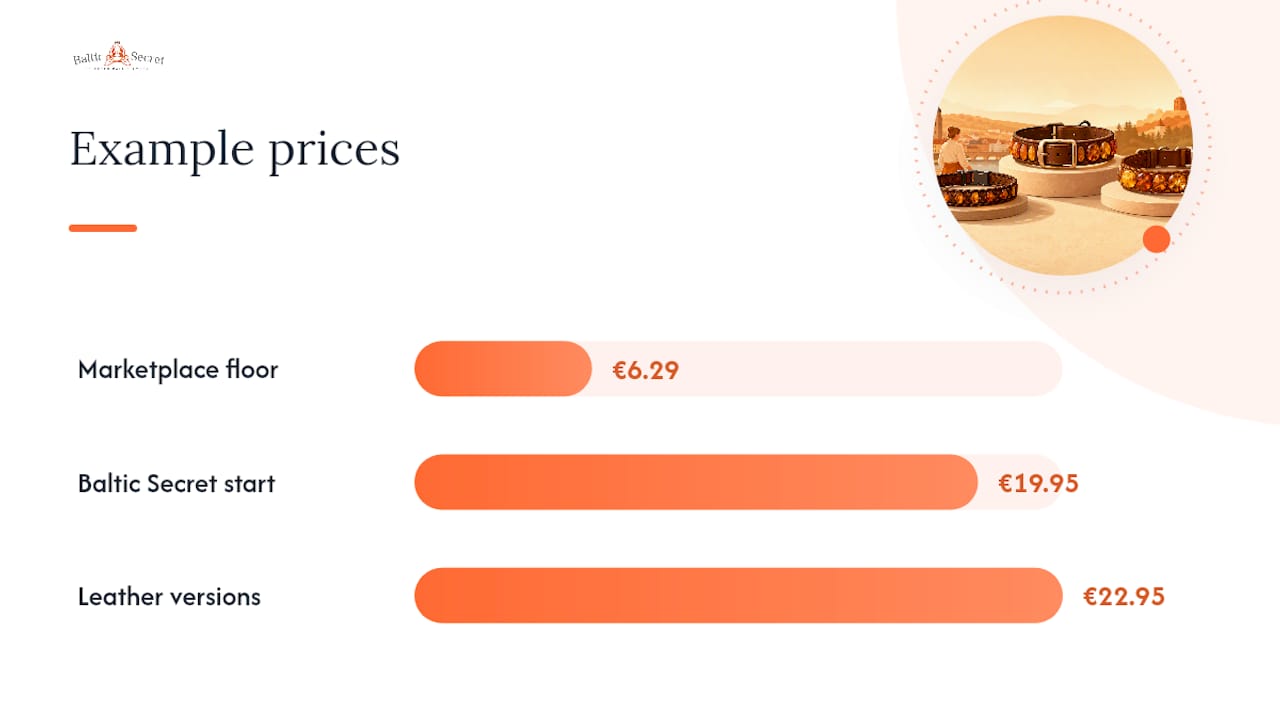
Premium collars feature larger raw beads, more visible craftsmanship, and safety screw clasps designed to stay secure without risking injury if the collar snags. Sellers at this level usually include some form of authenticity documentation.
A few things move the number around even within a single tier:
- Seller margin varies a lot between marketplaces and specialist amber shops.
- Seasonal discounts (holiday sales, end-of-season clearance) can knock 10 to 20 percent off listed prices.
- Shipping fees, especially from sellers outside your country, often add a few euros that don’t show up until checkout.
What Actually Drives the Price of an Amber Collar?
Two collars can look nearly identical in a product photo and still differ by €15 or more. The difference almost always comes down to five factors.
Raw versus polished amber is the biggest one. Raw, unpolished beads keep more of their natural surface texture and irregular shape, and many buyers pay a premium for that authentic look. Polished beads are smoother, more uniform, and generally cheaper to produce at scale.
Bead size and count matter more than people expect. Larger beads use more raw material per collar, and a longer collar with more beads costs more than a short one with the same bead size.
Clasp and strap type changes both price and function. A basic nylon strap with a standard buckle costs less than leather, and a safety screw clasp or breakaway mechanism adds to the price because it requires more careful construction.
Sourcing claims push prices up too. Amber marketed as genuine Baltic origin, sourced from the region around Kaliningrad, typically costs more than unspecified or unverified amber.
Packaging and craftsmanship round it out. Handmade finishing, care instructions, and any included certificate add cost but also add confidence that you’re getting real amber.
- Raw amber and larger beads cost more per collar.
- Leather straps and screw clasps cost more than nylon and basic buckles.
- Documented Baltic sourcing adds a price premium over unverified amber.
Pro Tip: If a listing doesn’t mention bead count, clasp type, or country of origin, treat that as a red flag rather than an oversight. Legitimate sellers list these details because they justify the price.
How Do You Choose the Right Amber Collar?
Getting the size and fastening right matters more than picking a specific color or bead shape. Here’s how to work through it:
- Measure your pet’s neck with a soft tape, add about an inch of slack, and match that to the collar’s length or bead count listed on the product page.
- Pick the fastening type based on the animal. Cats generally need a breakaway clasp that releases under pressure, since cats climb and can get caught on things. Dogs, especially supervised ones, can wear a secure screw clasp.
- Check the listing details before buying, not after. Bead count, bead size in millimeters, clasp material, and stated origin should all be visible on the product page.
- Decide raw or polished based on your priorities. Raw beads look more natural and some owners believe they release more scent; polished beads are smoother against fur and usually cost less.
- When unsure, go mid-range. A collar in the €19.95 to €25 band, like the ones detailed in Baltic Secret’s buying guide for amber dog collars, usually has better safety fittings and clearer sourcing than the cheapest option, without the price jump of premium raw-bead pieces.
Do Amber Collars Actually Work Against Ticks and Fleas?
Amber collars are marketed around a specific mechanism: the resin releases a scent and the friction against fur builds up a static charge, both of which are claimed to make the coat less hospitable to ticks and fleas. That’s the theory behind why pet owners reach for them as a natural alternative.
The realistic way to think about an amber collar is as a complementary accessory, not a replacement for veterinary parasite prevention, especially in areas with high tick activity. Veterinary sources are consistent on this point: conditions like flea allergy dermatitis often need a veterinarian’s diagnosis and a multimodal treatment plan, and an accessory alone rarely resolves an active infestation.
A few safety basics apply regardless of price tier:
- Supervise your pet, especially early on, to make sure they aren’t chewing on the beads.
- Watch for skin irritation where the collar sits, and remove it if you see redness or hair loss.
- If you live in a high-tick region, pair the collar with a vet-recommended treatment rather than relying on it alone.
- Talk to your vet if you notice scratching, hair loss, or skin changes that suggest an existing infestation.
Where Should You Buy an Amber Collar?
Three types of sellers show up when you search for a gintaro antkaklis nuo erkių: general marketplaces, specialist amber shops, and pet-focused brands that sell amber alongside other pet accessories. Prices vary noticeably between them, and the gap usually reflects sourcing transparency more than actual quality of the amber itself.
Before you check out anywhere, read the listing for three specific things: exact bead count, clasp description, and any statement about where the amber originated. A listing that’s vague on all three is harder to verify.
Shipping and return policy change your real cost more than people expect. A €7 collar with €6 shipping and no return option isn’t actually cheaper than a €20 collar with free shipping and a 30-day return window.
- Compare total cost at checkout, not just the listed price.
- Favor sellers who publish bead specs and clasp type on the product page.
- Check for bundled discounts if you’re buying for more than one pet.
- Confirm the return policy before ordering, particularly for sizing.
Why Trust Baltic Secret’s Amber Collars
Baltic Secret sources its amber directly and publishes the specifics buyers actually need: bead type, clasp style, and strap material, all listed on its organic amber collar collection. For readers weighing raw against polished, the brand’s own comparison page breaks down the price and appearance trade-offs directly. Baltic Secret also publishes care instructions so a collar you pay for actually lasts.
When Is an Amber Collar Worth the Money?
A cheap collar at the lower end of the price spectrum is a reasonable, low-risk way to try the idea without much commitment, particularly for an indoor cat that isn’t facing serious tick exposure. It’s not a research-backed treatment, just a low-cost experiment.
Spending more makes sense once your dog is outdoors regularly or you specifically want documented Baltic origin over unverified beads. That’s where the €19.95 to €25 mid-range earns its price, mainly through better clasps and clearer sourcing. Either way, pair the collar with a vet’s advice if you’re in a high-tick area. An accessory helps; it doesn’t replace prevention.
— Baltic Secret
See Current Amber Collar Prices and Options
Baltic Secret’s collars use authentic Baltic amber with a choice of bead insert, strap material, and clasp type, including a safety screw clasp for owners who want extra security.
If you want to see exact prices and current variants rather than estimates, browse the amber collar collection for dogs and cats directly. Leather-strap options are also available in the leather amber collar collection starting from 22.95 €. Check the listings, compare bead type and clasp style against what your pet needs, and order the one that fits.
Sources
- GINTARINIAI ANTKAKLIAI Šunims bei katėms - UAB “Vetpulsas” - Veterinarijos gydykla
- Gintarinis Antkaklis kainos nuo 6.29 € (5)
- One Bite, Weeks of Itch: Vet-Backed Checklist for Flea Allergy Dermatitis
FAQ
How much does a gintarinis antkaklis cost?
Basic amber collars start around €6 to €12 at general marketplaces, while mid-range and premium versions with better clasps and documented Baltic sourcing run €19.95 to €25 or more.
Does Baltic Secret sell amber collars for both dogs and cats?
Yes, Baltic Secret’s amber collar collection includes variants sized for both dogs and cats, starting from 19.95 €.
Do amber collars really repel ticks and fleas?
Amber collars are marketed on the idea that resin scent and static charge make fur less hospitable to ticks and fleas, but they should be treated as a complementary accessory rather than a proven substitute for veterinary parasite prevention.
What’s the difference between raw and polished amber collars?
Raw amber keeps its natural, irregular texture and often costs more, while polished amber is smoother and generally cheaper to produce, a distinction explained further in Baltic Secret’s raw versus polished comparison.
How long does it take to receive an amber collar after ordering?
Delivery timing depends on the seller and shipping method chosen at checkout, so check the specific listing for its stated shipping window before ordering.
How do I know if an amber collar is authentic?
Look for a listing that specifies bead count, clasp type, and country of origin, since sellers offering verified Baltic sourcing typically publish these details rather than leaving them vague.