What Is Butterscotch Amber Jewelry? A Full Guide

Butterscotch amber jewelry is defined as wearable pieces crafted from a rare, naturally occurring variety of Baltic amber distinguished by its creamy yellow to pale beige tones and characteristically opaque, soft appearance. Unlike the more widely available cognac or honey amber, this variety forms through a specific combination of heat, pressure, and microscopic air bubbles trapped within the resin during fossilization. The result is a gemstone that looks almost edible, warm and velvety in a way that transparent amber simply cannot replicate. If you are drawn to organic gemstones with genuine rarity and a story behind every piece, butterscotch amber deserves your full attention.
What makes butterscotch amber different from other amber types?
Butterscotch amber is creamy yellow to pale beige in color, with a distinctly opaque quality that sets it apart from the glassy transparency of cognac amber or the golden clarity of honey amber. That opacity comes from thousands of microscopic air bubbles suspended within the resin during the fossilization process, which took place over 44 million years ago in the ancient forests of what is now the Baltic region. The bubbles scatter light rather than transmit it, producing that signature soft, buttery glow.
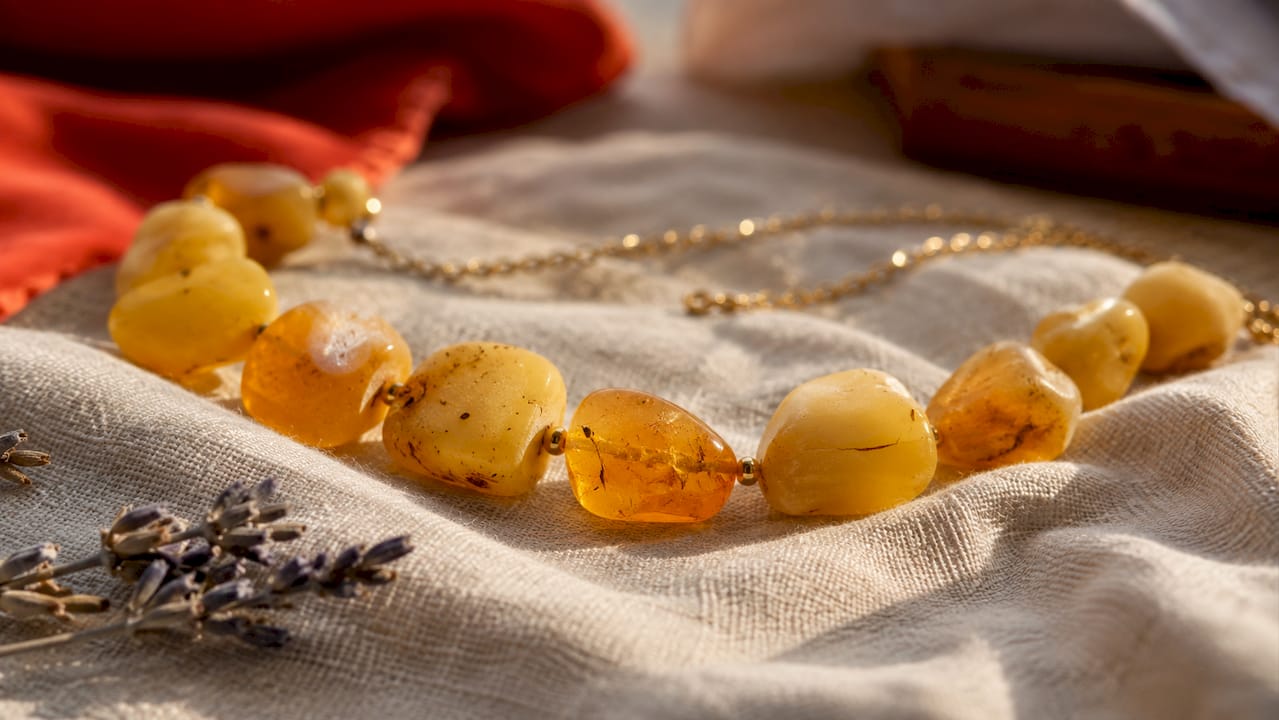
The term “royal amber” has historically been applied to the richest, most opaque butterscotch specimens. Historically considered rare, this variety was associated with elite ownership precisely because it was so seldom found in large, unblemished pieces. Modern extraction methods have made it more accessible, but it still occurs far less frequently than cognac or honey amber, which keeps its collector value intact.
The table below shows how butterscotch amber compares to the two most common Baltic amber varieties:
| Feature | Butterscotch amber | Cognac amber | Honey amber |
|---|---|---|---|
| Color range | Pale beige to creamy yellow | Deep orange to reddish brown | Golden yellow to light orange |
| Transparency | Opaque to semi-opaque | Translucent to transparent | Translucent |
| Rarity | High | Moderate | Common |
| Typical use | Cabochons, carved pieces, beads | Faceted stones, pendants | Beads, pendants, rings |
| Surface texture | Matte to soft luster | High luster | High luster |
Pro Tip: When shopping for butterscotch amber, look for pieces with natural color variation across the surface. Perfectly uniform color is a red flag for treatment or synthetic origin.
How to identify authentic butterscotch amber jewelry
Authentic butterscotch amber should display natural imperfections like tiny cracks or air bubbles visible under magnification. These are not flaws. They are proof of genuine organic origin. A piece that looks too perfect, with no variation in opacity, no surface texture, and no microscopic inclusions, is almost certainly treated or synthetic.
Several practical tests help confirm authenticity before you buy. The saltwater float test works because real amber floats in a saturated saltwater solution while most plastics and glass imitations sink. The warmth test is equally telling: genuine amber warms quickly in your hand and emits a faint piney or woody scent when rubbed, while plastic stays cool and odorless. UV light reveals another clue. Real Baltic amber fluoresces blue or greenish-blue under ultraviolet light, a reaction that most fakes cannot replicate convincingly.
Certification matters just as much as physical testing. Buying from certified sellers with assay office marks or National Amber Chamber certification removes the guesswork entirely. Balticsecret sources directly from Lithuania and provides documentation with its pieces, which is the standard you should expect from any reputable seller.
Amber can also be treated through autoclave processes that enhance clarity or alter color. These treatments compromise natural authenticity and reduce long-term value. Always ask a seller directly whether a piece has been heat-treated or clarified before purchasing.
- Natural imperfections (micro-cracks, air bubbles) confirm organic origin
- Saltwater float test: real amber floats, most fakes sink
- UV fluorescence: genuine Baltic amber glows blue-green under UV light
- Warmth and scent: amber warms fast and smells faintly resinous when rubbed
- Certification from recognized bodies adds a verifiable layer of assurance
How to care for butterscotch amber jewelry
Amber registers 2 to 2.5 on the Mohs hardness scale, making it one of the softest organic gemstones used in jewelry. That softness is part of its appeal. It is also the reason butterscotch amber requires more careful handling than quartz-based stones like amethyst or citrine, which sit at 7 on the same scale.
Follow these steps to keep your pieces in excellent condition:
- Clean gently. Use lukewarm water and a soft, lint-free cloth. Never use ultrasonic cleaners, steam, or chemical jewelry cleaners, as these degrade the surface and dull the characteristic glow.
- Dry immediately. Pat the piece dry after cleaning and allow it to air-dry fully before storing. Prolonged moisture weakens the surface over time.
- Store separately. Keep amber away from harder gemstones in your jewelry box. A soft pouch or lined compartment prevents surface scratches from contact with metal clasps or other stones.
- Avoid heat and sunlight. Direct sunlight and heat sources cause amber to become brittle and can alter its color over years of exposure.
- Apply cosmetics first. Perfume, hairspray, and lotions contain alcohol and solvents that cloud amber’s surface. Put your jewelry on last, after all products have dried.
Protective settings are recommended especially for amber rings, since hands absorb the most daily impact. Necklaces and earrings are the most practical formats for everyday wear because they face far less physical stress.
Pro Tip: If your butterscotch amber loses its luster over time, buff it gently with a drop of olive oil on a soft cloth, then wipe clean. This restores surface sheen without chemicals.
The meaning and potential health benefits of butterscotch amber
Butterscotch amber carries a long tradition of symbolic meaning rooted in warmth, protection, and nurturing energy. Across Baltic and Slavic cultures, amber was worn as a talisman against illness and negative energy. Its warm, golden tones associate it with the sun, and many traditions link it to emotional calm and mental clarity. These associations continue to influence why people choose it as a gift, particularly for new mothers, children, and anyone navigating a period of stress or transition.
The potential health benefits attributed to butterscotch amber connect directly to its chemistry. Baltic amber contains succinic acid at 3 to 8% by weight, a naturally occurring compound that folk medicine has long associated with soothing and anti-inflammatory effects. Proponents believe that body heat causes trace amounts of succinic acid to absorb through the skin, producing a mild calming or pain-relieving effect. Scientific evidence for transdermal absorption remains limited, but the tradition is centuries old and deeply embedded in Baltic wellness culture.
Here is what people most commonly associate with the benefits of butterscotch amber:
- Emotional calm: Wearing amber is believed to reduce anxiety and promote a sense of grounded wellbeing
- Pain relief: Folk traditions credit amber with easing teething discomfort in infants and joint pain in adults
- Immune support: Succinic acid is considered by some practitioners to support the body’s natural defenses
- Energy and vitality: The warm color palette is said to stimulate motivation and positive thinking
- Protection: Historically worn as an amulet to ward off illness and misfortune
Whether you approach these claims as literal or symbolic, they explain why butterscotch amber jewelry remains a popular gifting choice far beyond its visual appeal.
Popular styles and how butterscotch amber fits into modern fashion
Butterscotch amber works across a surprisingly wide range of jewelry formats. Its muted, creamy palette pairs naturally with both warm and neutral metal tones. Sterling silver at 925 purity is the most common setting material, and higher silver purity reduces oxidation, which keeps the overall piece looking cleaner for longer. Gold-filled and rose gold settings also complement the stone’s warm undertones beautifully.
Most butterscotch amber jewelry uses polished beads or cabochons rather than faceted cuts, because the stone’s opacity does not refract light the way transparent gems do. Faceted amber pieces exist but are rare. The cabochon format showcases the stone’s smooth, glowing surface to its best advantage, and polished bead necklaces remain one of the most popular formats for both fashion and wellness wear.
Current style trends favor:
- Statement pendants featuring large raw or polished butterscotch amber set in oxidized silver for a bohemian, artisan look
- Layered bead necklaces combining butterscotch and cognac amber for tonal depth
- Stud and drop earrings using small cabochons for everyday wear that pairs with both casual and professional outfits
- Cocktail rings with protective bezel settings that guard the soft stone from impact
- Wrap bracelets using graduated beads that showcase the natural color variation across individual pieces
Raw, unpolished butterscotch amber has gained traction in recent years as consumers gravitate toward natural, unprocessed aesthetics. The matte surface and irregular shapes of raw pieces feel distinctly contemporary alongside the polished minimalism that dominated jewelry trends in the previous decade.
Key takeaways
Butterscotch amber is a rare, organic gemstone that rewards careful buying, proper care, and genuine appreciation for natural materials.
| Point | Details |
|---|---|
| Definition and rarity | Butterscotch amber is a rare Baltic amber variety with creamy yellow to pale beige, opaque tones formed by microscopic air bubbles. |
| Authenticity matters | Natural imperfections, UV fluorescence, and certification from recognized bodies confirm genuine Baltic amber. |
| Gentle care is non-negotiable | At Mohs 2 to 2.5, amber scratches easily; clean with water and a soft cloth, store separately, and avoid chemicals. |
| Healing associations | Baltic amber contains 3 to 8% succinic acid, underpinning centuries of folk wellness traditions around pain relief and calm. |
| Style versatility | Polished cabochons and bead necklaces are the most common formats; sterling silver and gold settings both complement its warm tones. |
Why butterscotch amber is worth taking seriously as a collector’s stone
I have handled a lot of amber over the years, and butterscotch remains the variety that surprises people most when they see it in person. Most buyers expect amber to be glassy and golden. When they pick up a genuine butterscotch piece and feel that warm, matte weight in their hand, something shifts. It does not look like a gemstone in the conventional sense. It looks like something the earth made slowly, without any intention of being worn.
That is exactly what makes it worth collecting. The value of authentic butterscotch amber increases with genuine prehistoric inclusions, consistent opacity, and surface texture. Color name alone tells you very little. Two pieces labeled “butterscotch” can look completely different depending on the specific deposit, the age of the resin, and whether any treatment has been applied. Learning to read those differences is what separates a confident buyer from someone who gets lucky.
My honest advice: buy one exceptional piece rather than several mediocre ones. A well-sourced butterscotch amber pendant from a certified Lithuanian supplier will hold its character and value far longer than a batch of treated beads from an unverified source. Wear it, care for it properly, and it will look better in ten years than it does today. That is a quality very few gemstones can claim.
— Amber
Explore authentic butterscotch amber jewelry at Balticsecret
Balticsecret specializes in certified, handcrafted Baltic amber jewelry sourced directly from Lithuania, with every piece backed by documentation of authenticity. The collection includes both polished and raw butterscotch amber designs, from everyday bead necklaces to statement pendants, all set in quality sterling silver.
For fashion enthusiasts and collectors who want the real thing, the polished amber bead collection at Balticsecret offers a curated range of butterscotch and mixed-tone pieces suitable for daily wear and gifting. You can also explore the authentic amber pendant range for single-specimen pieces that showcase the stone’s natural character without modification. Every purchase comes with care guidance so your jewelry stays beautiful from day one.
FAQ
What is butterscotch amber jewelry exactly?
Butterscotch amber jewelry is made from a rare, opaque variety of Baltic amber with creamy yellow to pale beige tones caused by microscopic air bubbles within the fossilized resin. It is considered rarer than cognac or honey amber and is prized for its soft, warm appearance.
How is butterscotch amber different from regular amber?
Regular amber is often translucent and golden, while butterscotch amber is distinctly opaque with a matte, creamy surface. The opacity results from trapped air bubbles formed during fossilization, a condition that occurs less frequently than the clear resin that produces standard amber.
Does butterscotch amber have healing properties?
Baltic amber, including the butterscotch variety, contains succinic acid at 3 to 8% by weight, which folk traditions associate with calming and pain-relieving effects. Scientific evidence for skin absorption is limited, but the wellness tradition behind amber is centuries old and culturally significant.
How do I know if my butterscotch amber is real?
Genuine butterscotch amber floats in saturated saltwater, fluoresces blue-green under UV light, and shows natural micro-imperfections under magnification. Purchasing from a seller with National Amber Chamber certification or assay office documentation is the most reliable guarantee.
What is the best way to care for butterscotch amber jewelry?
Clean butterscotch amber with lukewarm water and a soft cloth, store it away from harder stones, and avoid perfume, heat, and chemical cleaners. Because amber rates only 2 to 2.5 on the Mohs scale, protective settings and careful storage are the most effective ways to preserve its surface long-term.