Monitoring Pet Amber Collar Wear: A Pet Owner's Guide

Monitoring pet amber collar wear is the most reliable way to know whether your pet is still getting the natural pest protection the collar was designed to deliver. An amber collar works through two mechanisms: the static electricity generated by friction against your pet’s fur, and the slow release of resinous aromatic compounds from the Baltic amber beads. When either of those mechanisms degrades, the collar stops working. This guide shows you exactly what to look for, how often to check, and when to replace.
How to spot signs of wear on your amber collar
The amber’s active surface degrades visibly and by scent, giving you two reliable, non-technical ways to assess effectiveness without any tools. You just need to know what you are looking for.
Visual changes in the beads are the first thing to check. Fresh Baltic amber beads have a slightly rough, textured surface. That texture is part of what creates friction against your pet’s coat. Over time, constant movement polishes the beads smooth. When you run your thumb across the beads and they feel glassy rather than slightly grainy, the collar has lost a significant portion of its friction-based effectiveness.
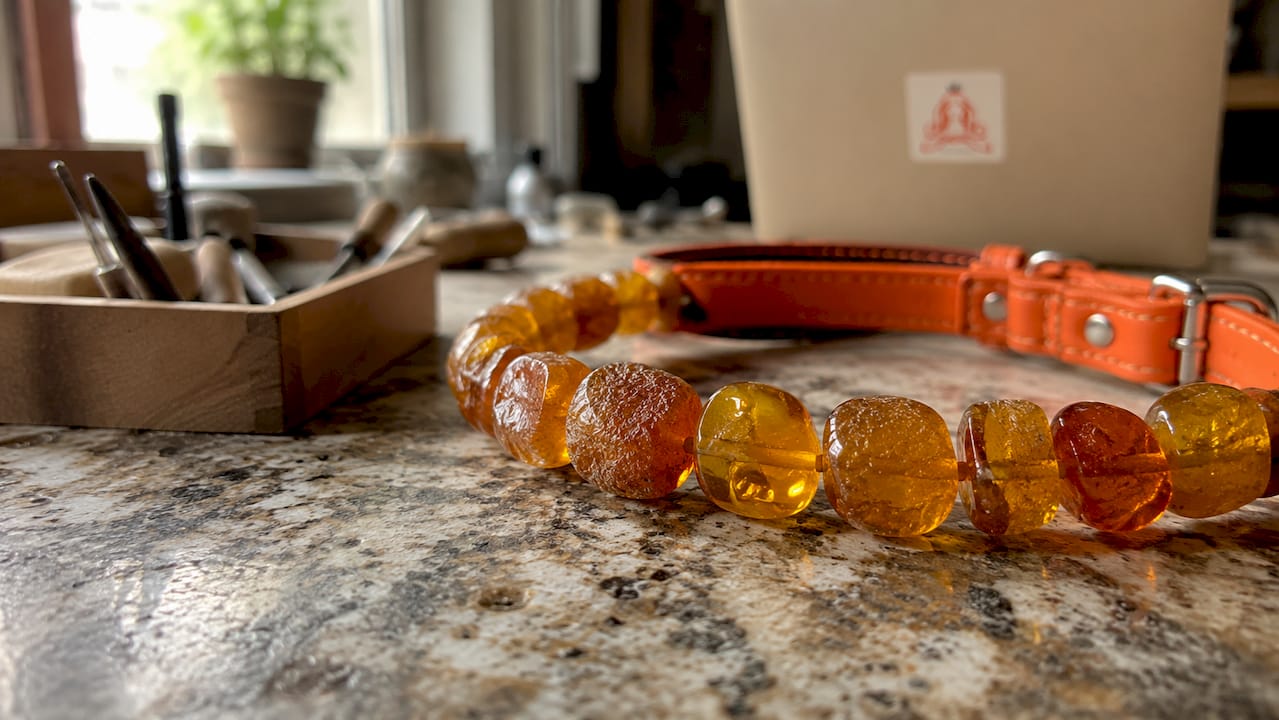
Color shifts are a secondary visual indicator. Authentic Baltic amber from Lithuania, like the handcrafted pieces used by Baltic Secret, shows natural variation in honey, cognac, cherry, and milky tones. A collar that has been worn heavily will often appear duller or slightly bleached in patches. That color change signals surface degradation, not just cosmetic wear.
Loss of resinous scent is the most definitive wear indicator. Hold the collar close and smell it. A functional amber collar carries a faint, warm, woody aroma from the natural resins inside the stone. When that scent is gone, the aromatic compounds have been fully released. The loss of resinous scent is a reliable non-technical method to gauge when amber collars cease to be effective.
Here is a quick checklist of wear signs to look for:
- Beads feel smooth or glassy instead of slightly textured
- Color appears dull, bleached, or uneven across beads
- Resinous woody scent is faint or completely absent
- Beads show visible chips, cracks, or flat spots
- The threading cord looks frayed, stretched, or discolored
Pro Tip: Hold the collar in your palm and close your fingers around it for 10 seconds. The warmth from your hand activates the resin. If you smell nothing after that, the amber is spent.
How long do amber collars typically last?
The lifespan of an amber collar typically spans several months, with no fixed expiration date. That range is wide because wear rate depends heavily on your pet’s lifestyle and the collar’s construction quality.
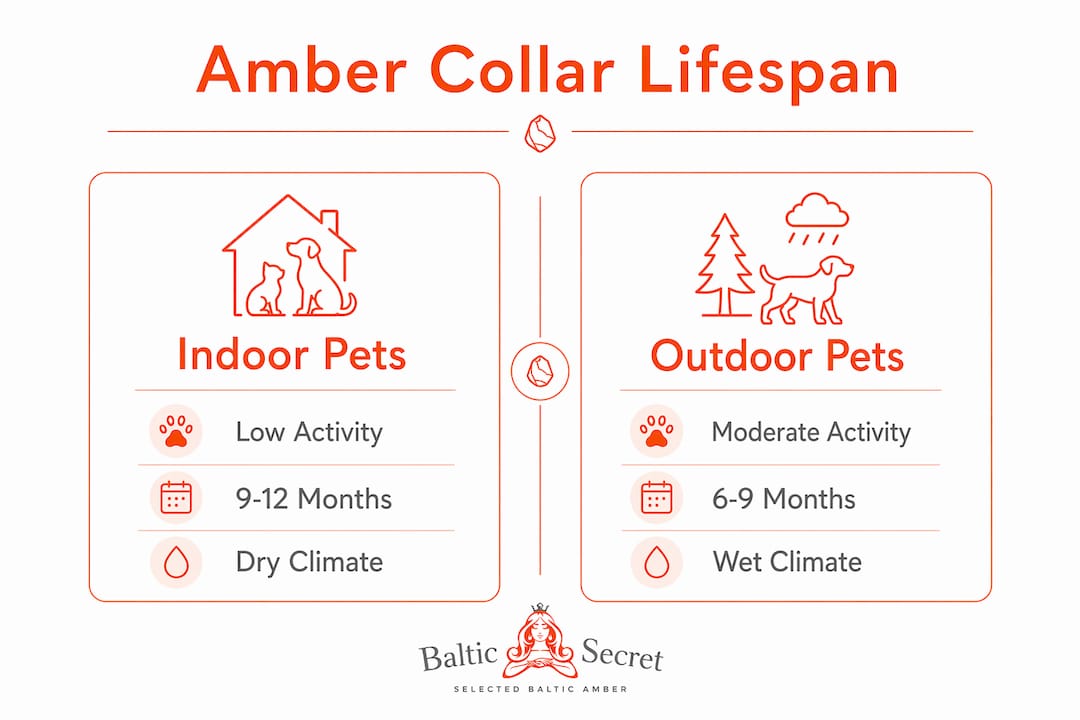
The table below breaks down realistic lifespan estimates across different conditions:
| Condition | Estimated Lifespan |
|---|---|
| Low-activity indoor pet, dry climate | 9–12 months |
| Moderate-activity pet, mixed indoor/outdoor | 5–8 months |
| High-activity outdoor pet, frequent swimming | 3–5 months |
| Authentic Baltic amber, high bead quality | Toward the longer end of any range |
| Synthetic or low-grade amber | Toward the shorter end of any range |
Quality is the single biggest variable. Amber collars are handmade from natural Baltic amber with varying bead size and color due to their natural origin. That natural variation means two collars from the same batch can wear at slightly different rates. A collar made with authentic, dense Baltic amber will outlast a collar made with processed or synthetic material every time.
Environmental exposure accelerates wear significantly. Salt water from ocean swims, chlorine from pools, and prolonged sun exposure all break down the amber surface faster than normal friction. Mud and grit act as abrasives that polish the beads smooth more quickly than fur contact alone.
Pro Tip: In summer, when your pet swims more and spends more time outdoors, check the collar monthly instead of seasonally. Heat and water are the two fastest ways to shorten a collar’s useful life.
What are the best practices for maintaining an amber collar?
Proper maintenance extends collar life and keeps the protection consistent. Follow these steps on a regular schedule.
Monthly monitoring routine:
- Remove the collar and lay it flat in good light.
- Run your fingers across every bead, feeling for smoothness or chips.
- Smell the collar after warming it in your palm for 10 seconds.
- Inspect the threading cord for fraying, stretching, or knots.
- Check the clasp or closure for secure function.
- Refit the collar on your pet, confirming you can slide two fingers underneath.
Cleaning guidelines matter because the wrong cleaning method destroys the amber surface. Wipe the collar with a soft, dry cloth after outdoor activity. If the collar needs deeper cleaning, use lukewarm water only and dry it immediately with a soft towel. Never use soap, detergent, alcohol, or ultrasonic cleaners. Those strip the resinous surface and accelerate bead degradation faster than normal wear.
Storage between uses is often overlooked. Store the collar in a cloth pouch or small box away from direct sunlight and heat. UV exposure degrades amber even when the collar is not being worn. A drawer or closed cabinet works perfectly.
Fit and tension affect both safety and effectiveness. A collar that is too loose slides around and generates less friction against the coat. A collar that is too tight causes skin irritation and restricts movement. The two-finger rule applies: you should always be able to slide two fingers between the collar and your pet’s neck. Check fit monthly, especially for young or growing animals.
Here are the key dos and don’ts for amber collar care:
- Do inspect the collar at least once a month
- Do store it away from heat and sunlight when not in use
- Do replace it when the scent is gone and beads feel smooth
- Don’t clean with soap, alcohol, or chemical cleaners
- Don’t let the collar soak in water for extended periods
- Don’t ignore fraying cord, even if the beads still look fine
Amber collars should be replaced when oil release decreases, color or texture changes, or effectiveness diminishes. Waiting too long after those signs appear means your pet has been unprotected for weeks without you realizing it.
What safety risks should you know about amber collar use?
Amber collars carry real benefits, but they also carry risks that pet owners frequently underestimate. Knowing those risks keeps your pet safe.
Some dogs may have allergic reactions to amber oils, requiring careful monitoring for skin irritation when you first introduce the collar. Check the skin beneath the collar after the first three days of wear. Redness, hair loss, or persistent scratching at the collar area are signs to remove it immediately and consult your veterinarian.
The most common safety mistake is fit. A collar that is too tight restricts blood flow and causes pressure sores. A collar that is too loose becomes a snagging hazard, especially for active dogs that run through brush or play with other animals. Check fit every time you put the collar back on after cleaning or storage.
Expert caution: Experts emphasize amber collars as complementary rather than primary pest prevention. Veterinary treatments remain the standard of care for heavy infestations. An amber collar works best as part of a broader pest management approach, not as a standalone solution.
Pet owners also frequently delay replacement past the point of effectiveness. A worn collar provides no protection but still looks like a collar. That false sense of security is the most common misuse pattern. Pair your amber collar with natural flea prevention strategies and schedule regular veterinary checkups to cover all your bases.
For pet owners who want data alongside physical inspection, devices like FitBark and Petivity Smart GPS track activity levels and location in real time. A sudden drop in activity can signal discomfort from an ill-fitting collar before you notice it visually.
Key takeaways
Effective amber collar care comes down to one rule: inspect the collar monthly, trust your nose and fingertips, and replace it the moment the scent and texture are gone.
| Point | Details |
|---|---|
| Wear shows in two ways | Smooth beads and lost resinous scent are the two clearest signs a collar has stopped working. |
| Lifespan varies widely | Expect 3–12 months depending on pet activity, climate, and amber quality. |
| Cleaning method matters | Use only a dry or slightly damp cloth; soap and chemicals strip the amber surface fast. |
| Amber collars are complementary | Veterinary pest treatments remain necessary for heavy infestations; amber works alongside them. |
| Monthly inspection is the standard | Check bead texture, scent, cord condition, and collar fit every month without exception. |
What years of handling amber collars have taught me
At Baltic Secret, we have handled thousands of authentic Baltic amber collars sourced directly from Lithuania. The pattern we see most often is not neglect. It is overconfidence. Pet owners who start with a great collar and see good results stop checking it as closely after a few months. The collar looks fine. The pet seems fine. But the resin is gone, the beads are smooth, and the protection has quietly disappeared.
The scent test is the single most underused tool in pet collar monitoring. Most people never think to smell the collar. Once you do it regularly, you will know within seconds whether the amber is still active. That knowledge is worth more than any chart or schedule.
We also see a lot of collars that have been cleaned with dish soap or hand sanitizer. The owner meant well. The result is a collar that lost six months of remaining life in one cleaning session. Dry cloth only. That rule sounds too simple to matter. It matters enormously.
The other thing worth saying plainly: amber collars are not a replacement for veterinary care. They are a natural, chemical-free layer of protection that works well when maintained correctly. Used that way, they are genuinely valuable. Used as a substitute for professional pest management, they will let you down.
— Baltic Secret
Find quality amber collars built to last at baltic secret
Baltic Secret offers a full range of authentic amber collars for dogs and cats, handcrafted from genuine Baltic amber sourced directly from Lithuania. Every collar is built for daily wear, with bead quality and threading designed to hold up through real pet activity.
Whether you need a first collar or a replacement after your current one has run its course, Baltic Secret carries options for every size and coat type. The amber tick collar for dogs is one of the most popular choices for active outdoor pets, combining natural pest protection with durable construction. Browse the full collection and find the right fit for your pet’s lifestyle and your maintenance routine.
FAQ
How often should i check my pet’s amber collar for wear?
Check the collar once a month at minimum. High-activity or outdoor pets that swim or run through brush need checks every two to three weeks.
What does a worn-out amber collar smell like?
A worn amber collar has no scent at all. A functional collar carries a faint, warm, woody aroma from the natural resins inside the Baltic amber beads.
Can i wash my pet’s amber collar with soap?
No. Soap, detergent, and alcohol strip the resinous surface of the amber and accelerate bead degradation. Use only a dry or slightly damp cloth.
Are amber collars safe for all dogs?
Most dogs tolerate amber collars well, but some dogs develop allergic reactions to amber oils. Monitor the skin beneath the collar closely during the first week of wear.
Do amber collars replace flea and tick treatments from a vet?
No. Amber collars are complementary to veterinary pest prevention, not a replacement. They work best alongside professional treatments, especially during peak tick and flea season.