Amber Collar and Necklace Care: A Daily Routine That Works

Wipe the beads with a soft, dry cloth after each wear, take the piece off before your pet or child is unsupervised, and check the string and clasp regularly for wear. Wash gently with warm water only when the beads look visibly dirty. That’s the whole routine, and skipping it is what leads to cracked polish, snapped cords, and choking hazards.
The single biggest safety rule: avoid leaving an amber collar on an unsupervised pet, and avoid leaving a necklace on a sleeping or unattended child. Fastenings loosen with movement, and a compromised clasp turns a calming accessory into a hazard.
- Do: wipe beads daily, inspect the cord weekly, remove before sleep or unsupervised play.
- Don’t: spray perfume directly on the beads, soak them, or use alcohol-based cleaners.
- Don’t: ignore a loose bead or fraying knot. Fix it before the next wear.
Key Takeaways
A short daily wipe, a weekly hands-on inspection, and removing the collar or necklace during unsupervised time prevent nearly all common amber damage and pet-safety incidents.
| Point | Details |
|---|---|
| Daily routine | Wipe beads with a soft cloth and keep perfume, lotion, and sunscreen away from direct contact. |
| Weekly inspection | Check stringing tension, clasp function, and bead surface for cracks or cloudiness. |
| Safe cleaning method | Use lukewarm water and mild soap only, never alcohol, ammonia, or ultrasonic cleaners. |
| Storage conditions | Keep pieces in a cool, dry, dark spot, stored separately in a soft pouch. |
| Retire or repair signals | Visible fraying, a loose bead, or a clasp that won’t lock means it’s time for professional restringing. |
| Buying for durability | Baltic Secret’s amber collars use individually knotted beads, secure fastenings, and a stated restringing policy. |
Table of Contents
- Why Gintaro Antkaklio Priežiūra Matters More Than You Think
- Daily Wear Rules for Amber Necklaces and Collars
- What a Weekly Collar and Necklace Inspection Should Cover
- How to Clean Amber Safely Without Damaging It
- Where and How to Store Amber Between Wears
- When to Get an Amber Collar or Necklace Professionally Restrung
- How to Choose an Amber Collar Built for Safety From the Start
- A Note From Baltic Secret
- Ready-Made Amber Collars Built With Care in Mind
- Frequently Asked Questions
- Sources
Why Gintaro Antkaklio Priežiūra Matters More Than You Think
Amber isn’t a mineral, it’s fossilized tree resin, and that changes everything about how you should treat it. It’s softer than most gemstones, sensitive to heat, and chemically reactive in ways a diamond or quartz simply isn’t. Part of what makes Baltic amber distinctive is its succinic acid content, an organic compound that helps explain why solvents, alcohol, and strong cleaners degrade its surface faster than they would a harder stone.
That fragility isn’t just cosmetic. A collar with a weakened cord or a bead that’s started to crack is a collar that can snap mid-walk, and a snapped collar is a lost pet or a choking risk if a curious mouth finds the loose piece. Proper gintaro antkaklio priežiūra treats the material science and the safety checklist as one job, not two separate concerns.
- Amber is soft and porous compared to most gemstones used in jewelry.
- Succinic acid content makes it reactive to solvents and prolonged chemical exposure.
- Structural failure (cracked beads, snapped cord) is a direct pet-safety issue, not just a cosmetic one.
Pro Tip: Hold the necklace or collar by the clasp, not by pulling on a section of beads, when you put it on or take it off. Repeated lateral pulling is one of the fastest ways to stretch or snap the internal cord.
Daily Wear Rules for Amber Necklaces and Collars
Most damage happens not from one dramatic accident but from small daily exposures that add up. Treat these as non-negotiable habits rather than optional extras.
Do this every day:
- Wipe beads with a soft, dry or barely damp cloth after outdoor walks or a sweaty day.
- Keep perfume, lotion, and sunscreen away from direct contact with the beads.
- Remove the piece before bathing, swimming, or any trip to the pool or sea.
Avoid these entirely:
- Strong household cleaners, alcohol wipes, or ammonia-based products near the beads.
- Extended direct sun exposure, especially through a car window on a hot day.
- Chlorinated water and high-humidity environments like saunas or steamy bathrooms.
For pet collars specifically, fit and supervision matter as much as cleaning. Check that the collar sits snugly with a comfortable amount of slack for fit and safety, confirm the fastening clicks or ties securely after rough play, and remove it during naps or unsupervised time indoors, a habit Ruffwear’s collar safety guidance points to as one of the simplest ways to prevent choking or entanglement. A quick fastening check after your dog rolls in the grass takes five seconds and catches most problems before they become emergencies.
What a Weekly Collar and Necklace Inspection Should Cover
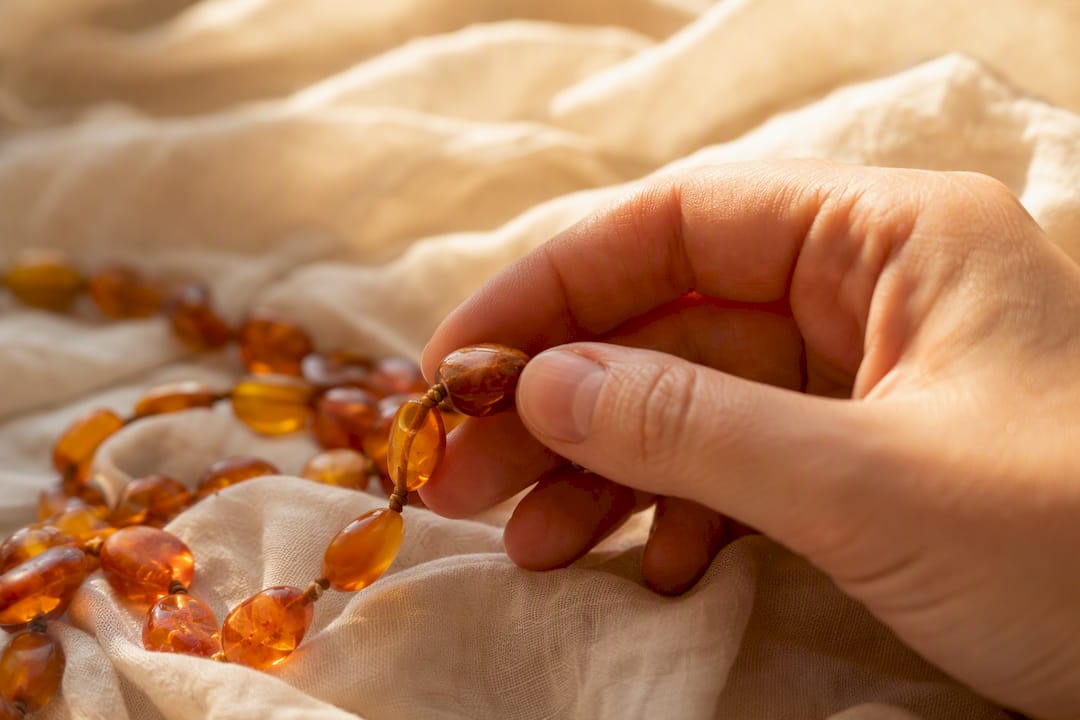
A fast daily glance and a slower weekly hands-on check catch different problems, and you need both. The daily glance tells you if beads look dull or dirty. The weekly check tells you if the piece is actually still safe to wear.
Run through this each week:
- Stringing: gently flex a short section of the necklace or collar. It should feel taut, not loose or stretchy.
- Clasp or fastening: open and close it fully. Listen for a solid click and check for bent metal or worn plastic.
- Bead surface: look for hairline cracks, chips, or cloudy patches that weren’t there before.
- Knots and cord ends: check for fraying, especially near the clasp, where tension concentrates.
Once a month, do a more detailed pass under good light, ideally with the piece off the pet or child so you can examine every bead. Retire the collar or set the necklace aside for repair the moment you spot visible fraying, a bead that wiggles independently of its neighbors, or a clasp that no longer locks with confidence. Continuing to use a compromised piece is the single most common cause of preventable collar-related pet injuries.
How to Clean Amber Safely Without Damaging It
Amber cleaning is forgiving if you follow the order of operations and punishing if you skip a step. Here’s the routine that protects both the polish and the internal cord.
- Remove the piece from your pet or set the necklace on a clean towel. Never clean amber while it’s still being worn.
- Wipe first with a dry, soft cloth to lift dust and surface grime before any water touches the beads.
- Use lukewarm water, never hot, and a soft cloth if beads still look dull. Hot water can soften the resin’s surface over time.
- Add a drop of mild, unscented soap only if needed, work it in gently, and avoid soaking, since GIA’s amber care guidance specifically warns against solvents and prolonged water exposure.
- Rinse quickly under lukewarm running water rather than letting the piece sit submerged.
- Pat dry immediately with a fresh soft cloth, then lay the piece flat on a towel to air dry fully before storing or re-wearing.
Never reach for alcohol, ammonia, ultrasonic jewelry cleaners, or steam cleaners. These strip the natural polish and can accelerate the microcracking that leads to bead failure. Skip the dishwasher and washing machine too, even for fabric-backed collars, unless the manufacturer’s care label explicitly says it’s safe.
Pro Tip: If the cord looks swollen or the knots feel loose after washing, don’t re-wear the piece while damp. Let it dry fully for 24 hours, then check the knots again. If they still feel soft or slack, that’s a job for a professional restringer, not a DIY fix.
Where and How to Store Amber Between Wears
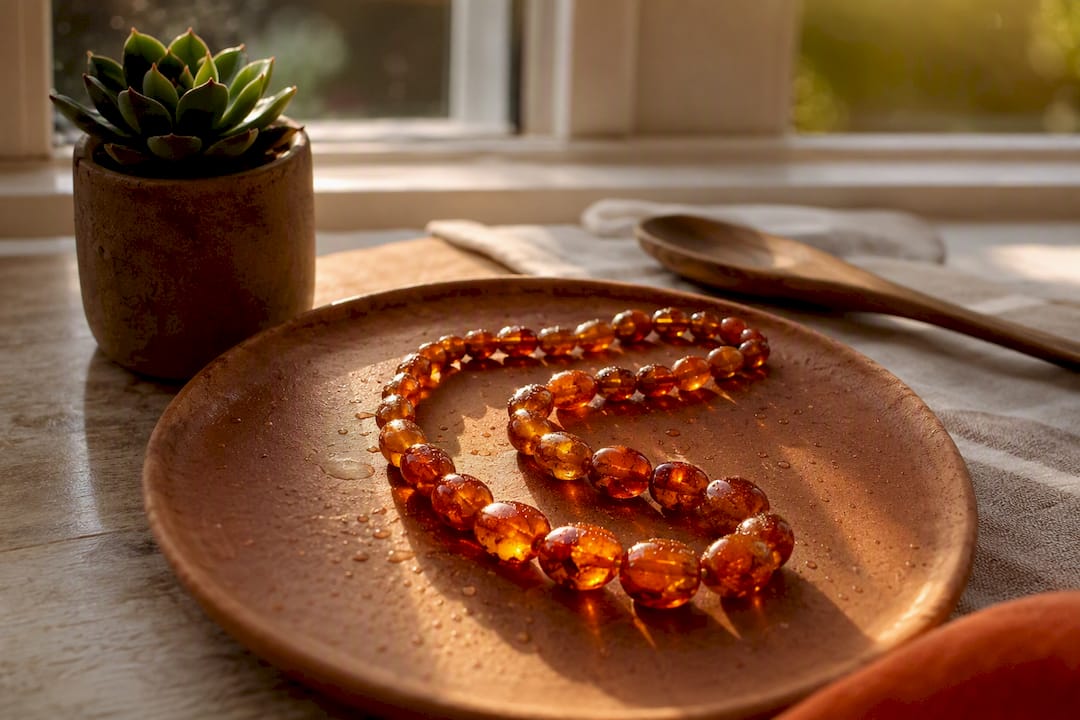
Storage habits matter almost as much as cleaning, since amber left in the wrong environment degrades even if it’s never cleaned incorrectly. Keep each piece in its own soft pouch or a cloth-lined box, separated from metal jewelry or anything with hard edges that could scratch the surface during storage.
The ideal spot is cool, dry, and dark. A drawer or jewelry box away from windows works fine. What doesn’t work: car dashboards in summer, attics, bathroom shelves near steam, or anywhere temperatures swing widely, since heat and humidity accelerate the aging process that dulls amber’s natural shine.
- Store necklaces and collars flat or gently coiled, never tightly knotted or crushed.
- Use a small silica gel packet in humid climates to keep moisture away from the cord.
- If storing a piece for months rather than days, loosen the knots slightly so tension doesn’t sit on one point of the cord indefinitely.
Pro Tip: A piece you wear daily doesn’t need special long-term storage, just a consistent spot away from sun and steam. Save the silica packet and pouch treatment for seasonal pieces you’re putting away for a while.
When to Get an Amber Collar or Necklace Professionally Restrung
Some problems are safe to monitor. Others need a professional the moment you notice them. Visible cord wear, more than one loose bead, a split or bent clasp, or any damage after a pet has chewed on the piece all fall into the second category. Trying to re-knot amber cord yourself without the right technique often makes the tension uneven, which just moves the failure point somewhere else.
A proper restringing job uses individually knotted beads on a durable cord, so a single break doesn’t scatter the whole strand, a technique worth asking about directly when you contact a restringer. Turnaround and cost vary by provider and damage extent, so get a specific quote rather than assuming a flat rate.
Before sending a piece out, check whether the original seller offers repair or warranty service. Baltic Secret’s guide to monitoring pet amber collar wear walks through exactly when a collar has crossed the line from “still fine” to “needs professional attention,” which takes the guesswork out of the decision.
How to Choose an Amber Collar Built for Safety From the Start
Good care habits only get you so far if the collar was poorly made to begin with. A few features separate a collar that ages well from one that fails within months.
For cats specifically, a breakaway fastening that releases under pressure is essential, since cats are far more likely than dogs to get a collar caught on a branch or fence post. Products like the Whisper Cat Collar illustrate what that breakaway mechanism looks like in practice. For dogs, look for a secure but adjustable clasp, individually knotted beads, and a cord rated for daily outdoor wear.
Run through this checklist before buying:
- Fastening type: breakaway for cats, secure buckle or clasp for dogs.
- Bead finish: polished beads resist grime better; raw beads offer more surface texture but need more frequent wiping, a trade-off covered in Baltic Secret’s amber pet collar types guide.
- Cord and knotting: each bead knotted separately, not strung on a single continuous thread.
- Size and weight guidance: matched to your pet’s neck size and age, not a generic one-size fit.
- Seller transparency: authenticity certification, clear care instructions, and a stated repair or restringing policy.
Baltic Secret’s authentic amber pet collar checklist covers these buying signals in more depth if you’re comparing options before a purchase.
A Note From Baltic Secret
We’ve spent years working directly with Baltic amber, sourcing it, testing fastenings, and hearing from pet owners about what actually holds up to daily life. The care steps above aren’t theoretical. They come from watching which habits keep a collar or necklace looking good for years and which ones send it back for repair within weeks.
If you have a question specific to a piece you already own, reach out to the seller before attempting a DIY fix. A quick message often saves a bead you’d otherwise lose.
Ready-Made Amber Collars Built With Care in Mind
If you’d rather start with a collar engineered for easy care than retrofit habits onto an older piece, Baltic Secret’s amber collars are built with the checklist above in mind from the start: individually knotted certified Baltic amber beads, secure fastenings sized for your pet’s neck, and a clear restringing policy if wear ever catches up with the cord.

Every piece ships with visible care instructions, so you’re not guessing at cleaning steps months later. The amber dog and cat collar page has current sizing and availability, and the amber tick collar for dogs is worth a look if you want the same natural material paired with tick-deterrent properties. Browse the full amber collection to compare finishes and sizes, and check a specific product page for current warranty and restringing terms before you buy.
Frequently Asked Questions
How often should I clean an amber necklace or pet collar? Wipe it with a dry cloth after each wear and do a full wash only when beads look visibly dull or dirty, typically every few weeks depending on how often it’s worn and how much sweat or dirt it’s exposed to.
Can I wear my amber necklace in the shower or pool? No. Remove amber jewelry before swimming, bathing, or any exposure to chlorine or salt water, since prolonged water contact and chlorine both accelerate surface damage.
Is it safe to leave an amber collar on my dog or cat overnight? It’s safer to remove it during sleep and any unsupervised time. Fastenings can loosen with movement, and an unattended pet wearing a compromised collar faces a real choking or entanglement risk.
What’s the difference between polished and raw amber beads for care purposes? Polished beads resist dirt and are easier to wipe clean daily. Raw beads have more texture, which can trap grime, so they need slightly more frequent wiping to stay looking good.
When should I stop using an amber necklace or collar and get it restrung? Retire it the moment you see fraying near the knots, feel a bead that moves independently of the strand, or notice the clasp no longer clicks securely shut. At that point, professional restringing is safer than continued daily wear.