Cognac Amber Jewelry: What It Is and Why It Matters

Cognac amber jewelry is defined as pieces made from fossilized tree resin in warm, deep golden to reddish-brown hues that closely resemble the color of aged brandy. This organic gemstone is not a mineral like a diamond or sapphire. It formed from ancient pine tree resin that hardened and aged over tens of millions of years. Baltic amber, sourced primarily from Lithuania and the surrounding Baltic region, is the most recognized origin for cognac amber pieces. Baltic Secret specializes in exactly this material, offering handcrafted jewelry that showcases the stone’s natural warmth and transparency.
What is cognac amber jewelry and where does it come from?
Amber is fossilized tree resin, not a mineral, which places it in the same category as coral and pearl as an organic gemstone. That distinction matters because amber behaves differently from mineral stones. It is lighter, warmer to the touch, and carries natural inclusions that no two pieces share.
The cognac tone results from a combination of original sap color and resin aging over 30–50 million years, giving each piece a unique warmth and depth. Oxidation and the presence of microscopic bubbles or plant matter inside the resin shift the color from pale honey toward the deeper reddish-brown that defines cognac. The same fossilized material can produce a wide range of tones depending on its internal structure.
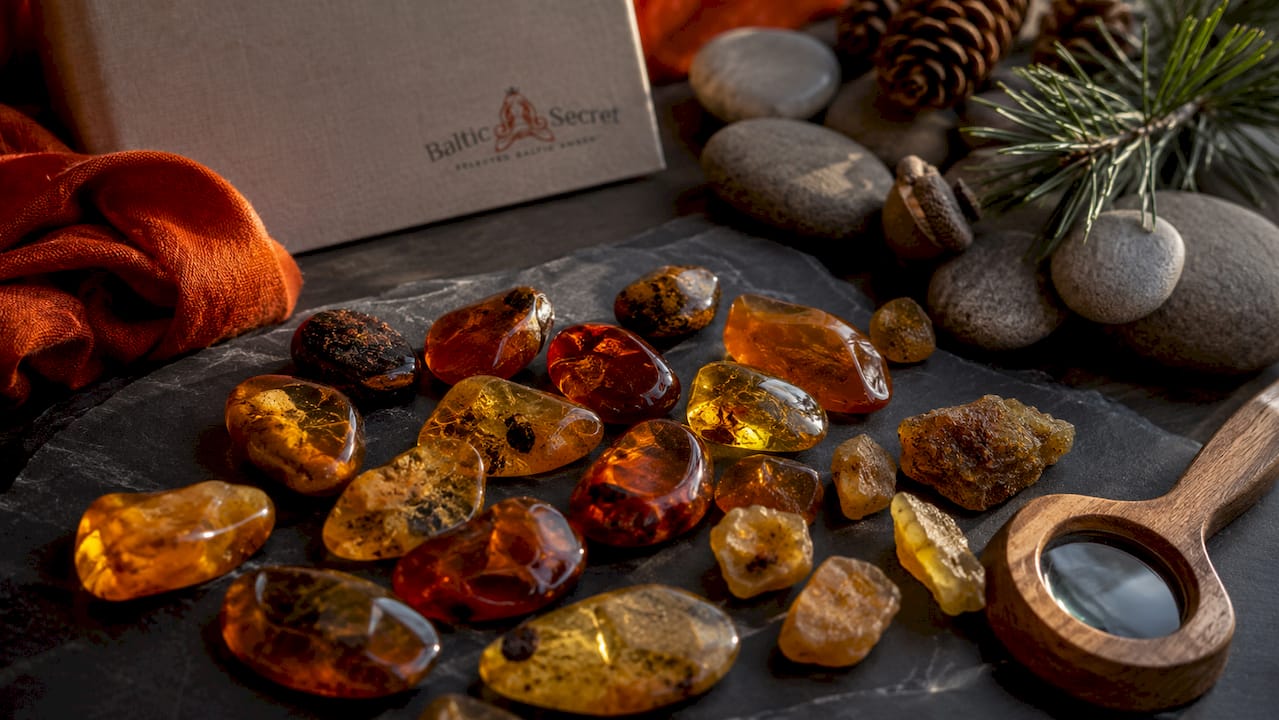
Baltic amber is 34–48 million years old and contains 3–8% succinic acid, a compound that distinguishes it from Dominican or Burmese amber. That chemical profile contributes to its stability and makes it the preferred choice for everyday jewelry. Cognac is considered the most familiar and widely available color within the Baltic amber spectrum.
Key facts about amber’s origin and nature:
- Amber forms from hardened resin of ancient coniferous trees, not from minerals or rocks
- The cognac color develops through oxidation and internal inclusions that scatter light differently
- Baltic amber is the most common source of cognac pieces, with deposits concentrated along the coasts of Lithuania, Latvia, and Poland
- Inclusions such as trapped insects, plant fragments, or air bubbles are natural and add to each piece’s individual character
- Amber registers 2–2.5 on the Mohs hardness scale, making it softer than most gemstones and requiring careful handling
Why is cognac amber prized for jewelry?
Cognac amber is noted for great transparency when polished, and that clarity is what separates it from opaque amber varieties. Light passes through the stone and reflects off internal layers, producing a warm inner glow that mineral gems simply cannot replicate. Jewelers in Baltic countries have refined polishing techniques over generations to control exactly how light travels through the material.
Polishing one side of an amber piece while leaving the other raw is a deliberate technique used by skilled craftspeople. It creates a contrast between the stone’s rough natural exterior and its glowing interior. That approach requires patience and expertise, and it is most commonly practiced by artisans in Lithuania and the broader Baltic region.
The color itself is exceptionally versatile. Cognac amber pairs naturally with silver settings, which provide cool contrast against the warm stone. It also works with gold tones, where the metals blend rather than contrast. Few gemstone colors sit as comfortably across casual, bohemian, and formal styles as cognac amber does.
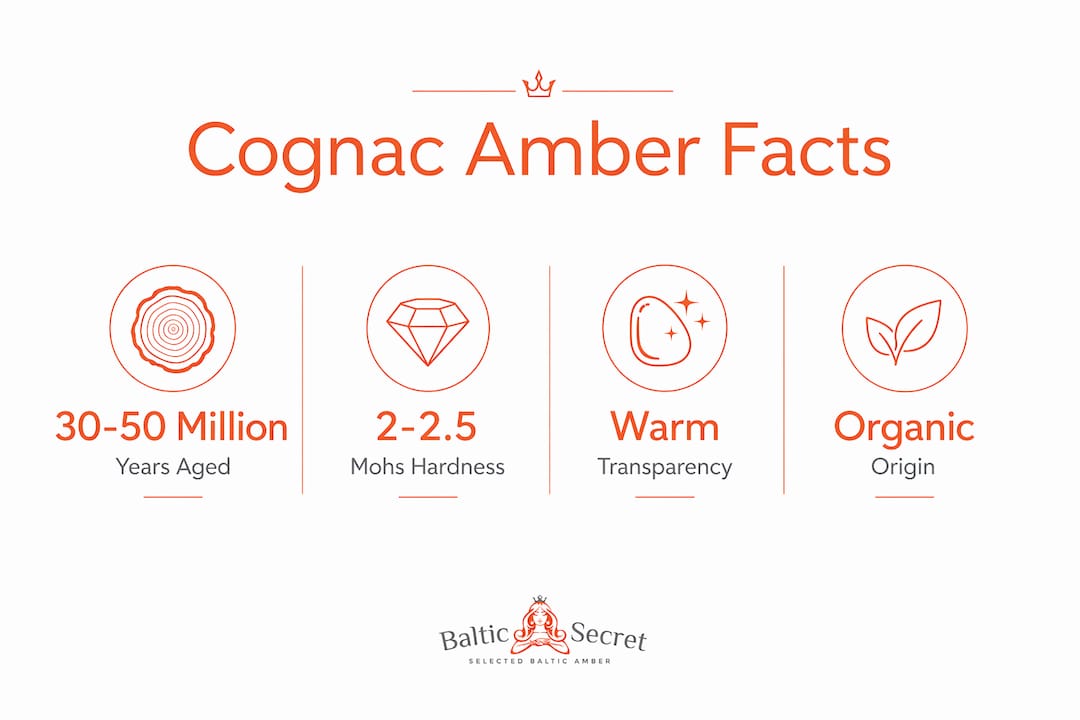
Amber’s organic composition contributes to its lighter weight and warmer feel compared to mineral gemstones. Wearers often notice that amber necklaces and bracelets feel more comfortable over long periods than glass or crystal alternatives. That physical quality reinforces the stone’s appeal for daily wear.
How cognac amber compares to other amber colors:
- Honey amber is lighter and more yellow, with less depth than cognac. It suits minimal, delicate designs.
- Butterscotch amber sits between honey and cognac in tone, with a creamy opacity that reduces transparency.
- Cognac amber offers the richest warm brown with the highest transparency among common Baltic amber colors.
- Cherry or red amber is rarer and darker, with a deeper reddish tone that commands a premium price.
- Green amber is the rarest variety, formed under specific oxidation conditions, and is far less common than cognac.
Pro Tip: View cognac amber under indirect natural daylight before purchasing. Warm indoor lighting can make the stone appear darker and more orange than it actually is. Natural light reveals the true depth and transparency of the piece.
How to choose authentic and quality cognac amber jewelry
Authentic cognac amber is distinguishable from plastic or glass imitations through several reliable tests. The most practical method for buyers is the saltwater float test. Genuine amber floats in a saturated saltwater solution because of its low density. Plastic sinks. This test works on loose beads but is less practical for finished jewelry pieces set in metal.
Indicators of genuine cognac amber to check before buying:
- Warmth to the touch: Real amber warms quickly in your hand. Glass stays cool.
- Weight: Amber is noticeably lighter than glass or most plastics of the same size.
- Inclusions: Natural amber contains irregular internal features. Perfectly uniform “inclusions” suggest a synthetic replica.
- Surface texture: Genuine polished amber has a slight softness underfoot compared to the hard, slick feel of glass.
- Certification: Reputable sellers provide documentation of Baltic amber origin. Baltic Secret sources directly from Lithuania and guarantees authenticity.
Color, clarity, and polish quality are the three factors that determine a piece’s visual grade. High-clarity cognac amber with minimal cloudiness commands the most attention. Polish quality affects how much of the stone’s interior glow reaches the eye. A well-polished piece appears to light up from within rather than simply reflecting surface light.
Because amber rates 2–2.5 on the Mohs scale, protective settings are strongly recommended for rings. Bezels and half-bezels shield the stone’s edges from impact. Necklaces and earrings carry less risk because they face fewer hard surfaces during daily wear. Pendants and cabochon settings are the most popular forms for cognac amber precisely because they protect the stone while showcasing its color.
| Feature | Genuine cognac amber | Plastic or glass imitation |
|---|---|---|
| Weight | Light, noticeably buoyant | Heavier relative to size |
| Temperature | Warms quickly in hand | Stays cool or room temperature |
| Inclusions | Irregular, natural patterns | Uniform or artificially placed |
| Transparency | Deep, layered inner glow | Flat, surface-level shine |
| Certification | Traceable Baltic origin | No origin documentation |
Pro Tip: Ask sellers to show the piece under backlighting. Genuine cognac amber changes appearance significantly under backlit conditions, revealing internal layers and depth. Imitations look flat regardless of the light source.
How is cognac amber jewelry worn today?
Amber has carried cultural significance for thousands of years across Baltic, Slavic, and Northern European traditions. Ancient Greeks called it elektron, the root of the word electricity, because rubbing amber produces a static charge. That historical weight adds meaning to modern pieces beyond their visual appeal.
Contemporary artisan jewelers in Lithuania, Latvia, and Poland continue to produce cognac amber jewelry using traditional hand-finishing methods. The Baltic region remains the global center for amber craftsmanship, and pieces sourced directly from these artisans carry a provenance that mass-produced alternatives cannot match. Baltic Secret works with craftspeople in this tradition to bring authentic pieces to buyers worldwide.
Common forms of cognac amber jewelry worn today:
- Necklaces and pendants: The most popular form, showcasing larger stones with full transparency
- Bracelets: Strung bead designs that highlight the color variation between individual pieces
- Earrings: Drop and stud styles that frame the face with warm color
- Children’s jewelry: Polished cognac amber necklaces and bracelets designed with safety closures for young wearers
- Pet collars: Amber collars for dogs and cats made from Baltic cognac amber beads, combining decorative appeal with traditional wellness beliefs
The use of amber in pet accessories reflects a broader trend toward natural materials in everyday products. Amber collars blend the stone’s aesthetic warmth with longstanding folk traditions around amber’s properties. They represent one of the more unexpected applications of cognac amber beyond conventional jewelry.
Traditional beliefs hold that Baltic amber carries wellness properties connected to its succinic acid content. These claims are rooted in folk medicine rather than clinical evidence, but they continue to drive interest in amber jewelry for both people and pets. The appeal is as much cultural as it is material.
Key Takeaways
Cognac amber jewelry is the most recognizable form of Baltic amber, valued for its warm transparency, organic origin, and versatility across styles and wearers.
| Point | Details |
|---|---|
| Organic origin | Cognac amber is fossilized tree resin, not a mineral, aged over 30–50 million years. |
| Color definition | The cognac tone ranges from deep golden brown to reddish gold, shaped by oxidation and internal inclusions. |
| Authenticity check | Genuine amber floats in saltwater, warms quickly in hand, and carries irregular natural inclusions. |
| Hardness and care | Amber rates 2–2.5 on the Mohs scale, so protective settings and careful storage are needed for rings. |
| Modern uses | Cognac amber appears in necklaces, bracelets, children’s jewelry, and pet collars sourced from Baltic artisans. |
What working with Baltic amber has taught me about cognac
Cognac amber is the color most people picture when they think of amber, and that familiarity is both its strength and its challenge. Because it is so common within the Baltic amber spectrum, the market is flooded with imitations that look convincing under store lighting. The difference becomes obvious the moment you hold a genuine piece outdoors.
The detail most buyers overlook is how dramatically the stone changes under different light. A cognac amber pendant that looks like a warm caramel under a shop’s warm bulbs can reveal extraordinary depth and reddish complexity in natural daylight. That variability is not a flaw. It is the stone’s most honest quality.
My recommendation for anyone building a collection is to start with a necklace or pendant rather than a ring. The stone’s softness makes rings vulnerable to scratching and chipping in daily use. A well-set pendant lets you appreciate the full transparency of the stone without worrying about damage. Pair it with sterling silver for the sharpest visual contrast, or with oxidized silver for a more earthy, organic look.
Cognac amber is not a luxury-only material. Its price point sits well below comparable mineral gemstones, which makes it accessible for everyday wear. The pieces worth investing in are those with the highest clarity and the most skilled polish work. Those qualities hold their visual appeal for decades.
— Baltic Secret
Authentic cognac amber pieces worth wearing every day
Baltic Secret offers a curated selection of handcrafted Baltic amber jewelry sourced directly from Lithuanian artisans, covering everything from polished cognac necklaces to raw bead bracelets.
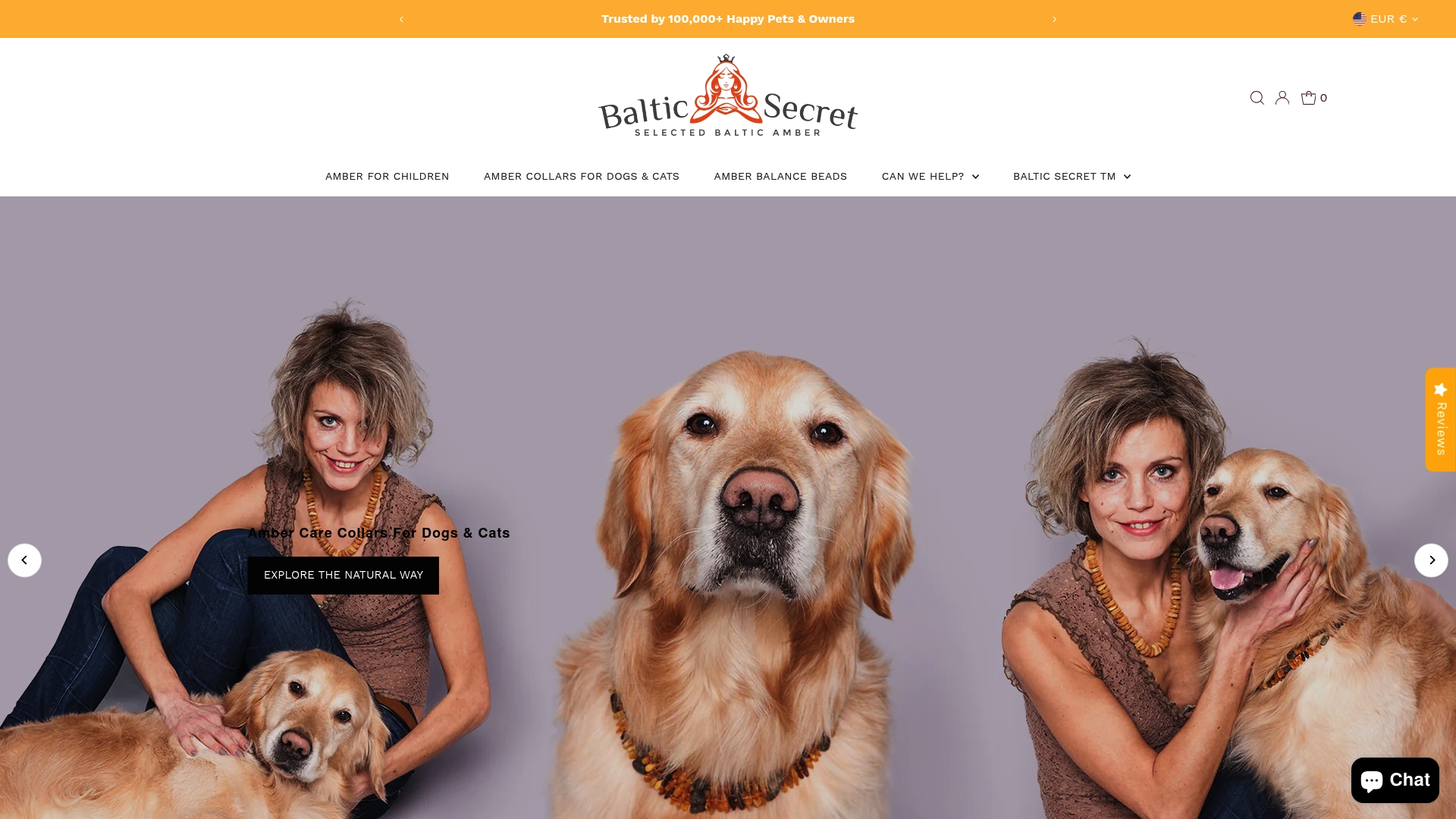
Every piece in the collection uses certified Baltic amber with traceable origin. The range includes polished amber necklaces and bracelets in classic cognac tones, artisanal pendants, children’s jewelry with safety closures, and amber pet collars for dogs and cats. Whether you are looking for a daily wear piece or a gift with genuine provenance, the full Baltic Secret collection covers the full spectrum of Baltic amber styles and uses.
FAQ
What is cognac amber made of?
Cognac amber is made from fossilized tree resin, not a mineral. It formed from the hardened resin of ancient coniferous trees over 30–50 million years.
How does cognac amber differ from yellow amber?
Cognac amber is deeper and more reddish-brown than yellow or honey amber, with richer transparency. The color difference comes from greater oxidation and a denser internal structure in cognac pieces.
Is cognac amber the most common Baltic amber color?
Yes. Cognac is considered the most familiar color in the Baltic amber spectrum and is widely available compared to rarer varieties like green or red amber.
How do I care for cognac amber jewelry?
Store amber away from direct sunlight and harsh chemicals, which can dull its surface over time. Clean it with a soft damp cloth and avoid ultrasonic cleaners, which can crack the stone.
Can cognac amber be used in jewelry for children and pets?
Yes. Polished cognac Baltic amber is used in children’s necklaces and bracelets with safety closures, as well as in amber pet collars for dogs and cats, combining natural aesthetics with traditional wellness appeal.