Why Wear Amber Against Skin: Benefits Explained

Wearing amber against the skin is defined as placing genuine Baltic amber jewelry in direct contact with bare skin so that body warmth can interact with the resin. Proponents claim this practice releases succinic acid, a naturally occurring compound in Baltic amber, which may deliver anti-inflammatory and analgesic effects. The tradition spans thousands of years across Baltic cultures, and today it draws renewed interest from natural remedy enthusiasts worldwide. This article examines both the traditional reasoning and the current scientific evidence so you can make an informed choice.
Why wear amber against skin: the succinic acid connection
Succinic acid is a dicarboxylic acid found naturally in the human body, where it plays a role in cellular energy production through the Krebs cycle. Baltic amber is one of the richest natural sources of this compound, containing 3–8% succinic acid by weight. That concentration is what drives the central claim behind wearing amber on the skin.
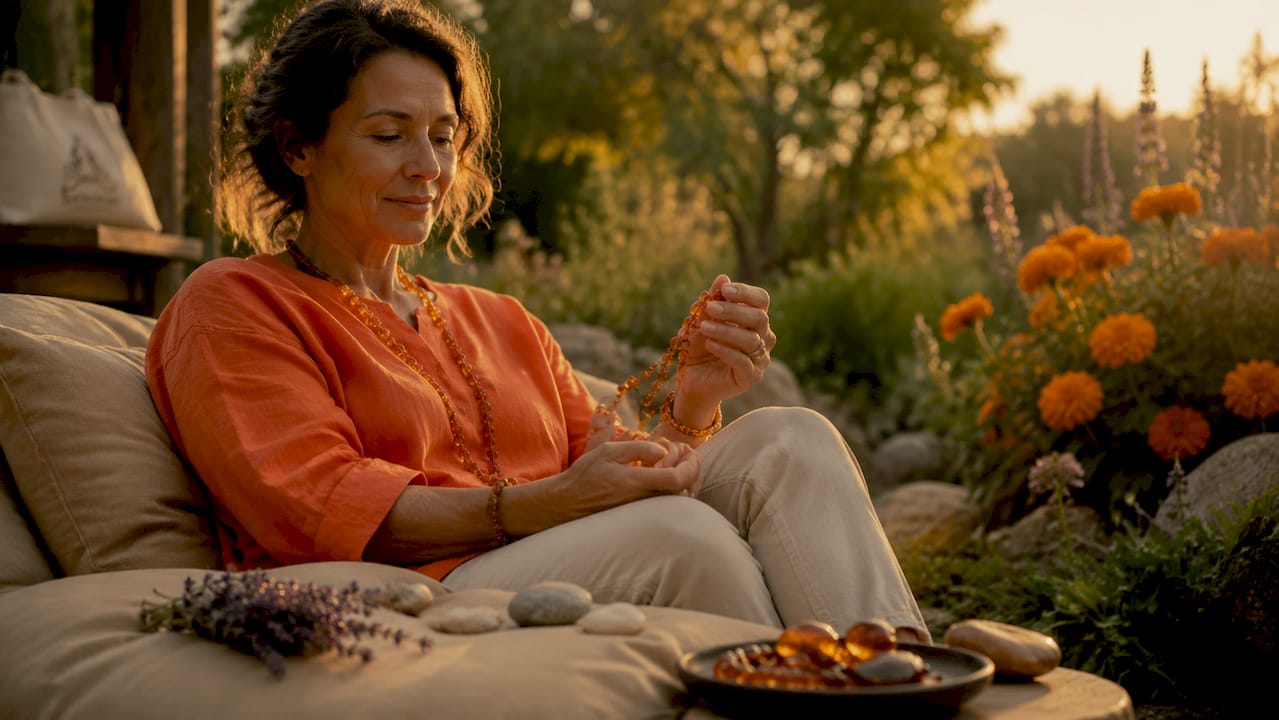
Traditional folk medicine holds that body heat warms the amber beads, softening the outer resin layer just enough to allow trace amounts of succinic acid to migrate to the skin surface. From there, the theory continues, the compound absorbs transdermally and enters the bloodstream to reduce inflammation and pain. This mechanism is the backbone of the amber healing properties argument you will find across wellness communities.
The key claims made by amber advocates include:
- Pain relief: Succinic acid is believed to act as a natural analgesic when absorbed through the skin, reducing localized discomfort.
- Anti-inflammatory effects: Proponents say the compound calms swollen tissue, making amber popular for teething children and adults with joint pain.
- Immune support: Baltic folk healers historically credited amber with strengthening the body’s defenses against infection.
- Calming and grounding: Direct skin contact with amber is said to promote emotional stability and reduce anxiety.
- Energy and vitality: Amber is described in wellness circles as a “feel-good” stone that supports confidence and positive mood.
These claims are deeply embedded in Baltic and broader European folk traditions. They are also the reason why wearing amber skin contact benefits remain a popular topic in natural wellness communities today.
What does science say about amber skin contact effects?
The scientific picture is more cautious than the folk tradition suggests. Research confirms that body heat alone is insufficient to release meaningful amounts of succinic acid from solid amber beads at skin temperature. The succinic acid in amber is locked inside a hardened resin matrix. Skin contact at normal body temperature does not generate enough heat or chemical action to break that matrix open.
The skin itself adds a second barrier. Human skin is designed to block most compounds from entering the body transdermally. Only small, lipid-soluble molecules pass through the skin barrier efficiently. Succinic acid, in its solid form within amber, does not meet those criteria under normal wearing conditions.
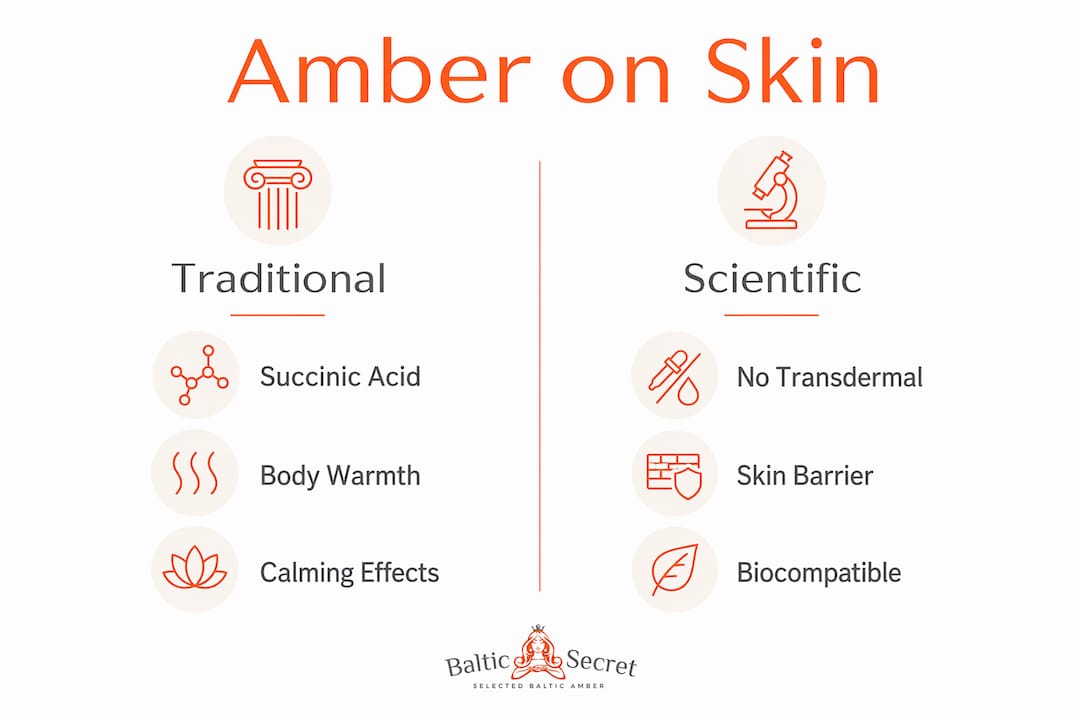
| Claim | Traditional view | Scientific finding |
|---|---|---|
| Succinic acid release | Body warmth releases it from amber | Solid matrix prevents release at skin temperature |
| Transdermal absorption | Acid absorbs through skin into bloodstream | Skin barrier blocks most non-lipid compounds |
| Pain and inflammation relief | Direct physiological effect | No confirmed clinical evidence |
| Safety on skin | Natural and gentle | Amber is non-allergenic and biocompatible |
One important nuance: the absence of confirmed physiological effect does not mean wearers feel nothing. Teething discomfort, for example, peaks and subsides naturally on its own cycle. When a parent puts an amber necklace on a child and the child calms down, the timing may be coincidental. Confirmation bias leads observers to credit the amber rather than the natural resolution of discomfort.
Pro Tip: If you wear amber for its calming or ritual value, that benefit is real and worth honoring. Just do not replace medical treatment with amber jewelry for serious conditions.
One genuinely positive finding: amber is biocompatible and non-allergenic, producing no skin hypersensitivity reactions in testing. That makes it safe for most people to wear directly against the skin without concern about irritation or allergic response.
Traditional uses and cultural history of amber worn on skin
Baltic cultures have worn amber against the skin for at least 4,000 years. Archaeological sites in Lithuania, Latvia, and Estonia contain amber jewelry dating back to the Neolithic period. The resin was not just decorative. It was medicine, currency, and spiritual protection.
In Baltic folk medicine, amber necklaces were used to treat goiter, infections, and respiratory illness. Healers believed amber’s electrostatic properties, generated by friction against skin, helped draw out illness. Amber was also burned as incense and dissolved in alcohol to create tinctures for internal use.
The cultural significance of amber extends well beyond the Baltic region:
- Ancient Egypt: Amber was imported and used in amulets for protection and healing.
- Ancient Greece and Rome: Physicians prescribed amber for throat ailments and as a general tonic.
- Medieval Europe: Amber beads were worn by clergy and nobility as protection against plague and evil.
- Traditional Chinese medicine: Amber, known as hu po, was used to calm the mind and treat convulsions.
Today, metaphysical practitioners describe amber as a stone of warmth, vitality, and emotional clearing. Wearing it close to the body is said to ground the wearer, promote confidence, and create a sense of protection. These beliefs influence millions of people who choose amber jewelry as part of a mindful daily practice. The ritual of wearing something natural, warm to the touch, and connected to ancient tradition carries genuine psychological weight, even when the biochemical mechanism remains unproven.
How to wear amber jewelry for maximum comfort and benefit
Direct skin contact is the foundation of every amber wearing practice, traditional or modern. The amber beads must rest against bare skin, not over clothing, to allow whatever interaction occurs between body warmth and resin. A snug but comfortable fit matters more than a tight one.
Follow these steps to wear amber safely and get the most from the experience:
- Choose raw or lightly polished beads. Raw amber has a more porous surface than heavily polished beads. Many wearers and traditional practitioners prefer raw amber because they believe the less processed surface allows for better contact with the skin.
- Wear it consistently. The traditional practice calls for continuous wear, including during sleep for adults. Consistency maximizes the time the amber spends in contact with your skin.
- Keep it clean. Wipe amber beads with a soft, damp cloth and mild soap. Avoid harsh chemicals, ultrasonic cleaners, and prolonged soaking, which can damage the resin surface.
- Check the clasp and string regularly. Inspect the threading and clasp every few weeks. A broken necklace can become a choking or entanglement hazard, particularly for children.
- Store it away from direct sunlight. Prolonged UV exposure can fade amber’s color and dry out the resin over time.
Pro Tip: Amber is lightweight, warm to the touch, and eco-friendly, which makes it genuinely comfortable for all-day wear. If a piece feels heavy or scratchy, it may not be authentic Baltic amber.
For children, supervised use is non-negotiable. Remove amber necklaces and bracelets during sleep, bath time, and any unsupervised play. A bracelet worn on the ankle under a sock is a safer option for very young children than a necklace. Adults wearing amber for wellness purposes can follow a more relaxed routine, but the same care and inspection habits apply. Pairing amber with other natural wellness practices, such as herbal remedies or mindfulness routines, can deepen the overall sense of wellbeing.
Key takeaways
Wearing amber against the skin carries genuine cultural and ritual value, but the scientific evidence for transdermal succinic acid absorption does not currently support the physiological claims made by folk tradition.
| Point | Details |
|---|---|
| Succinic acid is real but locked in | Amber contains 3–8% succinic acid, but body heat cannot release it from the solid resin matrix. |
| Skin is a barrier, not a sponge | Transdermal absorption of succinic acid from solid amber is not supported by current research. |
| Amber is safe for skin contact | Testing confirms amber is non-allergenic and biocompatible, making it safe for most wearers. |
| Cultural and ritual value is genuine | Thousands of years of Baltic tradition and the calming ritual of wearing amber carry real psychological benefit. |
| Safe wear requires care | Direct skin contact, regular inspection, and supervised use for children are the core safety practices. |
Baltic Secret’s perspective on amber as a wellness companion
We have spent years working directly with Lithuanian amber artisans and talking with thousands of customers who wear amber every day. Here is what that experience has taught us: the people who get the most from amber are not the ones chasing a biochemical miracle. They are the ones who treat it as a meaningful daily ritual.
The science is honest about its limits. Clinical evidence does not support amber as a primary medical treatment, and we will not tell you otherwise. What we have seen, consistently, is that wearing something natural, handcrafted, and connected to a 4,000-year tradition changes how people feel about their day. That is not nothing. That is actually quite a lot.
The mistake is treating amber as a substitute for medical care. The wisdom is treating it as a complement to a broader wellness practice. Pair it with movement, good sleep, and mindful habits. Let it be a reminder to slow down, not a cure-all. Metaphysical practitioners are right that amber promotes mindfulness and positive energy, even if the mechanism is psychological rather than biochemical.
We source every piece directly from Lithuania because authenticity matters. A synthetic resin bead does not carry the same weight, literally or symbolically, as genuine Baltic amber formed over 44 million years. When you wear the real thing against your skin, you are wearing a piece of natural history. That alone is worth something.
— Baltic Secret
Find authentic Baltic amber jewelry for skin contact wear
Genuine Baltic amber jewelry starts with verified sourcing. Imitations made from synthetic resin or copal lack the succinic acid content and natural properties that make Baltic amber distinct.
Baltic Secret sources all amber directly from Lithuania and offers a full range of authentic amber jewelry for adults, children, and pets. Every piece is designed for direct skin contact wear, with safety features built into children’s jewelry including individually knotted beads and breakaway clasps. Whether you are looking for a polished amber necklace and bracelet set for daily wellness wear or a raw amber piece for a more traditional experience, Baltic Secret carries certified authentic options. Shop with confidence knowing every item comes with authenticity guarantees and detailed care guidance.
FAQ
Why does amber need to touch the skin directly?
Direct skin contact allows body warmth to interact with the amber resin surface. Traditional practice holds that this warmth is necessary to activate amber’s purported therapeutic properties.
Does amber jewelry actually release succinic acid through the skin?
Current scientific evidence shows that body heat at skin temperature is not sufficient to release meaningful succinic acid from solid amber. The compound remains locked in the resin matrix under normal wearing conditions.
Is amber safe to wear against bare skin?
Yes. Testing confirms that amber is non-allergenic and biocompatible, producing no hypersensitivity reactions in humans. Most people can wear it directly against the skin without irritation.
What are the main benefits people report from wearing amber?
Wearers most commonly report reduced discomfort, a sense of calm, and improved mood. Experts note these effects are likely tied to the placebo effect and the calming ritual of wearing a natural, meaningful object rather than a confirmed physiological response.
Is amber jewelry safe for children to wear?
Amber jewelry for children requires supervised use at all times. Remove necklaces and bracelets during sleep, bathing, and unsupervised play. An ankle bracelet worn under a sock is a safer alternative to a necklace for very young children.