Building an Amber Jewelry Collection: A Collector's Guide

A curated amber jewelry collection is defined as a deliberate set of authenticated, documented pieces selected for provenance, rarity, and aesthetic coherence. This building amber jewelry collection guide follows a 4-year phased approach that moves from foundational purchases through scientific verification to thematic curation. Baltic amber, sourced from the Baltic Sea region and particularly Lithuania, is the market standard for collectors. The approach covered here treats amber not as decorative impulse buying but as a practice grounded in documentation, ethical sourcing, and long-term value.
1. What are the essential first pieces for your amber collection?
The strongest amber collections begin with one to three anchor pieces chosen for quality, not quantity. An anchor piece is a specimen that sets the standard for everything you add afterward. Baltic amber with clear provenance and strong visual character is the right starting point.
Pieces containing complete inclusions of extinct insects or rare botanical matter carry the highest appreciation potential among serious collectors. That rarity is not just aesthetic. It reflects scientific significance that sustains market value over decades.
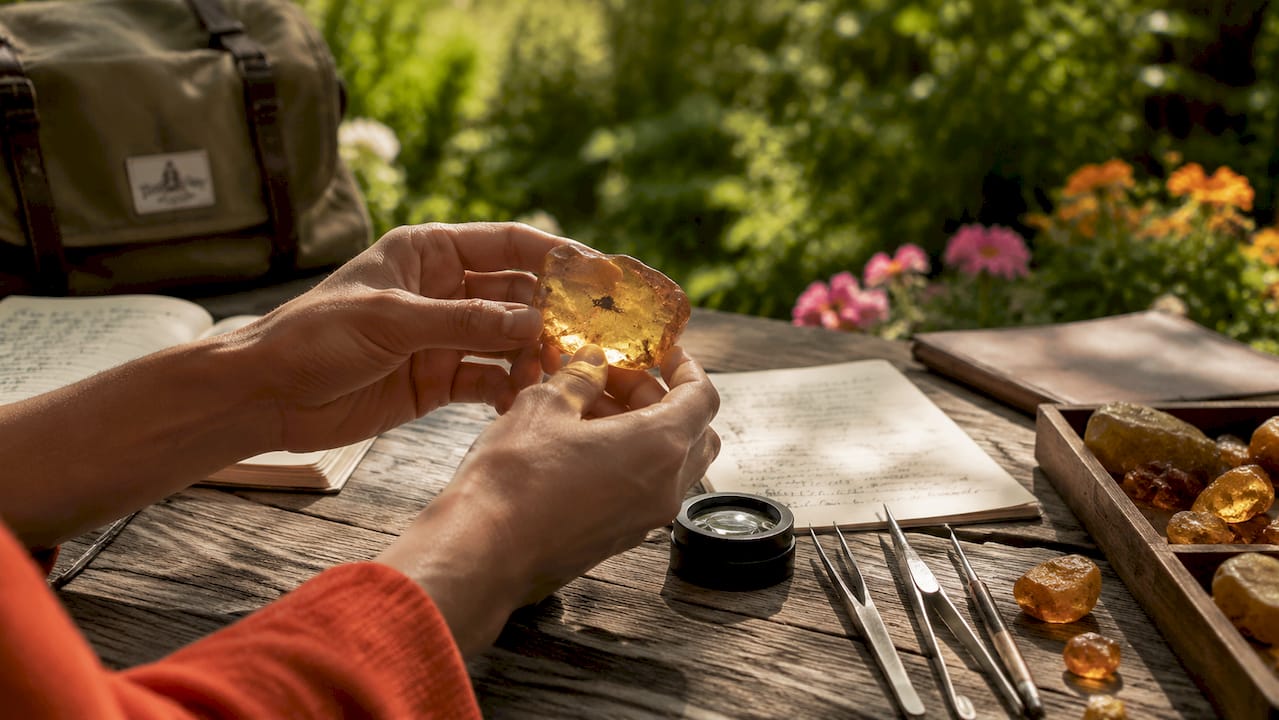
Before you buy, consult a certified gemologist who specializes in organic gemstones. They assess rarity and authenticity before a purchase, which protects you from overpaying for treated or synthetic material. This step is especially critical for pieces priced above entry level.
Documentation starts at the moment of purchase. Request a detailed invoice that records origin, weight, any inclusions, and full seller information. Photograph each piece in high resolution against a neutral background before it enters your collection. These records form the foundation of your provenance file.
- Obtain a detailed purchase invoice with origin, weight, and inclusion notes
- Photograph each piece in natural light and artificial light for reference
- Create a physical folder and a digital folder for each piece from day one
- Confirm legal sourcing from licensed quarries or permitted beach collectors
Pro Tip: Ask sellers for a statement of origin or collection permit at the time of purchase. Responsible makers provide these without hesitation, and their absence is a red flag.
2. How to organize and catalog your amber collection systematically
Systematic cataloging separates a casual accumulation from a true collection. The goal is a record system that any future appraiser, heir, or insurer can read without your explanation.
A spreadsheet or dedicated inventory app works well for most collectors. Each entry should include a unique ID, purchase date, seller name, origin region, weight in grams, color grade, inclusion description, purchase price, and current estimated value. Assign the same ID to the physical piece, its folder, and its digital file so nothing gets separated.
- Assign a unique catalog ID to every piece upon acquisition
- Record all fields: origin, weight, color, inclusions, purchase price, and seller
- Scan or photograph all paper documents and store them in labeled digital folders
- Back up digital records to both an encrypted cloud service and a physical hard drive
- Review and update records after every appraisal or display change
Physical storage matters as much as digital records. Wrap each piece in soft cloth and store it in a non-abrasive compartment away from direct sunlight. Amber fades and scratches more easily than most collectors expect. A cool, dark drawer or a lined display case with UV-filtering glass protects color and surface integrity.
Joining collector communities and forums accelerates your learning. Other collectors share sourcing contacts, warn about fakes circulating in specific markets, and recommend appraisers. The knowledge exchange in these groups is practical and specific in ways that general guides cannot replicate.
Pro Tip: Label each storage compartment with the piece’s catalog ID. When you pull a piece for display or appraisal, you can return it to the exact right spot without confusion.
3. What professional verifications protect your collection’s authenticity?
Authentication is the step most collectors delay and later regret. Buying on visual inspection alone leaves you exposed to copal, plastic, and treated amber sold as genuine Baltic material.
Fourier Transform Infrared Spectroscopy, known as FTIR, is the laboratory standard for confirming amber origin and authenticity. FTIR testing is scheduled in the third year of the phased approach, once you have assembled enough pieces to justify the cost and have a clear picture of your collection’s scope. The test produces a spectral fingerprint that distinguishes Baltic succinite from other resins definitively.
- Schedule FTIR or equivalent lab testing for any piece above a threshold value you set in advance
- Request a written lab report and add it to the piece’s provenance file
- Have a certified gemologist conduct a formal appraisal and issue a signed document
- Re-appraise every 3–5 years or after significant market shifts to keep insurance values current
- Consult a conservator for pieces with complex inclusions or surface fragility before any cleaning
Insurance is non-negotiable once your collection reaches meaningful value. Insurers require written appraisals, photographs, and ideally lab reports to issue scheduled jewelry coverage. A standard homeowner’s policy does not cover collector-grade amber at replacement value. Work with an insurer who handles fine jewelry and organic gemstones specifically.
The chain-of-custody log you maintain from day one becomes your most important document at this stage. Every movement, display loan, appraisal, and ownership transfer should be recorded with dates and signatures where possible. That log is what separates a piece with provenance from a piece with a story.
4. How to curate and style a distinctive amber collection
Curation is where a collection develops its identity. Without a guiding framework, collectors accumulate pieces that share no visual or conceptual logic, which reduces both display impact and resale coherence.
The Anchor, Build, Diversify framework gives your collection structure. Start with one to three anchor pieces that set the visual and emotional tone. Build by adding complementary pieces in related colors, forms, or metals. Diversify by introducing contrasting elements that create tension and interest without breaking the overall theme.
Thematic coherence is the clearest sign of a serious collection. Common themes include geographical origin (pieces exclusively from the Baltic region), inclusion type (only flora or only fauna inclusions), color family (cognac, lemon, green, and cherry amber in graduated tones), or historical period (antique settings paired with period-appropriate amber). Curators recommend starting with anchor pieces that resonate emotionally before building outward.
| Theme type | What it emphasizes | Best suited for |
|---|---|---|
| Geographical origin | Regional authenticity and provenance | Collectors focused on Baltic heritage |
| Inclusion type | Scientific rarity and natural history | Collectors drawn to specimen value |
| Color family | Visual harmony and wearability | Collectors who display and wear pieces |
| Historical period | Antique craftsmanship and setting styles | Collectors interested in jewelry history |
Metal choice reinforces thematic coherence. Sterling silver and gold settings each read differently against amber’s warm tones. Silver emphasizes the natural, organic character of the stone. Gold adds formality and warmth. Mixing metals without intention creates visual noise.
- Choose one or two metal types and stay consistent across the collection
- Group pieces by theme for display rather than by acquisition date
- Use a jewelry safety guide to understand care requirements before displaying pieces long-term
- Rotate displayed pieces seasonally to limit UV exposure and keep the collection visually fresh
Key takeaways
A curated amber jewelry collection requires provenance documentation, scientific verification, and thematic curation to retain value and significance across generations.
| Point | Details |
|---|---|
| Start with anchor pieces | Choose one to three high-quality, documented Baltic amber pieces before expanding. |
| Document from day one | Record origin, weight, inclusions, and seller details at the moment of purchase. |
| Verify with FTIR testing | Lab testing confirms authenticity and supports insurance and investment decisions. |
| Re-appraise every 3–5 years | Market shifts change replacement values; outdated appraisals leave you underinsured. |
| Apply the Anchor, Build, Diversify framework | Thematic coherence increases display impact and long-term collection value. |
What building a real amber collection has taught me
The collectors who build the most meaningful amber collections share one habit: they treat provenance as a living document, not a one-time task. Most people buy a piece, file the receipt, and move on. The collectors whose pieces hold and grow in value are the ones who update their records after every appraisal, every display loan, and every conversation with a specialist.
The most common mistake I see is buying based on color alone. Amber’s visual range is extraordinary, from pale lemon to deep cognac to rare green. But color without documentation is just a pretty stone. The pieces that matter to future generations are the ones with a clear, unbroken record of where they came from and who verified them.
Ethical sourcing is not a trend. It is a baseline expectation that serious collectors and future buyers apply when evaluating a collection. Responsible sourcing from licensed quarries with permits and origin statements is the standard, not an extra. If a seller cannot provide that documentation, the piece does not belong in a serious collection regardless of how beautiful it looks.
The long view matters most. Amber is 44 million years old on average. The pieces you collect now can become heirloom art that carries family history, scientific significance, and genuine monetary value. That only happens if you treat the collection with the same care and rigor from the first purchase.
— Baltic Secret
Baltic Secret’s amber collection for serious collectors
Collectors who want a trusted starting point for authentic, well-documented Baltic amber will find Baltic Secret’s range built for exactly that purpose.
Baltic Secret sources directly from Lithuania and provides detailed product information, including origin, craftsmanship notes, and care instructions, with every piece. The amber jewelry collection spans polished bead necklaces and bracelets, artisanal statement pieces, and raw amber styles suited to collectors at every stage. For collectors seeking a distinctive anchor piece, the artisanal amber necklace range offers handcrafted options with the visual character and documented sourcing that serious collections require. Sign up for updates to receive guidance on new arrivals and sourcing transparency.
FAQ
What is the best first piece for an amber jewelry collection?
The best first piece is a Baltic amber specimen with clear provenance documentation and strong visual character. Pieces with complete insect or botanical inclusions carry the highest long-term value.
How do I verify that amber is authentic?
FTIR laboratory testing is the definitive method for confirming amber authenticity and origin. A certified gemologist can also conduct a visual and physical assessment before lab testing.
How often should I have my amber collection appraised?
Re-appraise every 3–5 years or after significant market shifts. Regular appraisals keep insurance coverage accurate and give you a current picture of your collection’s value.
What does ethical sourcing mean for amber collectors?
Ethical sourcing means amber comes from licensed quarries or permitted beach collectors, with documentation such as collection permits or statements of origin provided by the seller.
How should I store amber jewelry to prevent damage?
Wrap each piece in soft cloth and store it in a non-abrasive compartment away from direct sunlight. Cool, dark storage prevents fading, surface scratches, and long-term degradation.