Heirloom Amber Jewelry: History, Value, and Care

Heirloom amber jewelry is defined as fossilized tree resin, crafted into wearable pieces and preserved across generations for their natural beauty, cultural weight, and lasting monetary value. The term “heirloom” in jewelry refers to any piece intentionally passed down within a family, but amber earns that status through a combination of age, rarity, and provenance that few organic gemstones can match. What is heirloom amber jewelry at its core? It is a piece of prehistoric nature, shaped by skilled hands, and given meaning by the people who wear and inherit it. Baltic Secret sources its amber directly from Lithuania, the heart of the world’s most prized amber deposits, where Baltic amber holds the market benchmark for heirloom quality. Understanding what makes these pieces worth keeping, and passing on, starts with knowing exactly what you are holding.
What are the distinctive characteristics of heirloom amber jewelry?
Heirloom amber jewelry is identified by a specific set of physical and artistic qualities that separate it from mass-produced or decorative pieces. Knowing these qualities helps you buy with confidence and evaluate what you already own.
Color and rarity
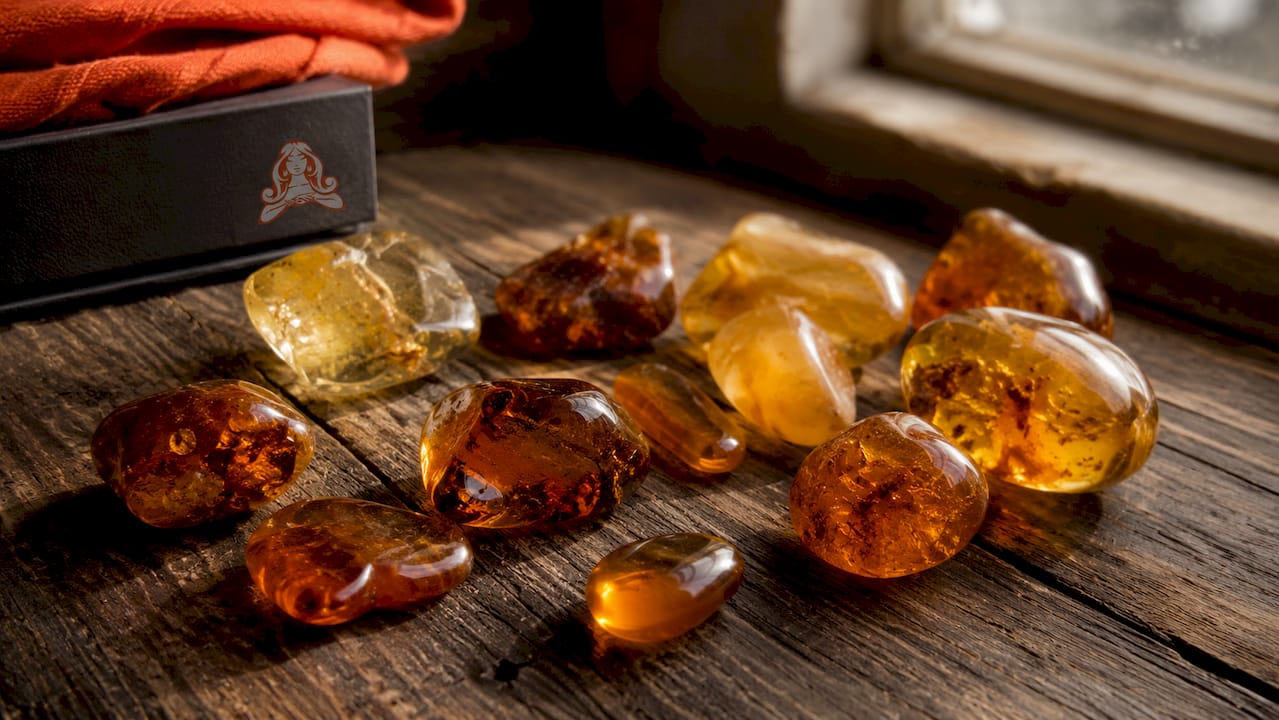
Amber comes in a wider color range than most people expect. The most common and commercially valued shades are cognac, honey, and deep cherry red. Transparent cognac and honey amber command premium prices because their clarity signals purity and minimal processing. Green and blue amber are rarer still and attract strong collector interest, though they require authentication to confirm genuineness. White amber accounts for only 2% of production and, despite its scarcity, is less popular in jewelry than the warm transparent tones.
Inclusions and their value
Inclusions are the trapped materials inside amber, and they are one of the most powerful value drivers in the heirloom market. Insects, plant fragments, air bubbles, and mineral particles all qualify as inclusions. High-quality inclusions can transform a decorative amber piece into a serious collector’s item, because they offer a literal window into ecosystems that existed tens of millions of years ago. A piece with a well-preserved insect inclusion is both scientifically significant and visually extraordinary.
Craftsmanship and settings
The setting matters as much as the stone in heirloom amber jewelry. Handcrafted silver or gold mounts are the standard for heirloom-quality pieces because they protect the amber while adding durability and aesthetic contrast to its warm tones. Machine-made settings in base metals signal decorative intent rather than heirloom intent. Look for hand-finished bezels, prong settings, or wire wraps in sterling silver or 14-karat gold as markers of genuine craft.
Key physical traits that define heirloom-grade amber:
- Transparency: Clear, transparent amber without a “bony” or cloudy texture caused by trapped air bubbles
- Color depth: Rich, saturated cognac, honey, or cherry tones rather than pale or washed-out hues
- Inclusions: Visible, well-preserved organic material that adds scientific and collector value
- Setting quality: Handcrafted silver or gold mounts with clean, finished edges
- Surface integrity: No cracks, chips, or signs of synthetic coating or plastic resin
Pro Tip: Run a saltwater float test at home. Genuine Baltic amber floats in a saturated saltwater solution (roughly 1 part salt to 4 parts water), while plastic and glass imitations sink. This is not a definitive lab test, but it is a fast first screen.
What is the historical and cultural significance of amber as an heirloom?
Amber’s status as an heirloom material is not a modern invention. It is one of the oldest decorative substances used by humans, and its cultural weight is built on thousands of years of continuous use.
-
Prehistoric origins. Amber is fossilized resin from ancient pine forests, most of it formed during the Eocene epoch, roughly 44 million years ago. The Baltic region holds the world’s largest deposits, making Baltic amber the historical and commercial standard for the material.
-
Neolithic use. Amber has been used since Neolithic times in jewelry and ornaments, making it one of the earliest materials humans chose to wear and trade. Archaeological finds across Europe confirm amber trade routes stretching from the Baltic coast to the Mediterranean as far back as 3000 BCE.
-
Spiritual and protective meaning. Across cultures from ancient Greece to the Baltic tribes of Lithuania and Latvia, amber carried protective and spiritual significance. It was worn as a talisman against illness, given to children for protection, and placed in graves as an offering. That tradition of amber as a guardian material feeds directly into its modern role as a family heirloom.
-
Status and trade value. Roman emperors prized Baltic amber so highly that a small amber figurine could cost more than a healthy slave. The “Amber Road,” the ancient trade route connecting the Baltic coast to Rome, moved amber alongside gold and silk. That historical association with wealth and status has never fully left the material.
-
Generational continuity. Heirloom amber meaning is rooted in continuity. A piece worn by a grandmother in Lithuania carries the weight of her life, her culture, and her choices. When that piece passes to a grandchild, it carries all of that forward. No synthetic gemstone can replicate that accumulated meaning.
How should collectors care for and maintain heirloom amber jewelry?
Amber is an organic material, and it requires care that reflects that fact. Unlike diamond or sapphire, amber is porous and temperature-sensitive. Treating it like a hard gemstone will damage it.
Caring for amber jewelry correctly comes down to a few firm rules:
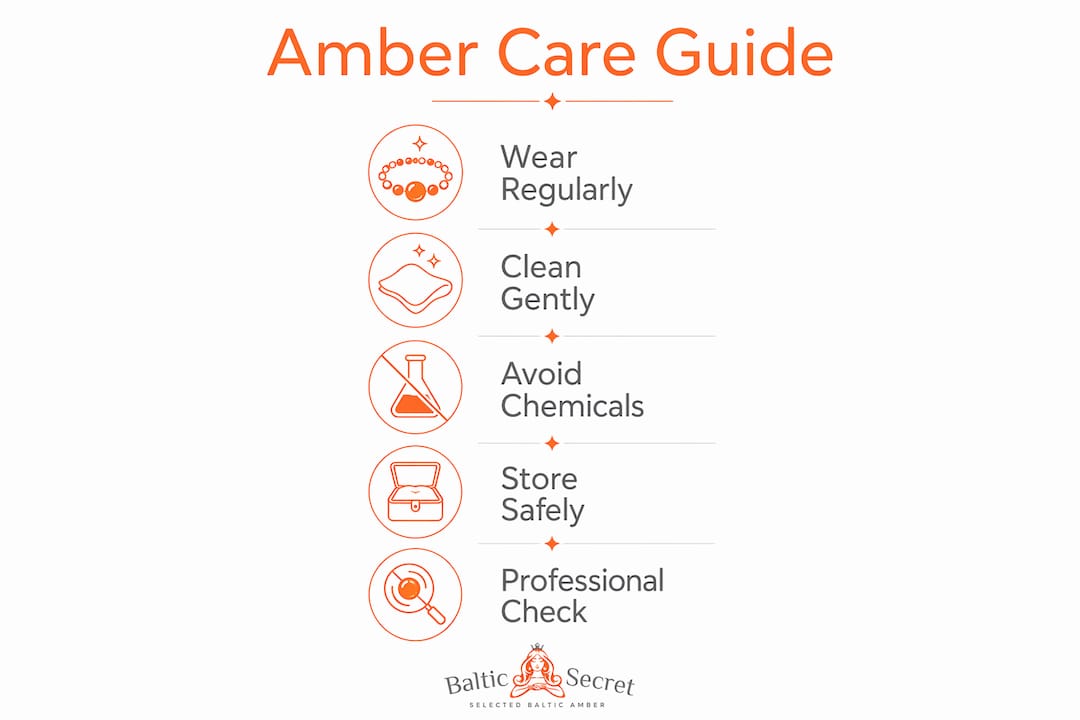
- Clean gently. Use a soft, damp cloth and mild soap. Avoid ultrasonic cleaners, steam cleaners, and chemical jewelry solutions. These strip amber’s surface and accelerate cracking.
- Avoid heat and light. Prolonged exposure to direct sunlight or high heat causes amber to darken, crack, or become brittle. Store pieces away from windows and heating vents.
- Store carefully. Wrap each piece individually in a soft cloth or place it in a padded compartment. Amber scratches easily when stored loose with other jewelry.
- Limit chemical contact. Remove amber jewelry before applying perfume, hairspray, or sunscreen. These substances cloud the surface over time.
- Control humidity. Amber needs a stable microclimate with minimal handling and consistent temperature. Extreme humidity swings cause surface crazing, the fine network of cracks that permanently dulls the stone.
Pro Tip: Wearing amber regularly actually benefits it. The natural oils from your skin keep the surface conditioned and slow the drying process that leads to cracking. A piece worn daily often looks better after years than one kept in a drawer.
Heirloom collections benefit from professional appraisals and scheduled insurance reviews. Fine art or personal property endorsements are the appropriate coverage type for high-value amber pieces. An appraisal every 3–5 years keeps your documentation current and your insurance coverage accurate.
How to authenticate and document heirloom amber jewelry for long-term value?
Authentication is the foundation of heirloom value. A piece without verified origin and documented history is worth a fraction of what it could be with proper records.
-
Verify Baltic origin. Baltic amber from Lithuania, Latvia, Poland, and Russia’s Kaliningrad region holds the strongest market position. Request a certificate of origin from the seller, and look for lab reports from recognized gemological laboratories that confirm succinite content, the defining chemical marker of Baltic amber.
-
Test for authenticity. Natural amber can be distinguished from treated or synthetic material through several methods. The saltwater float test is a useful home screen. Ultraviolet light causes genuine Baltic amber to fluoresce blue or green. A gemological lab can perform infrared spectroscopy for definitive confirmation.
-
Build a documentation file. Every heirloom piece needs a paper trail. Collect the original purchase invoice, seller information, and any certificates provided at the time of sale. Photograph the piece from multiple angles under natural light, capturing inclusions, settings, and any identifying marks.
-
Add lab results. Commission an infrared spectroscopy report from a certified gemological lab if the piece is high value. This report becomes the most authoritative document in your provenance file and supports both insurance claims and future resale.
-
Digitize and archive. Digitizing documentation and updating appraisals every 3–5 years supports insurance and resale processes. Store digital copies in cloud storage and keep physical copies in a fireproof location. A provenance log that tracks each owner, date of transfer, and condition notes adds depth that future generations and buyers will value.
| Documentation type | Purpose |
|---|---|
| Certificate of origin | Confirms Baltic source and geographic provenance |
| Lab report (infrared spectroscopy) | Verifies succinite content and rules out synthetic material |
| Purchase invoice | Establishes acquisition date, price, and seller identity |
| Photographic record | Documents condition, inclusions, and setting at time of acquisition |
| Appraisal report | Supports insurance coverage and resale valuation |
Key Takeaways
Heirloom amber jewelry holds its value and meaning only when it combines verified Baltic origin, quality craftsmanship, and thorough documentation maintained across generations.
| Point | Details |
|---|---|
| Baltic origin matters most | Pieces from Lithuania, Latvia, or Poland with certified origin hold value better than undocumented amber. |
| Transparency signals quality | Clear cognac or honey amber without a “bony” texture commands the highest collector prices. |
| Inclusions add collector value | Well-preserved insects or plant fragments can elevate a decorative piece into a serious heirloom. |
| Organic care is non-negotiable | Avoid heat, chemicals, and ultrasonic cleaners; clean with a soft damp cloth only. |
| Documentation protects your investment | Maintain invoices, lab reports, photos, and appraisals updated every 3–5 years for insurance and resale. |
What working with Baltic amber has taught me about heirloom value
Most people underestimate amber the first time they hold it. They expect something harder, colder, more “gemstone-like.” What they get instead is warm to the touch, surprisingly light, and alive with color in a way that photographs never fully capture. That first surprise is exactly why amber makes such a powerful heirloom.
The biggest misconception I see is that rarity alone creates heirloom value. White amber is genuinely scarce, making up only 2% of production, yet it sits at the lower end of collector demand. What actually drives value is the combination of transparency, color depth, verified origin, and the story attached to the piece. A cognac amber pendant with a documented Baltic provenance and a clear insect inclusion is worth far more than a rare white amber bead with no paperwork.
The overlooked care tip I share most often is about wearing the piece. People lock heirloom amber away to protect it, and that is the wrong instinct. Amber benefits from contact with skin. The natural oils condition the surface and slow the drying that causes cracking. A piece worn with intention, cared for properly, and documented thoroughly becomes more valuable with each generation, not less.
Starting a meaningful amber collection does not require a large budget. One well-chosen piece with clear Baltic origin, a quality silver setting, and complete documentation is a stronger foundation than a dozen undocumented pieces bought on impulse. Buy once, document thoroughly, and wear it.
— Baltic Secret
Authentic Baltic amber jewelry, curated for lasting value
Baltic Secret offers a curated selection of authentic Baltic amber pieces sourced directly from Lithuania, each crafted to heirloom standards. Every piece comes with origin documentation and is made from genuine succinite-verified amber set in handcrafted silver or natural materials.
Whether you are starting a family collection or adding a significant piece to an existing one, Baltic Secret’s range covers polished and raw amber in cognac, honey, cherry, and green tones. The artisanal amber necklace collection includes pieces designed for daily wear and long-term preservation. Each purchase includes the documentation foundation you need to build a proper provenance file from day one.
FAQ
What is heirloom amber jewelry, exactly?
Heirloom amber jewelry is fossilized tree resin, typically from Baltic pine forests, crafted into wearable pieces and preserved across generations for their natural beauty, rarity, and cultural significance. Baltic amber, sourced from Lithuania, Latvia, and Poland, is the recognized standard for heirloom-quality pieces.
How do I know if my amber jewelry is genuine Baltic amber?
Genuine Baltic amber floats in saturated saltwater, fluoresces blue or green under ultraviolet light, and contains succinite, a compound confirmed by infrared spectroscopy at a certified gemological lab. A certificate of origin from the seller is the first document to request.
Which amber color is most valuable for heirloom purposes?
Transparent cognac and honey amber command the highest prices because their clarity indicates purity and minimal treatment. Deep cherry red is also highly valued, while white amber, despite being rare at only 2% of production, is less sought after by collectors.
How often should I have heirloom amber appraised?
Professional appraisals every 3–5 years keep your insurance coverage accurate and your documentation current. Fine art or personal property insurance endorsements are the appropriate coverage type for high-value amber pieces.
Does wearing amber jewelry damage it over time?
Regular wear actually benefits amber. Natural skin oils condition the surface and slow the drying process that leads to cracking. The key is to remove amber before contact with perfume, sunscreen, or chemical cleaners, and to store it wrapped in soft cloth when not worn.