Amber Care in Summer: What to Do and What to Avoid

To protect amber this summer, keep it away from direct sun and heat, take it off before swimming, sunbathing, or sauna, and clean it only with mild soap, lukewarm water, and a soft cloth. Skip perfume, sunscreen, and chlorine contact whenever you can. Amber is soft, organic, and reacts fast to conditions that most other gemstones shrug off, so summer is the season where sloppy habits show up as permanent damage.
Here’s the shortlist worth pinning to your fridge:
- Do remove amber before swimming, sunbathing, or sauna sessions.
- Do wipe it down with a soft, damp cloth after wear.
- Don’t leave it on a windowsill, dashboard, or beach towel in direct sun.
- Don’t let it touch sunscreen, perfume, insect repellent, or chlorine.
- Do store it in a soft pouch, away from other jewelry, when not worn.
- Don’t use ultrasonic cleaners, steam, or solvents to clean it.
Follow those six rules and your amber keeps its color, clarity, and resale value for decades. Ignore them for one bad beach weekend and you can watch the surface cloud over for good.
Key Takeaways
Amber survives summer heat, sun, and chemical exposure only when it’s removed for swimming and sun, cleaned exclusively with mild soap and a soft cloth, and stored away from direct light.
| Point | Details |
|---|---|
| Remove before water and heat | Take amber off for swimming, sunbathing, showers, and sauna sessions every time. |
| Avoid chemical contact | Apply sunscreen, perfume, and insect repellent before putting jewelry on, not after. |
| Clean gently only | Use lukewarm water, mild pH-neutral soap, and a soft cloth; never ultrasonic or steam cleaners. |
| Store cool and separated | Keep pieces in a soft pouch away from heat sources, sunlight, and other jewelry. |
| Inspect settings often | Check clasps and stringing weekly in summer, since heat softens cord faster. |
| Choose safety-built pieces | Baltic Secret’s polished, secure-clasp amber jewelry is designed to hold up to daily summer wear. |
Table of Contents
- Why Amber Reacts to Summer Heat, Light, and Chemicals
- Everyday Rules for Wearing Amber in Summer
- Beach, Pool, and Shower: What Water and Sand Actually Do to Amber
- How to Clean Amber Safely at Home
- Packing and Storing Amber for Summer Travel
- When to Stop DIY and Call a Professional
- Conservative Polishing vs. Risky Methods: A Technical Look
- A Note on Authenticity and Long-Term Care
- Shop Summer-Ready Amber, Built to Last
- Frequently Asked Questions
- Sources
Why Amber Reacts to Summer Heat, Light, and Chemicals
Amber isn’t a mineral. It’s fossilized tree resin, an organic material that behaves more like a hardened sap than a stone, which is exactly why summer conditions hit it so hard. On the Mohs hardness scale, amber sits at roughly 2 to 2.5, softer than a fingernail-scratch test would suggest, and its toughness is notably low compared to quartz, sapphire, or even pearl.
That softness has consequences. Prolonged direct sunlight can darken amber, dull its transparency, and eventually cause fine surface cracking, according to guidance from the GIA. Heat softens the resin at a molecular level long before it visibly melts, so a hot car dashboard or a sunny windowsill does slow, cumulative damage you won’t notice until it’s already happened. Light exposure accelerates oxidation, which is part of why old amber pieces sometimes look darker and more opaque than freshly polished ones.
Amber sensitivity checklist:
- Heat softens the resin’s surface, making it more prone to dents and warping.
- UV light oxidizes the surface, causing gradual darkening and loss of clarity.
- Solvents (alcohol, acetone, perfume) dissolve or cloud the resin’s outer layer.
- Sudden temperature swings, going from an air-conditioned car to hot sand, can stress the stone and its setting simultaneously.
The damage that matters most is the kind you can’t undo. A clouded surface or a fine crack from heat stress doesn’t polish out the way a scratch on gold does. The setting suffers too: metal prongs expand and contract at a different rate than resin, and repeated heat cycles loosen mounts over a season faster than most people expect.
Everyday Rules for Wearing Amber in Summer
Treat amber the way you’d treat a good leather bag, not a stainless steel watch. It survives daily wear fine, but only if you’re deliberate about the moments that stress it most.
- Keep pieces in shade whenever possible, especially during peak midday sun between roughly 11 a.m. and 3 p.m.
- Take amber off before extended beach time, sunbathing, or sauna visits.
- Apply sunscreen, perfume, and insect repellent before putting jewelry on, never after.
- Remove amber before workouts, gardening, or any activity with repeated friction or impact.
- Check clasps, jump rings, and stringing knots weekly during summer, since heat-softened cord stretches faster than you’d think.
- Store loose pieces in a soft pouch rather than tossing them in a bag with keys or sunglasses.
Pro Tip: *Keep a spare microfiber pouch in your beach bag or car glovebox.
If you have kids wearing teething necklaces or pet collars, the same rules apply, just with more urgency, since children and pets can’t self-monitor for a loosening clasp or a fraying cord the way an adult wearing a bracelet can.
Beach, Pool, and Shower: What Water and Sand Actually Do to Amber
Water itself doesn’t dissolve amber, but almost everything that comes with water in summer does damage indirectly. Sea salt corrodes metal findings over repeated exposure. Pool chlorine is worse: it’s a mild bleaching agent that can dull amber’s surface polish and accelerate wear on silver or gold-filled settings. Even amber’s famous saltwater float test, used to help spot fakes, works because real amber is buoyant, not because salt water is safe for it long term.
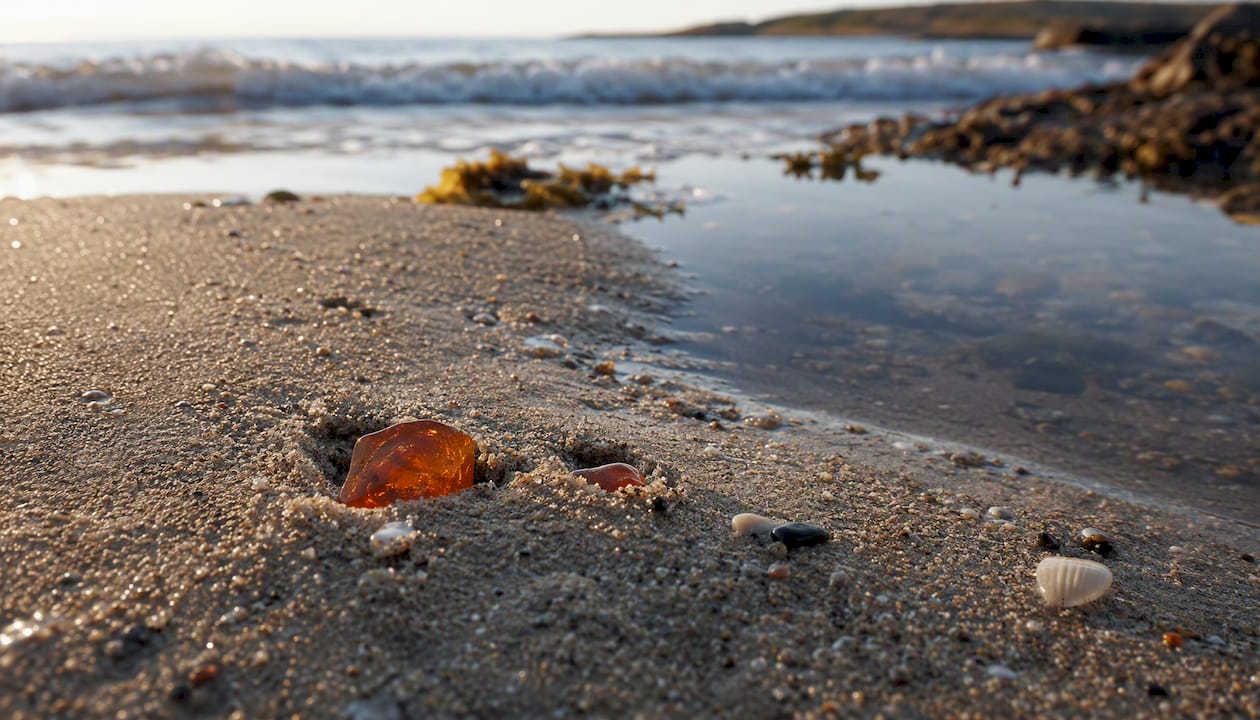
Sand is a separate problem entirely. It’s essentially loose abrasive grit, and rubbing sandy skin against amber beads is functionally the same as light sanding, except uncontrolled and unwanted.
Here’s how the risk breaks down by scenario:
At the beach: Sun plus hot sand accelerates color change fast, and a piece left on a towel in direct sun can heat up considerably within an hour, per seasonal wear guidance from Kalvaite. Take amber off before you lie down, and never bury jewelry in sand “for safekeeping.”
At the pool: Chlorine and prolonged wet exposure stress both the resin and its setting. Remove amber before swimming, full stop.
In the shower or sauna: Heat and humidity together are the worst combination amber faces outside of direct sunlight. Steam softens resin faster than dry heat does, so sauna sessions are a hard no.
After any water exposure: Rinse the piece briefly in fresh water to remove salt or chlorine residue, pat dry with a soft cloth, and inspect the stringing before you put it away. A quick 30-second check catches a loosening knot before it becomes a lost bead.
Pet owners face a version of this too. A dog swimming in a lake with an amber collar on picks up the same salt, chlorine, or algae residue, and checking collar wear after outdoor summer use should become as routine as checking the leash clip.
How to Clean Amber Safely at Home
Amber cleaning is simple, but the margin for error is thin. Follow this sequence and you’ll avoid the two most common mistakes: over-scrubbing and using the wrong products.
- Fill a bowl with lukewarm water. Not hot. Heat is the enemy here, so err on the side of cooler.
- Add a small amount of mild, pH-neutral soap. Baby shampoo or a gentle castile soap works well.
- Dip a soft cloth or your fingers and wipe the amber gently, working around beads and settings rather than scrubbing at them.
- Rinse briefly under lukewarm running water to remove soap residue.
- Pat dry immediately with a soft, lint-free cloth. Don’t let it air dry sitting in a wet pouch.
- Optional: buff lightly with a drop of jojoba or olive oil on a soft cloth to restore shine, then wipe off any excess so the piece isn’t left greasy, a technique GIA notes as safe when done sparingly.
This routine takes under five minutes and should happen every few weeks during heavy summer wear, more often if the piece has been to the beach or pool.
What to avoid entirely:
| Method | Why it damages amber |
|---|---|
| Ultrasonic cleaners | High-frequency vibration can crack amber along existing stress lines |
| Steam cleaners | Rapid localized heat can soften and permanently deform the surface |
| Acetone or alcohol | Dissolves the resin’s outer layer, causing clouding |
| Commercial jewelry dips | Often contain solvents or ammonia that strip amber’s polish |
| Abrasive polishes | Scratch the soft surface instead of smoothing it |
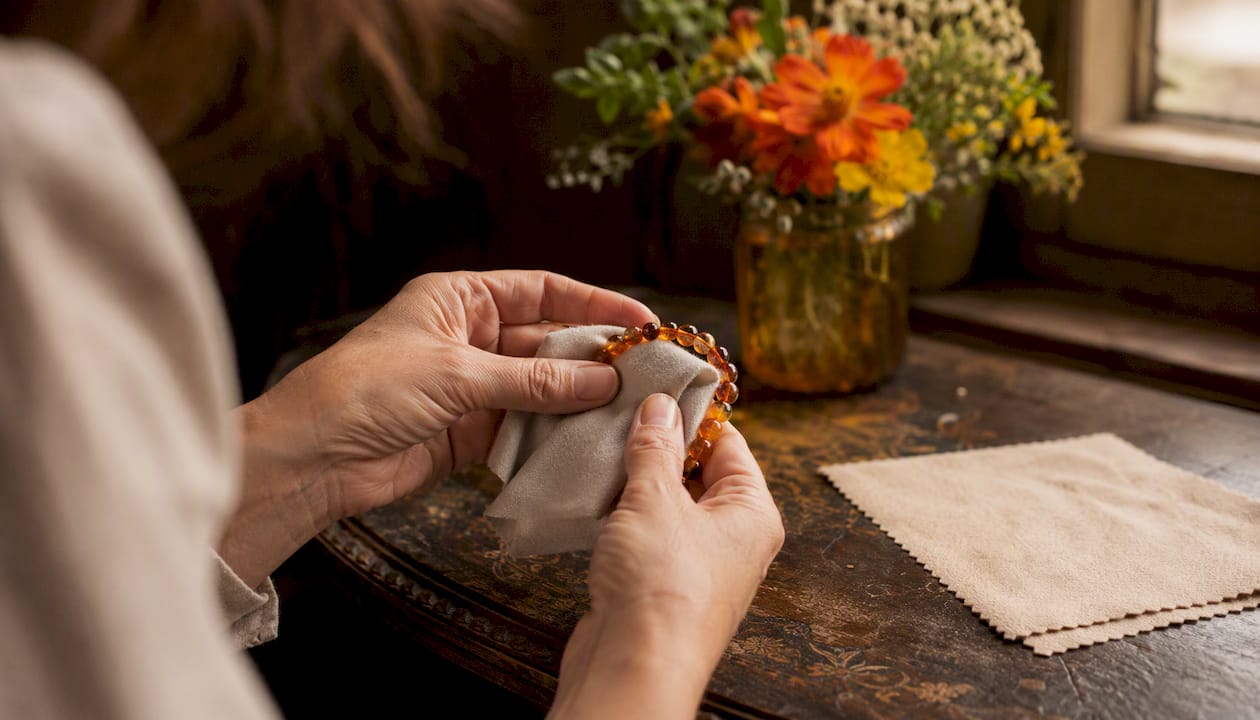
Ultrasonic and steam cleaners are the two most commonly misused tools on amber, largely because they’re standard equipment for cleaning gold and diamonds. The vibration from an ultrasonic bath travels along microscopic internal stress lines that most amber pieces already have, and it can turn a hairline flaw into a visible crack in seconds.
If you notice a sticky film that soap and water won’t remove, or a cloudy patch that seems to be under the surface rather than on it, stop. That’s a job for a conservator, not a home remedy, and trying a stronger cleaner at that point usually makes things worse.
Packing and Storing Amber for Summer Travel
Amber’s two enemies while traveling are heat and friction, and a suitcase or hotel room manages to combine both if you’re not careful.
- Pack pieces in a soft, padded pouch or a divided jewelry box so beads don’t knock against each other in transit.
- Add a small silica gel packet to your travel case to control humidity swings, and swap it out every few months since silica loses effectiveness over time.
- Never leave amber in a car, especially on the dashboard or in direct sun through a window; interior temperatures can climb well past what the resin can handle in minutes.
- At a hotel, store amber in a drawer or the room safe rather than on a sunlit windowsill or bathroom counter near steam from a shower.
- On beach days, leave valuable or sentimental pieces at your accommodation rather than risking sand, sun, and saltwater all at once.
- Keep pieces of different colors or finishes separated within a pouch. Amber beads can scratch each other just as easily as they scratch against harder stones.
This is the same logic conservators apply to any organic material stored long term: stable temperature, controlled humidity, minimal handling, and protection from UV light preserve both the look and the market value of a piece.
When to Stop DIY and Call a Professional
Most amber problems are preventable, but once damage happens, home fixes often make things worse. Know these red flags:
- A deep scratch or visible crack that catches your fingernail.
- A persistent tacky or sticky residue that doesn’t wipe off with soap and water.
- A loose bead, clasp, or setting that moves more than it should.
- Cloudiness that appears to be inside the resin rather than on the surface.
- Any high-value piece with visible insect or plant inclusions, where authenticity and provenance matter for resale or insurance.
For pieces worth restoring or reselling, ask about non-destructive lab testing. FTIR analysis can confirm a piece is genuine Baltic amber without damaging it, and reputable conservators or jewelers can provide provenance documentation alongside restringing or professional polishing work. Skip the hot-needle test some guides suggest for checking authenticity at home; it’s destructive and unnecessary when a saltwater float test or a quick UV check can tell you almost as much without risking the stone.
A professional visit typically includes restringing with fresh, summer-appropriate cord, a slow hand-polish to restore shine without heat damage, and, for higher-value pieces, a written authentication report you can keep with your insurance documents.
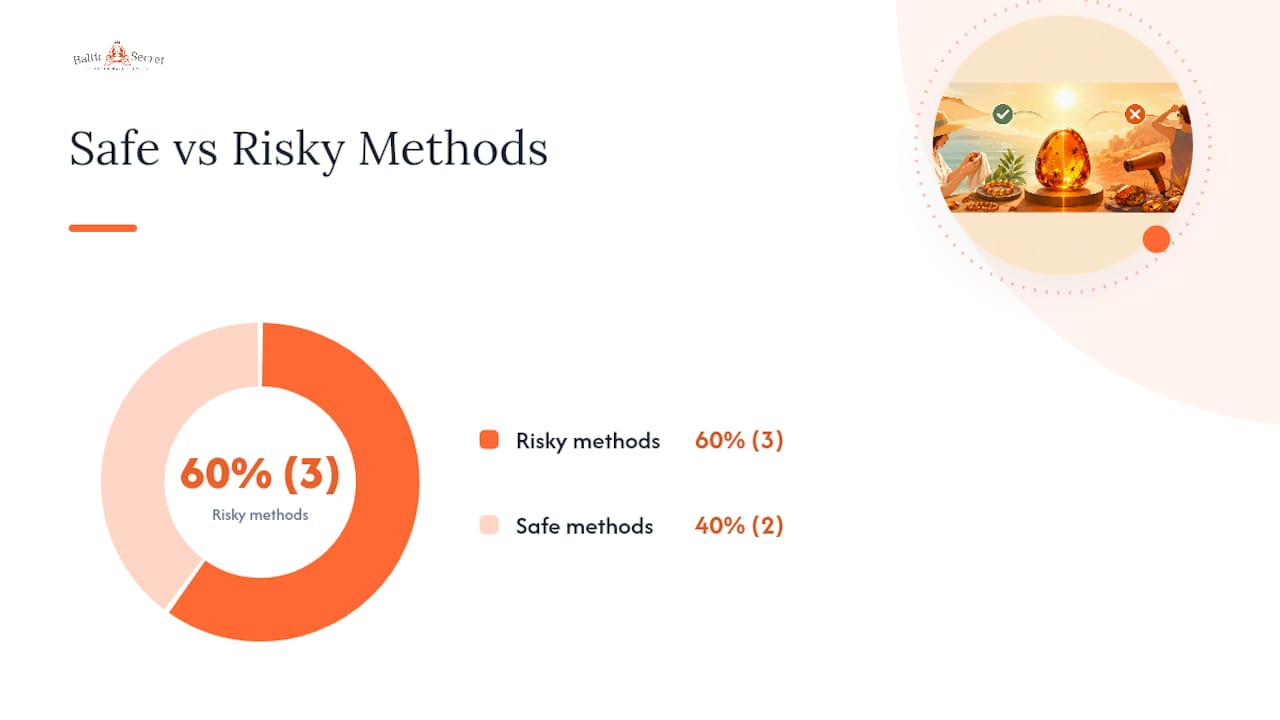
Conservative Polishing vs. Risky Methods: A Technical Look
The difference between safe and unsafe amber restoration almost always comes down to heat and vibration control. Ultrasonic vibration travels along a piece’s internal stress lines and can cause existing micro-cracks to spread rapidly, while steam cleaners introduce sudden, localized heat that can push amber past its softening point, causing permanent warping, both documented risks according to GIA.
Wet sanding avoids both problems. Keeping the piece constantly wet during sanding dissipates heat as it builds, and working through a staged grit progression, roughly 400 to 600 to 800 to 1,200 to 2,000, lets a practitioner remove surface flaws gradually instead of forcing it. Guides on amber processing recommend frequent pauses during this process specifically to prevent heat buildup at the contact point.
| Method | Risk level | Notes |
|---|---|---|
| Wet hand sanding (staged grits) | Safe | Requires constant wetting and frequent pauses |
| Low-speed hand buffing | Safe | Effective when monitored closely for heat |
| Ultrasonic cleaning | Risky | Can propagate existing cracks within seconds |
| Steam cleaning | Risky | Rapid heat can permanently deform the surface |
| Solvent dips (acetone, alcohol) | Risky | Dissolves resin, causes irreversible clouding |
Pro Tip: If you’re restoring an older piece at home with fine sandpaper, work in short bursts, no more than 15 to 20 seconds of contact at a time, and dip the piece back in water between passes. The moment it feels warm to the touch, stop and let it cool fully before continuing.
A Note on Authenticity and Long-Term Care
Good summer care only pays off if you started with genuine Baltic amber in the first place. Before buying a higher-value piece, ask the seller for provenance details and, ideally, FTIR lab documentation confirming it’s authentic fossilized resin rather than copal or plastic. A saltwater float test or a UV fluorescence check can offer quick reassurance at home, but they’re no substitute for a proper lab report on an expensive purchase.
Care and authenticity are connected in a way people underestimate. A piece with documented provenance tends to be worth protecting properly, and buyers who understand why amber reacts to heat, chlorine, and solvents are far less likely to accidentally ruin something they paid a fair price for. Baltic Secret sources amber directly from the Baltic region and builds safety into every piece designed for children and pets, from rounded, secure clasps to sizing guides that account for how kids and animals actually move through a summer day.
Shop Summer-Ready Amber, Built to Last
If you’re replacing a piece that didn’t survive last summer, or buying your first, look for jewelry designed with the realities of hot weather in mind: secure clasps, polished (not raw) surfaces that are easier to wipe clean, and sizing that fits properly so pieces don’t get yanked or snagged.

Baltic Secret’s extra-safe polished amber necklaces and bracelets are built for exactly this kind of daily wear, with rounded beads and secure clasps that hold up to a summer of pool days and car rides. Every product page lists sourcing and safety details up front, so you know what you’re buying before it arrives. Pet owners dealing with lake trips and tick season might also want to check out the natural amber tick collar, a chemical-free option that still needs the same post-swim rinse-and-check routine covered above. If your dog spends a lot of time outdoors this season, pairing that collar with a good paw balm for hot pavement rounds out a decent summer care kit. Browse the full amber collection to find a piece with the provenance details and safety features that fit how you actually live in summer, then start with the cleaning routine above the first week you wear it.
Frequently Asked Questions
Can amber jewelry get wet occasionally, or should it never touch water? Brief contact with fresh water, like washing your hands, won’t hurt amber. The real risk comes from prolonged exposure to chlorine, salt water, or hot shower steam, which stress both the resin and its metal setting over time.
Does amber lose its color permanently from sun exposure? Yes, in most cases. Prolonged UV and heat exposure darkens amber and reduces its transparency in a way that doesn’t reverse with cleaning or polishing. Prevention through shade and proper storage is far more effective than trying to fix it afterward.
Is it safe to wear amber while swimming in the ocean? No. Salt water corrodes metal clasps and settings over repeated exposure, even though amber itself can float in concentrated salt water. Remove amber jewelry before any swimming, whether it’s a pool or the sea.
How often should amber jewelry be cleaned in summer? Every two to three weeks during heavy summer wear, or immediately after exposure to sweat, sunscreen, or water. A quick wipe with a soft cloth after each wear also helps prevent buildup between full cleanings.
Can I use jewelry cleaning wipes or ultrasonic jewelry cleaners on amber? No. Ultrasonic cleaners can crack amber along existing stress lines, and most commercial jewelry wipes or dips contain solvents that cloud or dissolve the resin’s surface. Stick to mild soap and lukewarm water.
Sources
These references cover the technical and practical side of amber care in more depth than a single article can, useful if you’re restoring a piece or verifying authenticity before a purchase.
- Amber care and cleaning — GIA
- Gintaro apdirbimas – išsamus gidas gintaro paruošimui — Pasiskaitom
- Gumilendas
When checking any of these, look specifically for cleaning instructions, mentions of lab testing methods like FTIR, and any staged technique for polishing rather than a single-step shortcut. Those three details separate a source built on real conservation practice from one repeating generic jewelry advice.