What Is Bioenergy Amber Jewelry? A Clear Guide

Bioenergy amber jewelry is defined as standard amber jewelry marketed with a wellness framing, based on amber’s fossilized tree resin origin and traditional claims about subtle benefits when worn against the skin. The term “bioenergy” is not a regulated material category or a scientific classification. It is a marketing overlay applied to genuine amber pieces. Baltic Secret sources authentic Baltic amber directly from Lithuania, and understanding what the material actually is, what it can realistically offer, and how to care for it will help you make a confident, informed choice.
What is bioenergy amber jewelry and where does the term come from?
“Bioenergy amber jewelry” is not a separately regulated category. It is amber jewelry presented with wellness or energy language drawn from amber’s natural properties and long folk medicine history. The word “bioenergy” signals a wellness orientation to buyers, but it does not describe a distinct material or manufacturing process. The amber itself is identical to any other genuine amber piece.
The appeal is understandable. Amber has been used in jewelry and folk medicine since the Stone Age, and its warm, golden appearance carries a sense of natural vitality. Sellers apply the bioenergy label to connect that historical resonance with modern wellness culture. Knowing this distinction lets you evaluate any piece on its actual merits rather than its marketing name.
What is amber as a material?
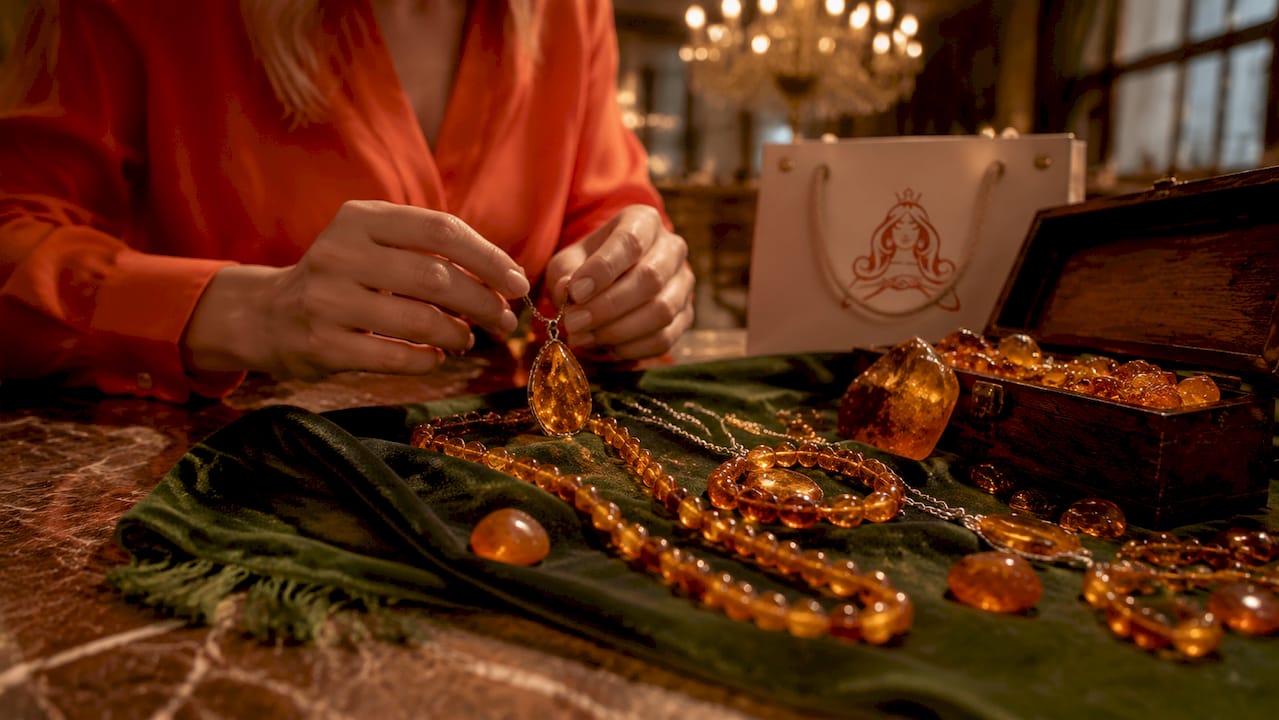
Amber is fossilized tree resin, not a mineral crystal. That distinction matters more than most buyers realize. Because amber formed from organic resin rather than mineral deposits, it behaves very differently from stones like quartz or tourmaline. It is warm to the touch, lightweight, and capable of preserving ancient inclusions such as insects, plant matter, and air bubbles from millions of years ago.
Color, inclusions, and visual appeal
Amber’s color range runs from pale yellow through deep cognac, cherry red, and even rare blue varieties. Insect and plant inclusions increase both the value and the sense of mystery that draws many people to the material. Baltic amber, sourced from the Baltic Sea region, is among the most prized varieties worldwide for its clarity and succinic acid content.
Hardness and what it means for daily wear
Amber rates 2 to 2.5 on the Mohs hardness scale. That places it well below common gemstones like amethyst (7) or sapphire (9). Everyday surfaces, including fabric, countertops, and other jewelry, can scratch amber with minimal force. This softness is the single most important physical fact for anyone buying amber jewelry. It shapes every decision about how to wear, store, and care for the piece.
- Amber is organic, not mineral, so it reacts differently to heat, chemicals, and abrasion
- Colors range from pale yellow to deep cognac, cherry, and rare blue
- Insect inclusions are natural and increase collector value
- The 2–2.5 Mohs rating means scratches accumulate faster than with most gemstones
- Baltic amber from Lithuania contains measurable levels of succinic acid, which drives most wellness claims
Pro Tip: Store amber pieces separately in a soft pouch. Even contact with harder gemstones in the same jewelry box will cloud the surface over time.
If you want to learn more about amber’s physical properties and how they affect jewelry crafting, Baltic Secret’s crafter guide covers the material in practical detail.
How do bioenergy claims about amber actually work?
The central claim behind bioenergy amber jewelry involves succinic acid. Amber, especially Baltic amber, contains succinic acid as a natural component of the resin. Proponents argue that body heat warms the amber against the skin, releasing a small amount of oil that carries succinic acid, which then absorbs transdermally and produces calming or anti-inflammatory effects.
Body heat does warm amber when worn as a necklace or bracelet, and amber does contain succinic acid. The gap in the argument is the absorption step. Clinical evidence for transdermal succinic acid absorption and measurable pain relief from wearing amber is limited and largely unproven. The warming sensation is real. The biological effect on the body remains unverified by controlled research.
“Separating amber’s physical and chemical properties from the wellness or bioenergy claims marketed around them is the most honest service any amber retailer can offer a buyer.”
Common bioenergy claims you will encounter include:
- Succinic acid release from skin contact provides anti-inflammatory effects
- Amber’s electromagnetic properties balance the body’s natural energy field
- Wearing amber reduces stress, improves sleep, or boosts mood
- Amber teething necklaces soothe discomfort in infants
The last claim carries a specific caution. Health organizations warn against amber teething necklaces for infants due to choking and strangulation risks, and the claimed benefits lack clinical backing. For adults wearing amber as a wellness accessory, the risk profile is different, but the evidence gap for specific health outcomes remains the same.
How does amber jewelry compare to other wellness jewelry types?
Amber sits within a broader category of natural wellness jewelry. Understanding where it fits helps you choose with clarity.
| Jewelry type | Material origin | Core wellness claim | Evidence level | Typical form |
|---|---|---|---|---|
| Amber | Fossilized tree resin | Succinic acid release, calming energy | Limited clinical evidence | Necklaces, bracelets, pendants |
| Crystal/gemstone | Mineral crystal | Vibrational energy, chakra alignment | No clinical evidence | Pendants, rings, bracelets |
| Magnetic | Metal alloy with magnets | Improved circulation, pain relief | Mixed, mostly weak evidence | Bracelets, wraps |
| Lava bead | Volcanic basalt | Grounding energy, essential oil diffusion | Anecdotal only | Bracelets, necklaces |
| Copper | Metal | Joint pain relief, anti-inflammatory | Some weak clinical studies | Bracelets, rings |
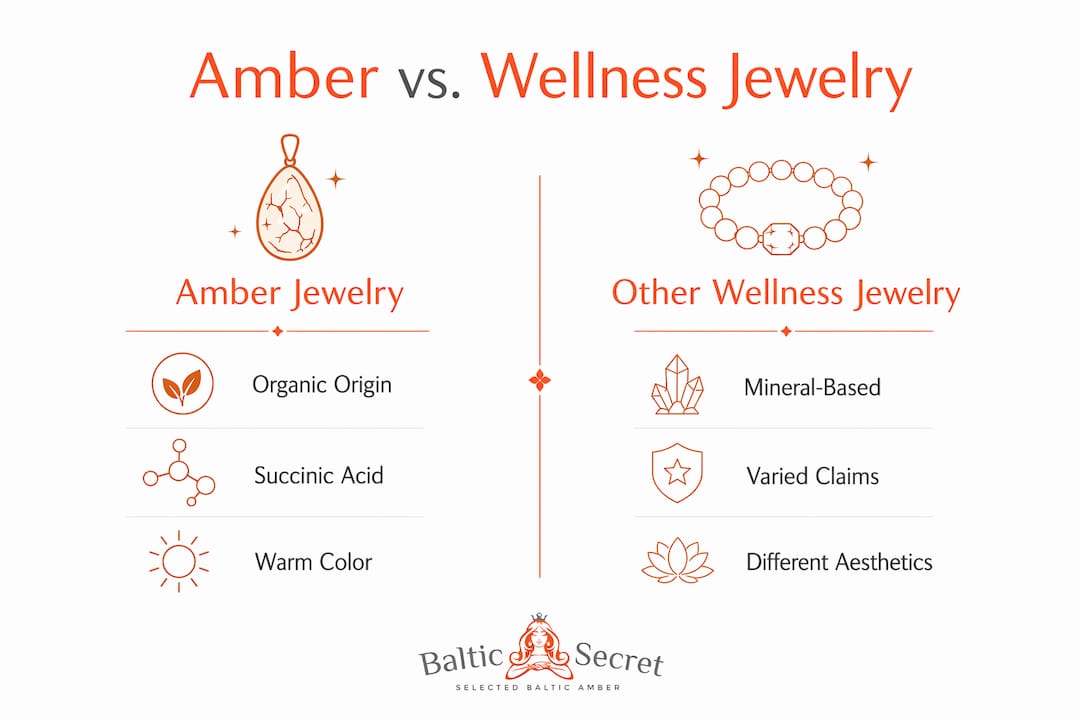
Amber’s advantage over purely mineral wellness jewelry is its organic origin and measurable chemical composition. Succinic acid is a real compound. The debate is about delivery and dosage, not whether the compound exists. That gives amber a more grounded starting point than crystals or lava beads, even if the clinical proof remains thin.
Amber also wins on aesthetics. The warm, translucent color and natural inclusions make each piece visually unique in a way that magnetic bracelets or copper bands cannot match. For buyers who want wellness intent combined with genuine wearable beauty, amber is a stronger choice than most alternatives in this category.
How to select, wear, and care for amber jewelry
Choosing the right amber piece starts with understanding its softness. Necklaces and pendants are the best everyday choices because they avoid the constant abrasion that rings and bracelets face against hard surfaces. A ring set in a protective bezel can work, but it requires deliberate care.
Follow these steps to get the most from your amber jewelry:
- Choose necklaces or pendants for daily wear. They stay off hard surfaces and preserve the stone’s surface far longer than rings or bracelets.
- Clean with a soft, damp cloth only. Avoid ultrasonic cleaners, steam, harsh chemicals, and even standard jewelry cleaning solutions. All of these damage amber.
- Store separately in a soft pouch or lined box. Contact with harder materials clouds and scratches the surface, which reduces both appearance and perceived quality.
- Keep away from prolonged heat and direct sunlight. Amber can crack or discolor with extended UV or heat exposure.
- Set realistic wellness expectations. Wear amber because you value its natural origin, historical significance, and beauty. Treat any calming effect as a welcome bonus rather than a guaranteed outcome.
Pro Tip: If your amber piece develops a cloudy surface from minor scratches, a jeweler can lightly polish it to restore clarity. This is a normal part of owning a soft organic gem.
For a full breakdown of amber types and how to identify authentic pieces, the Baltic Secret guide on butterscotch amber jewelry is a useful reference.
Key Takeaways
Bioenergy amber jewelry is genuine amber marketed with wellness language, and its real value lies in amber’s organic origin, historical depth, and natural beauty rather than in clinically proven health effects.
| Point | Details |
|---|---|
| Bioenergy is a marketing term | The label describes wellness intent, not a distinct material or regulated category. |
| Amber is soft and organic | At 2–2.5 on the Mohs scale, amber scratches easily and needs careful storage and wear habits. |
| Succinic acid claims are real but unproven | Amber contains succinic acid, but transdermal absorption and health benefits lack clinical evidence. |
| Necklaces outperform rings for longevity | Pendants and necklaces avoid abrasion and preserve amber’s surface far better than rings. |
| Authenticity and sourcing matter most | Genuine Baltic amber from verified sources delivers the material properties behind any wellness claim. |
Baltic Secret’s take on bioenergy amber jewelry
We have spent years working directly with Baltic amber from Lithuania, and the honest answer is that amber’s greatest power is its authenticity as a material. Every piece we handle is genuinely millions of years old. That fact alone carries more weight than any marketing label.
The bioenergy framing is not dishonest when used carefully. Amber does contain succinic acid. It does warm against the skin. The folk medicine tradition behind it stretches back thousands of years across cultures that had no commercial incentive to invent benefits. What I push back on is the certainty some sellers attach to specific health outcomes. The warming sensation is pleasant and real. Whether it produces measurable anti-inflammatory effects in the body is a question science has not yet answered cleanly.
What I know from experience is this: people who buy amber for its beauty and natural origin tend to be the most satisfied long-term wearers. People who buy it expecting a specific medical result are more likely to feel let down. The material is extraordinary on its own terms. It does not need inflated claims to justify its place in your collection.
Buy authentic, source carefully, and wear it because it connects you to something genuinely ancient and natural. That is a value proposition that holds up without a single wellness claim attached to it.
— Baltic Secret
Authentic Baltic amber jewelry from Baltic Secret
Baltic Secret carries a full range of genuine Baltic amber pieces sourced directly from Lithuania, with authenticity guaranteed on every item.
The collection covers amber necklaces and bracelets for women, men, and children, along with amber accessories for pets. Every piece is handcrafted from natural amber, with detailed product information on bead size, clasp type, and care instructions. Whether you are drawn to amber for its wellness associations, its visual warmth, or simply its status as one of nature’s most remarkable organic materials, Baltic Secret has a piece built for daily wear and long-term satisfaction. Browse the full collection to find the style and color that fits your life.
FAQ
What does “bioenergy” mean in amber jewelry?
“Bioenergy” is a marketing term applied to amber jewelry to signal a wellness orientation. It is not a regulated category or a scientific classification of the material.
Does amber jewelry actually release succinic acid?
Body heat does warm amber against the skin, and Baltic amber does contain succinic acid. However, clinical evidence for meaningful transdermal absorption and health benefits remains limited.
What is the best type of amber jewelry for everyday wear?
Necklaces and pendants are the best choice for daily wear because amber’s 2–2.5 Mohs hardness makes it prone to scratching from hard surfaces that rings and bracelets contact constantly.
Is amber jewelry safe for children?
Adult amber jewelry worn as a necklace or bracelet is generally safe with normal precautions. Health organizations specifically warn against amber teething necklaces for infants due to choking and strangulation risks.
How do I know if my amber is genuine Baltic amber?
Genuine Baltic amber floats in saturated saltwater, feels warm to the touch, and is lightweight. Purchasing from a verified source like Baltic Secret, which sources directly from Lithuania with authenticity certification, is the most reliable guarantee.