Common Teething Jewelry Mistakes Parents Make

The single most dangerous mistake parents make with teething jewelry is letting a baby wear it unsupervised or during sleep. The American Academy of Pediatrics does not recommend amber teething necklaces for any infant because of documented strangulation and choking risks, and because the pain-relief claims behind them lack scientific support.
The most common errors, at a glance:
- Leaving a necklace on during sleep or nap time
- Assuming knotted beads or breakaway clasps make the jewelry safe
- Believing body heat releases pain-relieving compounds from amber
- Buying counterfeit amber from unverified sellers
The FDA has received reports of death and serious injuries to infants and children, including strangulation and choking, caused by teething jewelry such as amber teething necklaces. — FDA 2018 safety alert, cited by Nationwide Children’s Hospital
Table of Contents
- What are the most common teething jewelry mistakes parents make?
- What safety rules must you follow if you still choose amber jewelry?
- How can you confirm genuine Baltic amber before buying?
- What do pediatricians recommend instead of teething jewelry?
- How should you inspect and care for amber teething jewelry?
- Key Takeaways
- Baltic Secret’s commitment to safety and authenticity
- Authentic amber teething jewelry from Baltic Secret
- Authoritative sources for further reading
What are the most common teething jewelry mistakes parents make?
Parents usually reach for amber teething necklaces out of desperation, not carelessness. But several specific errors turn a well-intentioned purchase into a genuine hazard.
-
Wearing the necklace during sleep. A necklace can tighten around a baby’s neck during rolling or repositioning. Suffocation is the leading cause of death for children under one year old, and the AAP advises that infants should not wear any jewelry for exactly this reason.
-
Assuming knotted beads prevent choking. Individual knots between beads are meant to keep beads separated if the cord snaps. They do not. If the cord breaks, each bead is still small enough to be aspirated, and bead size itself is the real variable. Knots reduce scatter; they do not eliminate the choking hazard.
-
Trusting breakaway clasps as a strangulation safeguard. Clinical evaluations show that safety clasps often fail under real tensile loads. A clasp that works in a controlled pull test may not release during an actual entanglement. Relying on it creates a false sense of security.
-
Believing the succinic acid pain-relief claim. Retailers say body heat releases succinic acid from amber to numb sore gums. Texas Children’s Hospital explains that releasing active compounds from amber requires temperatures far above what human skin produces. There is no plausible physical mechanism, and no clinical evidence backs the claim.
-
Using homeopathic teething tablets. Some parents swap necklaces for homeopathic tablets, assuming “natural” means safe. Mayo Clinic warns that certain homeopathic tablets have been found to contain undeclared or excessive belladonna, which can cause seizures and respiratory distress.
-
Buying counterfeit amber. Fake amber made from plastic or copal resin is common online. It carries the same physical hazards as genuine amber with zero of the claimed properties, and low-quality cords and clasps on counterfeits fail faster.
Pediatric experts note that parents often choose teething jewelry out of desperation, but the products add risks without proven therapeutic benefit. Simple measures are safer and effective. — HealthyChildren.org
What safety rules must you follow if you still choose amber jewelry?
If you decide to use amber teething jewelry despite the guidance above, these rules are non-negotiable.
- Remove it for every sleep period, including naps. No exceptions.
- Never leave the child unattended while wearing any piece, even for a minute.
- Keep it off during car seat, stroller, and high chair use, where cords can catch on buckles or straps.
- Inspect the piece before each use — cord tension, bead condition, clasp function.
- Do not let the baby mouth the necklace. If you want a chewable option, a wrist or ankle bracelet worn only under direct supervision reduces neck risk, though choking risk from loose beads remains.
For sizing, the teething necklace size guide from Baltic Secret covers how to check fit by length and bead size for different ages. A necklace that fits snugly enough not to catch on objects but loosely enough not to constrict is the target, though no fit eliminates strangulation risk entirely.
Pro Tip: Do not assume a breakaway clasp will save your child. Clinical testing shows these mechanisms sometimes fail under real-world tensile loads. Supervision, not hardware, is the actual safeguard.
Bracelets and anklets carry lower neck-strangulation risk than necklaces, but the choking hazard from a broken cord remains identical. The bracelet vs. necklace safety comparison on Baltic Secret’s blog walks through the practical tradeoffs between the two formats.
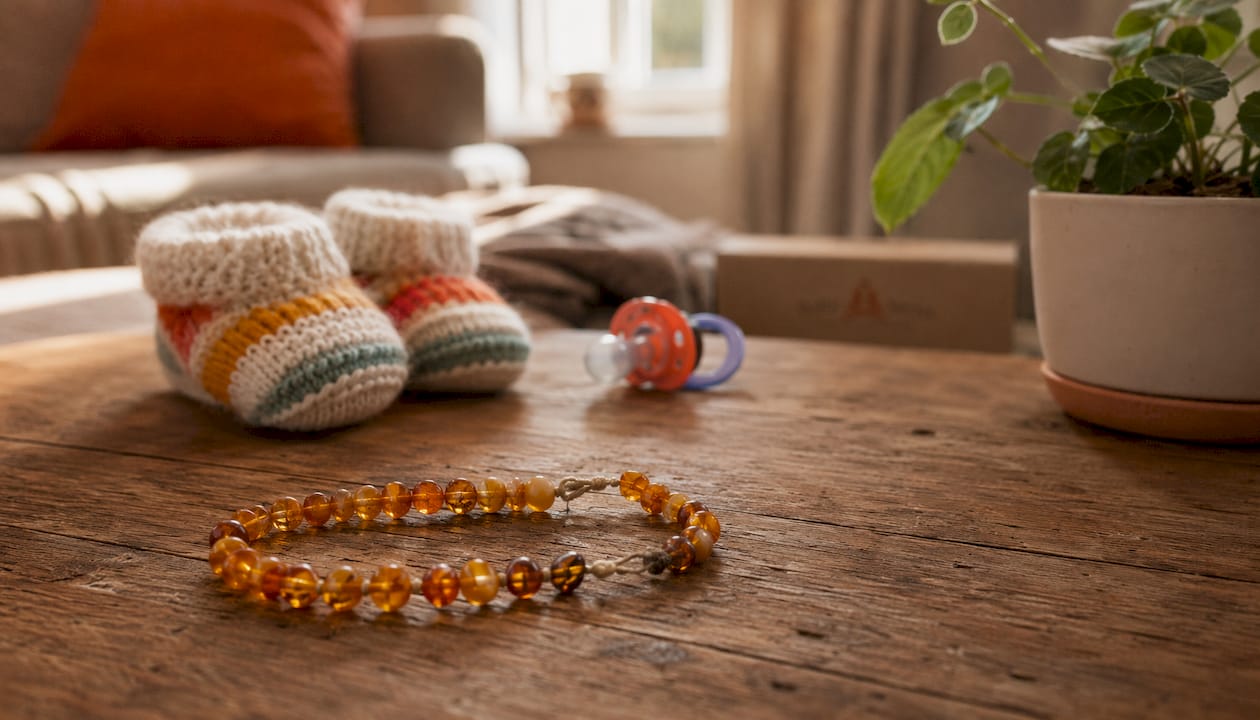
How can you confirm genuine Baltic amber before buying?
Counterfeit amber is widespread, and a fake piece offers no claimed benefit while still carrying every physical hazard of the real thing. Here is what to check.
- Ask for origin documentation. Genuine Baltic amber comes from Lithuania, Latvia, or the Kaliningrad region. A reputable seller can name the source.
- Request a certificate of authenticity or lab verification. Reputable sellers provide this; anonymous marketplace listings rarely do.
- Check bead knotting and cord material. Each bead should be individually knotted on a child-safe cord. Inspect photos closely before purchasing.
- Verify clasp type. A screw-barrel or pop-clasp designed for child jewelry is standard on quality pieces. Avoid standard lobster-claw clasps not rated for child use.
- Ignore the “warm to touch” test. Genuine amber does feel slightly warm compared to glass, but this test is easy to fake with plastic resin and tells you nothing about succinic acid content.
- Check return and replacement policy. A seller confident in their product offers a clear return window.
Baltic Secret sources amber directly from Lithuania and lists bead size, cord type, clasp details, and sizing options on each product page, giving parents the specific information needed to make an informed decision.
What do pediatricians recommend instead of teething jewelry?
The safest first-line options require no jewelry at all. Chilled silicone or rubber teethers, chilled washcloths, and gentle gum massage are the options pediatric sources consistently recommend. They address the actual discomfort without adding a strangulation or choking hazard.
- Chilled (not frozen) silicone or rubber teether — cold reduces gum inflammation; silicone is durable and easy to clean.
- Chilled damp washcloth — a twisted, knotted washcloth from the refrigerator gives babies something to gnaw on safely.
- Gentle gum massage with a clean fingertip, which also helps you feel where teeth are emerging.
- Age-appropriate chilled food for infants already eating solids, under supervision.
Consumer-safety guides and parenting sources consistently point to teethers designed and tested for infant mouthing as the standard recommendation.
Two options to avoid entirely: benzocaine-containing gels and homeopathic teething tablets. The FDA warns that benzocaine can cause methemoglobinemia, a serious blood-oxygen condition, in infants. And as noted above, some homeopathic tablets have contained dangerous levels of belladonna.
Numbing gels or creams that contain benzocaine are not recommended for infants. — Nationwide Children’s Hospital, citing FDA guidance
Contact your pediatrician if your child shows a high fever, signs of dehydration, difficulty breathing, or symptoms that go beyond typical teething fussiness.
How should you inspect and care for amber teething jewelry?
Daily inspection takes about thirty seconds and catches problems before they become hazards.
- Cord tension: tug gently on the cord between two beads. Any slack or fraying means the piece needs to be retired.
- Bead condition: look for micro-cracks, chips, or unusual discoloration. A cracked bead can splinter.
- Clasp function: open and close the clasp. If it sticks, releases too easily, or shows corrosion, replace the piece.
- Smell and stickiness: a sour smell or tacky surface can indicate mold or material breakdown.
For cleaning, wipe amber beads with a soft damp cloth. Avoid soap with harsh detergents, boiling water, ultrasonic cleaners, and chemical jewelry cleaners — all of these degrade natural amber and weaken cord fibers. Store the piece away from direct sunlight when not in use.
Retire any piece immediately if you find cracked beads, loosening knots, a damaged clasp, or any sign of mold. Do not attempt to re-knot or repair a child’s teething necklace yourself.
Key Takeaways
Avoiding the most serious teething jewelry mistakes comes down to one rule: never let a baby wear any necklace unsupervised or during sleep, and verify authenticity and condition before every use.
| Point | Details |
|---|---|
| Remove for sleep | Never leave any teething necklace on during sleep or naps — strangulation risk is highest then. |
| Clasps are not reliable | Clinical evaluations show breakaway clasps can fail under real tensile loads; supervision is the only true safeguard. |
| Succinic acid claim is unsupported | Body heat cannot release active compounds from amber; the analgesic mechanism has no scientific basis. |
| Prefer chilled silicone teethers | Pediatric sources consistently recommend chilled rubber or silicone teethers and gum massage as first-line options. |
| Baltic Secret | Offers handcrafted amber teething pieces sourced from Lithuania with sizing, knotting, and clasp details listed per product. |
Baltic Secret’s commitment to safety and authenticity
At Baltic Secret, we take the AAP and FDA guidance seriously. We publish it plainly on our product pages rather than burying it in fine print. Every amber teething piece we sell is sourced directly from Lithuania, individually knotted, and described with specific bead sizes, cord type, and clasp details so parents can make an informed choice. We do not overstate what amber can do. The therapeutic properties of Baltic amber are a subject of ongoing interest, but we are not a substitute for your pediatrician, and we say so.
Our goal is to give parents who choose amber jewelry the most accurate product information available, including sizing guidance and care instructions, so that if you decide to use one of our pieces, you are doing so with clear eyes. For any medical concern about your child’s teething symptoms, please consult a clinician.
Authentic amber teething jewelry from Baltic Secret
Parents who have weighed the guidance and still want a genuine amber piece deserve a seller who is transparent about what the product is and what it is not.
Baltic Secret’s Premium Amber Teething Necklace & Bracelet is handcrafted from certified Lithuanian amber, with each bead individually knotted on a child-safe cord and fitted with a tested clasp. Product pages list bead size, necklace length, and clasp type so you can match the piece to your child’s age and size before ordering. A clear return policy backs every purchase.
Key features to verify on any amber teething product page before buying:
- Amber origin (Lithuania or Baltic region, with documentation)
- Individual bead knotting on a child-rated cord
- Clasp type and child-safety rating
- Available sizes with age guidance
- Cleaning and care instructions
Browse the full children’s collection at Baltic Secret’s U.S. store or contact customer support directly with sizing questions before you order.
Authoritative sources for further reading
The AAP does not recommend amber teething necklaces because of strangulation and choking risk, and because the therapeutic claims are not supported by evidence. — HealthyChildren.org (American Academy of Pediatrics)
- HealthyChildren.org — Teething Necklaces and Beads: A Caution for Parents: The AAP’s primary statement on amber teething necklaces, covering strangulation risk, choking hazard, and the lack of evidence for succinic acid claims.
- Nationwide Children’s Hospital — Dangers of Amber Teething Necklaces: Detailed clinical explanation of the FDA 2018 safety alert and safer teething alternatives.
- Mayo Clinic — Teething: Tips for Soothing Sore Gums: Covers homeopathic tablet risks (belladonna), benzocaine warnings, and evidence-based soothing methods.
- WebMD — Teething in Babies: Symptoms and Remedies: Practical overview of safe teething remedies, including chilled teethers and gum massage.
- Texas Children’s Hospital — Warning Against Teething Necklaces: Explains why body heat cannot release succinic acid from amber at levels sufficient for pain relief.
- PMC Clinical Report — Safety Clasp Evaluation: Peer-reviewed evaluation of breakaway clasp performance under real-world tensile conditions.
This article is general information, not medical advice. Consult your child’s pediatrician or a qualified clinician for guidance specific to your child’s situation, and check current FDA and AAP recommendations directly.