Infant Bracelet Size Guide: Measurements, Safety & Fit

Infant bracelet size is the wrist circumference measurement that determines a safe, comfortable fit for your baby’s delicate wrist. Getting this number right matters more than most parents realize. A bracelet that sits too tight restricts circulation and causes skin irritation. One that’s too loose can slip over the hand, snag on fabric, or become a choking hazard. Whether you’re buying a keepsake, a gift, or a piece of amber jewelry, understanding proper sizing is the first step toward choosing something your baby can actually wear safely.
What are typical infant bracelet sizes by age?
Newborn wrist circumference typically measures between 4.0 and 4.5 inches (10.5 to 11.5 cm), while infants aged 6 to 12 months generally require 4.5 to 4.9 inches (11.5 to 12.5 cm). These figures come from 2026 industry sizing data and represent averages across healthy birth weights. Individual variation is real, so treat these numbers as a starting point rather than a guarantee.
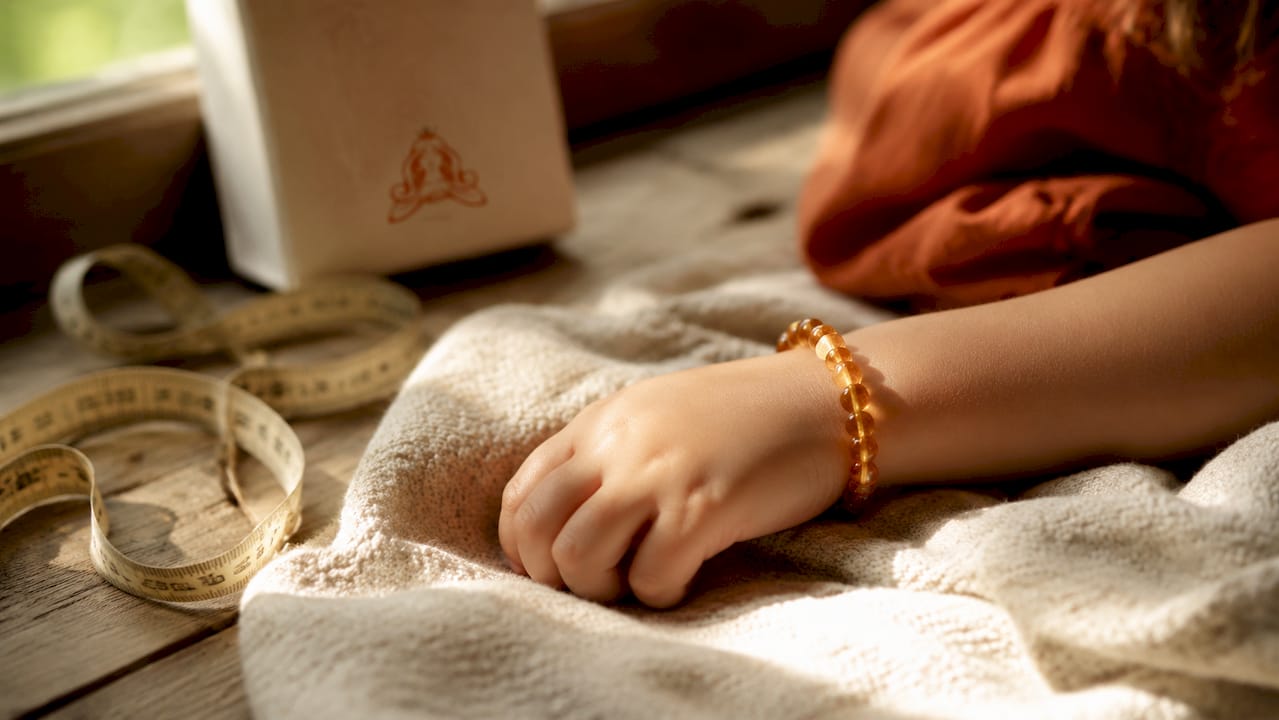
The table below gives you a practical baby bracelet sizing chart to reference when shopping or ordering online.
| Age range | Average wrist size | Recommended bracelet length |
|---|---|---|
| 0 to 3 months | 4.0 to 4.2 in (10.5 to 10.7 cm) | 4.3 to 4.5 in (11.0 to 11.5 cm) |
| 3 to 6 months | 4.2 to 4.5 in (10.7 to 11.5 cm) | 4.5 to 4.8 in (11.5 to 12.2 cm) |
| 6 to 12 months | 4.5 to 4.9 in (11.5 to 12.5 cm) | 4.8 to 5.2 in (12.2 to 13.2 cm) |
| 12 to 24 months | 4.9 to 5.2 in (12.5 to 13.2 cm) | 5.2 to 5.5 in (13.2 to 14.0 cm) |
Bracelet length recommendations already include a small comfort allowance above the raw wrist measurement. Infants grow fast. A newborn who fits a 4.3-inch bracelet in January may need a 4.7-inch fit by April. This is why many jewelry specialists and parents alike favor adjustable designs over fixed-length pieces for this age group.
Pro Tip: If you know your baby’s birth weight was above average, size up by one bracket from the start. Larger babies consistently measure wider at the wrist than standard charts predict.
How to measure your infant’s wrist for the right fit
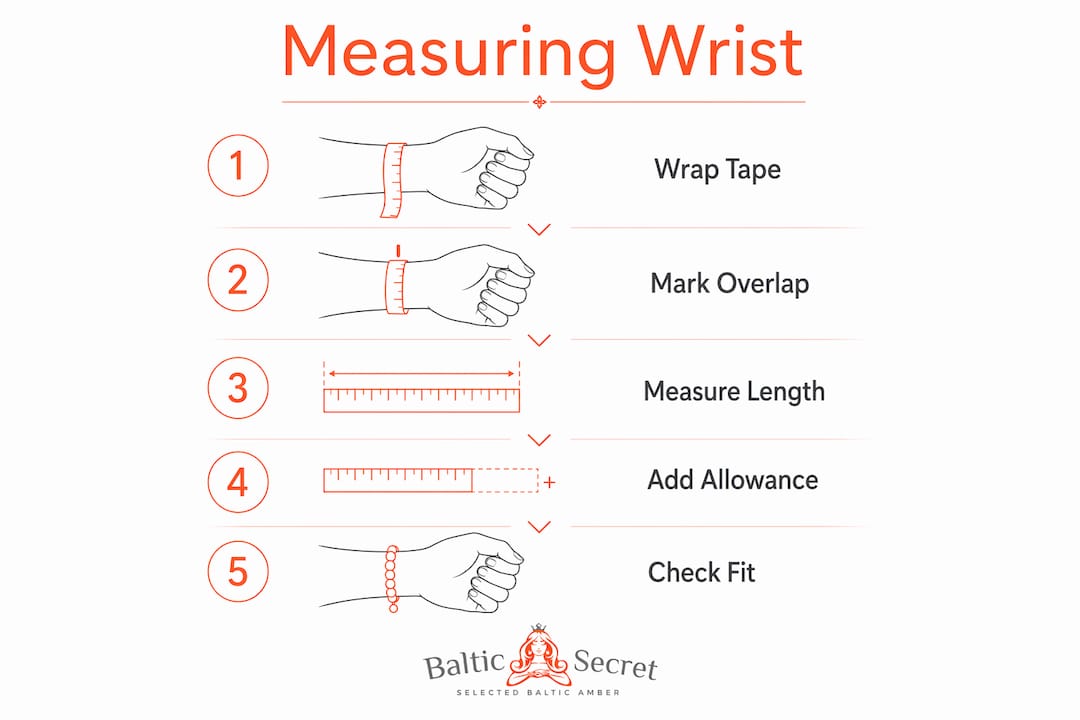
Accurate newborn bracelet measurements start with the right tools and a calm baby. Follow these steps to get a reliable reading before you buy.
- Gather your materials. Use a soft fabric measuring tape or cut a thin strip of paper. A rigid ruler alone will not conform to a round wrist and will give you an inaccurate result.
- Choose the right moment. Measure when your baby is relaxed, ideally after a feeding. A crying or flailing infant will flex their wrist muscles, adding up to 0.2 inches to the reading.
- Wrap snugly, not tightly. Place the tape around the widest part of your baby’s wrist, just below the wrist bone. The tape should lie flat against the skin without compressing it.
- Record the measurement. Note the circumference in inches or centimeters. Take two readings and average them if they differ slightly.
- Add the comfort allowance. Add 0.3 to 0.5 inches to your raw measurement. For infants specifically, stay at the lower end of that range, around 0.3 inches, to prevent the bracelet from slipping over the hand or catching on clothing.
The most common mistake parents make is skipping step five entirely. A bracelet cut to the exact wrist measurement will feel tight the moment your baby bends their wrist. The allowance is not optional. It’s the difference between a bracelet your baby tolerates and one they wear comfortably all day.
Pro Tip: If you only have a piece of string, wrap it around the wrist, mark the overlap point with a pen, then lay it flat against a ruler. This method is accurate to within 1 to 2 millimeters and works perfectly when a measuring tape is not available.
Adjustable bracelets for infants are the safest choice when you want to accommodate rapid growth without remeasuring every few weeks. Sliding knot cords and extender chains both allow you to fine-tune the fit as your baby develops.
What are the key comfort and safety considerations in infant bracelet sizing?
Sizing is only half the equation. The physical design of the bracelet determines whether a correctly sized piece is actually safe and comfortable for daily wear.
- Weight. The ideal infant bracelet weighs approximately 2 grams. At this weight, babies are unaware of the bracelet during normal activity. Components heavier than 3 to 5 grams or beads larger than 2.5 mm can cause stiffness and restrict natural wrist movement.
- Bead and clasp size. Clasps add concentrated weight at one point on the wrist. Heavy clasps pull the bracelet out of position and create a pressure point. Choose designs where the clasp weight is minimal or integrated into the overall bracelet structure.
- Surface finish. Smooth finishes and rounded edges are non-negotiable for infant skin. Sharp edges, textured metal links, or large spacer beads all create friction points that irritate sensitive skin within hours of wear.
- Corded versus rigid designs. Corded bracelets reduce skin irritation and minimize catching risks compared to rigid bangles. For active infants, a soft cord design is the practical choice for daily wear.
“A bracelet that fits perfectly on paper can still cause problems if it’s too heavy or too rigid. Weight and flexibility matter as much as circumference when you’re dressing a baby.”
The two failure modes to avoid are opposite extremes. A bracelet that’s too tight leaves red marks and restricts blood flow. One that’s too loose rotates constantly, catches on fabric, and can work its way over the hand entirely. Both scenarios are preventable with accurate measurement and appropriate design selection.
How to choose the right size when buying as a gift
Buying an infant bracelet as a gift without knowing the exact wrist measurement is one of the most common sizing challenges parents and gift-givers face. Age-based sizing charts are reliable estimates when you have no other information, but they carry real margin for error given how much infant wrist size varies by body weight and growth rate.
Always size slightly larger rather than smaller when you are uncertain. A bracelet that’s a fraction too large can be adjusted or temporarily worn on the ankle. One that’s too tight cannot be worn at all until the baby grows into it, which could take months.
Pro Tip: Ask the retailer whether professional resizing is available before you purchase. Many jewelers who work with infant pieces offer this service at low or no cost, which makes a fixed-size bracelet a safer gift choice than it would otherwise be.
What materials and styles work best for infant bracelets?
Material selection directly affects how a correctly sized bracelet performs against your baby’s skin during daily wear. The wrong material on a well-fitted bracelet still causes problems.
- Hypoallergenic metals. Sterling silver and 14-karat gold are the most widely used metals for infant jewelry. Both are low-reactivity and well-tolerated by most babies. Avoid nickel-containing alloys, which are a leading cause of contact dermatitis in infants.
- Natural materials. Authentic Baltic amber beads are lightweight, warm to the touch, and non-reactive against skin. Amber jewelry designed for infants, such as the amber teething bracelet options from Baltic Secret, combines natural material benefits with infant-specific sizing and safety construction.
- Corded designs. Waxed cotton, nylon, and silk cords are softer against skin than metal links and flex naturally with wrist movement. They also weigh almost nothing, keeping the total bracelet weight well within the 2-gram comfort standard.
- Personalized charms. Small engraved discs or single-charm pendants add meaning without adding significant weight. Keep charm diameter under 10 mm and confirm the charm has no sharp stamped edges before purchasing.
- Cleaning and maintenance. Wipe metal and amber bracelets with a damp cloth weekly. Avoid submerging corded bracelets in water, as prolonged moisture weakens the cord fibers and shortens the bracelet’s lifespan. Inspect clasps and knots monthly for wear.
Infant skin is thinner and more reactive than adult skin, which means material quality matters more here than in almost any other jewelry category. A bracelet made from authentic, certified materials with a smooth finish is not a luxury. It’s a baseline requirement for safe daily wear.
Key takeaways
Accurate infant wrist measurement combined with the right bracelet design is the single most reliable way to achieve a safe, comfortable fit for your baby.
| Point | Details |
|---|---|
| Standard newborn wrist size | Newborns measure 4.0 to 4.5 inches; use this as your baseline before adding allowance. |
| Always add a comfort allowance | Add 0.3 inches for infants to prevent tightness without risking slippage. |
| Weight is a safety factor | Keep total bracelet weight at or below 2 grams to avoid restricting movement. |
| Adjustable designs reduce risk | Sliding knot cords and extender chains accommodate growth without remeasuring. |
| Material quality is non-negotiable | Use hypoallergenic metals or natural materials like Baltic amber for sensitive infant skin. |
Why I always recommend measuring first, then shopping
I’ve seen parents spend real money on beautiful infant bracelets that never get worn because the sizing was off by a quarter inch. The bracelet sits in a drawer, too tight to put on safely, and the moment passes. That outcome is entirely avoidable.
The part that surprises most parents is how fast infant wrist size changes. Babies lose their wrist chub quickly, and a bracelet that fit at two months can feel loose by four months. This is not a flaw in the bracelet. It’s just infant physiology. The practical response is to choose adjustable designs from the start, or to buy with the understanding that resizing may be needed within a few months.
My honest recommendation is to skip rigid bangles entirely for infants under 12 months. They look beautiful in photos, but they rotate constantly on small wrists, concentrate weight unevenly, and offer no adjustment range. A well-made corded bracelet with a sliding knot gives you the same visual impact with far better wearability.
The 2-gram weight standard is the single most underused piece of guidance in infant jewelry shopping. Most parents focus entirely on size and material, then overlook the fact that a bracelet weighing 6 or 7 grams will feel heavy and distracting to a baby who weighs 12 pounds. Weight matters. Check it before you buy.
Style trends come and go, but a bracelet your baby actually wears comfortably is always the right choice. Measure first, prioritize adjustability, and let safety lead every decision.
— Baltic Secret
Discover Baltic Secret’s infant amber bracelets
Baltic Secret offers a curated collection of infant bracelets built around the sizing and safety principles covered in this guide. Every piece uses authentic Baltic amber sourced directly from Lithuania, kept lightweight to meet the 2-gram comfort standard, and designed with smooth finishes suited to sensitive baby skin.

The premium amber children’s bracelet collection features adjustable sizing options with clear length specifications on every product page, so you can match your measured wrist circumference directly to the right piece. For parents who want a trusted starting point, the full amber jewelry range at Baltic Secret includes detailed sizing guides and expert support to help you choose with confidence. Natural materials, honest sizing, and infant-first design in every piece.
FAQ
What is the standard infant bracelet size for a newborn?
The standard newborn bracelet size is 4.3 to 4.5 inches (11.0 to 11.5 cm), based on an average newborn wrist circumference of 4.0 to 4.5 inches plus a 0.3-inch comfort allowance. Always measure your individual baby before ordering, as birth weight significantly affects wrist size.
How do I measure my baby’s wrist for a bracelet?
Wrap a soft tape or paper strip around the widest part of your baby’s wrist, record the circumference, then add 0.3 inches for infants to get the correct bracelet length. Take the measurement when your baby is calm and relaxed for the most accurate result.
Are adjustable bracelets safe for infants?
Adjustable bracelets with sliding knot cords or extender chains are generally the safest option for infants because they accommodate rapid wrist growth and allow precise fit adjustment. Confirm that the adjustment mechanism has no sharp edges and that the cord material is durable and non-toxic.
How heavy should an infant bracelet be?
An infant bracelet should weigh approximately 2 grams. Pieces heavier than 3 to 5 grams can restrict wrist movement and cause discomfort during daily activity, making weight one of the most important factors to check alongside size.
What materials are safest for infant bracelets?
Sterling silver, 14-karat gold, and natural Baltic amber are the safest and most widely recommended materials for infant bracelets. Avoid any alloy containing nickel, as nickel is a common cause of skin reactions in babies with sensitive skin.
Recommended
- Premium Amber Teething Necklace & Bracelet for Babies / Polished / Mul – Baltic Secret
- Baltic Amber Teething Necklace Baby & Children | Balticsecret – Baltic Secret
- Amber Teething Necklace & Bracelet For Children / Extra Safe & Authent – Baltic Secret
- RAW AMBER NECKLACE & BRACELET FOR CHILDREN / HONEY COLOUR / SAFE & EFF – Baltic Secret