Amber Pet Collar Types: A Complete Buyer's Guide

Amber pet collars fall into four main categories: raw chip collars (irregular, unpolished pieces knotted on cord), polished bead collars (smooth, round or oval beads with a finished surface), mixed chip-and-bead styles, and beads-on-strap designs (amber beads mounted on leather or nylon). For owners who want genuine Baltic amber with documented sourcing and real safety features, Baltic Secret’s raw and polished options are the recommended starting point.
Before going further, one thing needs to be said plainly:
- Raw chip collars: irregular texture, maximum surface area, preferred by owners who prioritize the repellent theory
- Polished bead collars: smooth finish, cleaner look, slightly easier to clean
- Mixed styles: combine chip and round beads for varied texture and aesthetics
- Beads-on-strap: amber beads threaded onto or sewn onto leather or nylon, often with a traditional buckle clasp
- Amber collars are a chemical-free supplement, not a proven replacement for vet-prescribed flea and tick prevention, especially for pets in high-exposure environments
Key Takeaways
Amber pet collars are a chemical-free supplement with real construction differences that affect safety, durability, and fit — choosing the right type and sourcing from a verified Baltic amber brand are the two decisions that matter most.
| Point | Details |
|---|---|
| Four main collar types | Raw chip, polished bead, mixed styles, and beads-on-strap each differ in texture, fit, and claimed repellent effect. |
| Breakaway clasps for cats | Non-breakaway clasps on cat collars are a safety hazard; always confirm breakaway before buying. |
| Evidence is limited | No controlled clinical trial has proven consistent flea or tick repellency; amber works best as a supplement to vet-prescribed prevention. |
| Replace periodically as needed | Replace when cord frays, knots loosen, or raw beads become smooth; clean with mild soap and air-dry only. |
| Baltic Secret | Sourced from Lithuania with authenticity certificates, raw and polished options, and cat-safe breakaway clasps available. |
Table of Contents
- What are the main types of amber pet collars?
- How amber collars are made: stringing, straps, and clasps
- How is amber supposed to repel fleas and ticks?
- What do vets and the evidence actually say?
- Safety checklist: choking, chewing, and red flags
- How to measure your pet and choose the right size
- How long do amber collars last, and when should you replace them?
- What to look for when buying an amber collar
- Why Baltic Secret stands out for authentic amber collars
- A practical note on amber collars worth saying plainly
- Baltic Secret’s amber pet collars: where to start
- Sources
What are the main types of amber pet collars?
The style of an amber collar affects texture, durability, claimed effectiveness, and how it fits your pet’s neck. Here is what each type actually looks like in practice.
Raw chip collars
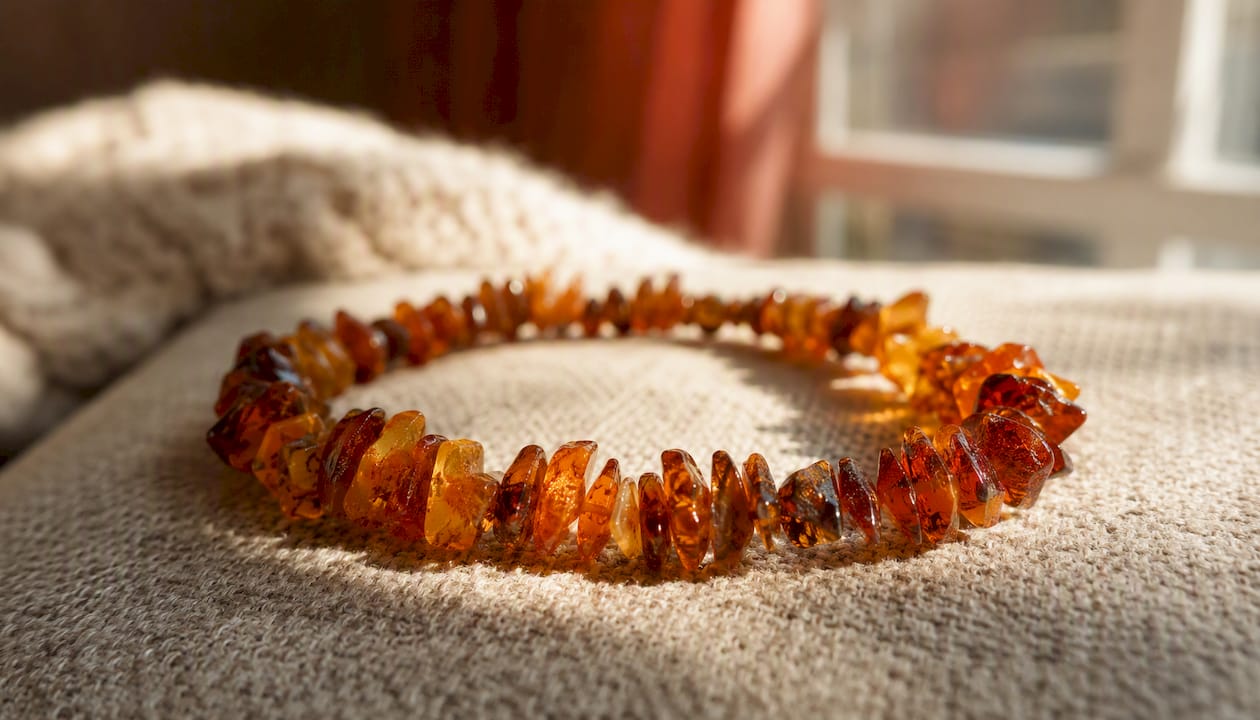
Raw chip collars use unpolished, irregular amber pieces, each one slightly different in shape and size. The surface is rough and resinous, which vendors claim maximizes the electrostatic effect against parasites. Most are strung on knotted cord with individual knots between each piece, so if the cord breaks, you lose one chip rather than the whole collar. The look is earthy and natural, which appeals to owners who want something that reads as genuinely unprocessed. Baltic Secret’s raw vs. polished comparison confirms that raw amber is the preferred choice among buyers focused on the repellent claim, while polished options are favored for aesthetics.
Polished bead collars
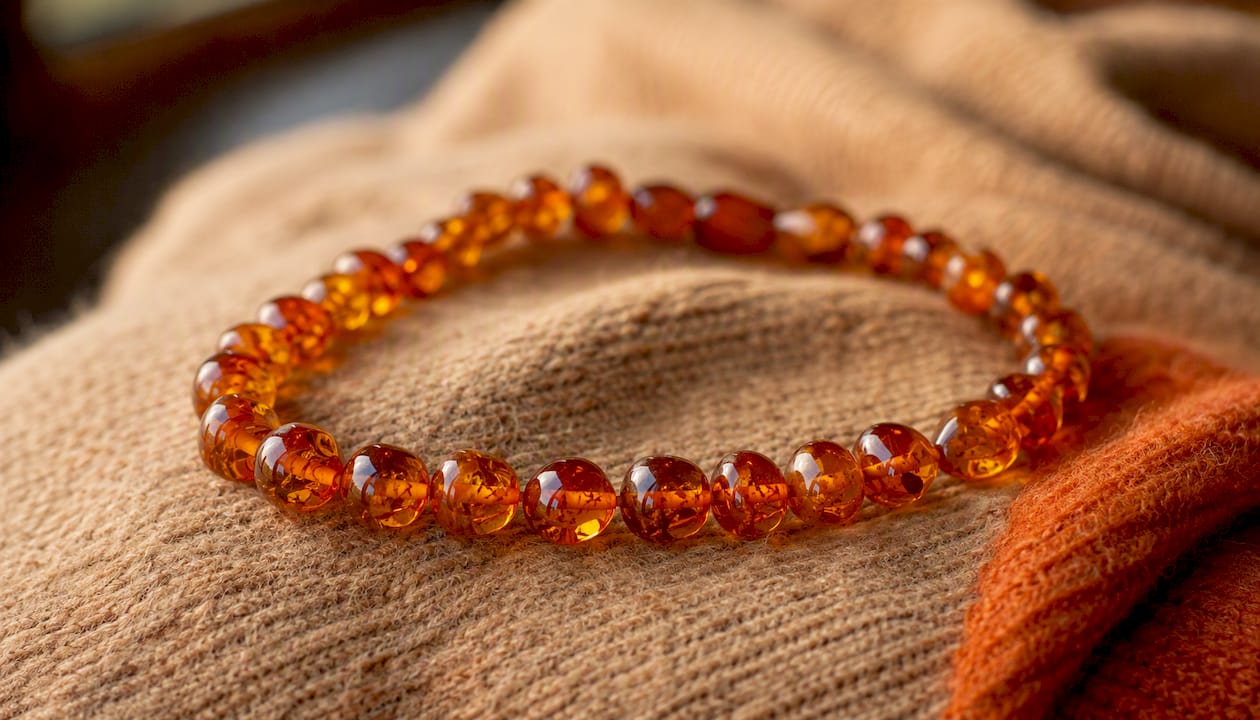
Polished beads are tumbled and finished to a smooth, glassy surface. They come in round or oval shapes and are far more uniform in appearance than chips. The trade-off: a smoother surface theoretically generates less friction against fur, which is relevant if you believe the electrostatic theory. On the practical side, polished beads are easier to wipe clean and tend to hold their color longer. Many owners with cats or small dogs prefer them because the lighter, more refined look suits a smaller animal.
Mixed styles and color varieties
Some collars combine chip-cut and round beads in alternating patterns. Color is a real variable here. Baltic amber comes in honey (golden yellow), cognac (warm brown-orange), cherry (deep reddish), and occasionally green or milky white. Vendors sometimes claim darker or raw amber contains higher concentrations of succinic acid, though no clinical data confirms this matters for parasite repellency. What color choice actually affects is aesthetics and how the collar photographs against your pet’s coat.
Beads-on-strap designs
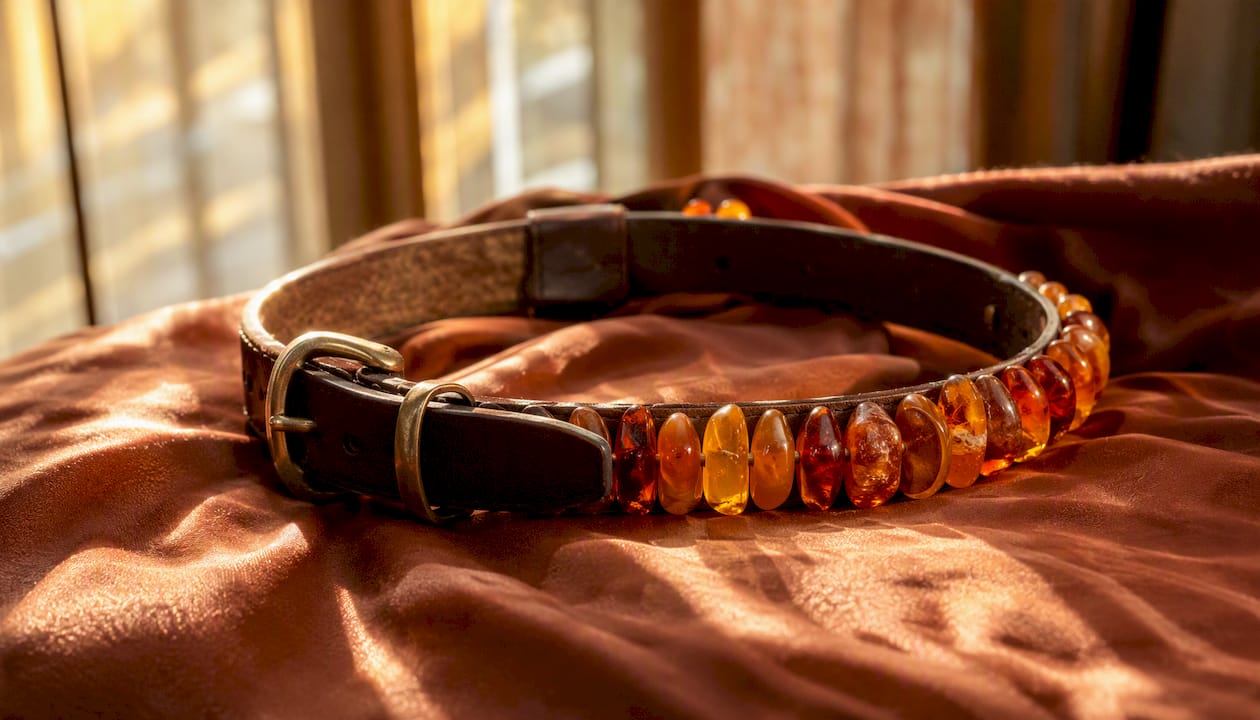
Instead of a full-bead slip-on necklace, these collars thread amber beads onto a leather or nylon strap with a traditional buckle or barrel clasp. The strap adds adjustability and makes sizing easier, particularly for dogs with thick necks or unusual proportions. The amber coverage is typically less dense than a full-bead collar, but the fit is more predictable. For dogs who already wear a standard collar, a beads-on-strap style can sit alongside it without bulk.
Pro Tip: When shopping, zoom into product photos and look for individual knots between each bead or chip. A collar without inter-bead knots is a single-point-of-failure product — one break and every bead scatters.
How amber collars are made: stringing, straps, and clasps
Construction quality separates a collar that lasts a year from one that falls apart in a month.
- Knotted cord stringing: the gold standard for bead collars. A knot between each bead means a break loses one bead, not all of them. Look for this in any product description.
- Unknotted cord: cheaper to produce, higher risk. If the cord snaps, every bead is loose near your pet.
- Glued beads: a red flag. Adhesive residue can irritate skin, and glued beads cannot be restrung. Avoid any listing that does not specify the stringing method.
- Leather strap with knotted beads: durable and adjustable, but leather needs conditioning to avoid cracking. Good for medium to large dogs.
- Nylon or elastic band: lighter and water-resistant, but elastic degrades faster than cord or leather. Check that the elastic is not the only thing holding beads in place.
- Barrel clasps: standard for dog collars, easy to open and close, but not safe for cats.
- Breakaway clasps: designed to release under pressure. For cats, this is non-negotiable. A cat that snags its collar on a branch or fence can strangle on a non-breakaway design. Baltic Secret’s educational content on collar safety explicitly flags breakaway clasps as a decisive safety feature for cat-specific listings.
Bead size and weight also matter. A collar with large, heavy beads on a small cat or toy breed creates unnecessary neck strain. Smaller beads on lighter cord are the right call for anything under roughly 10 pounds.
How is amber supposed to repel fleas and ticks?
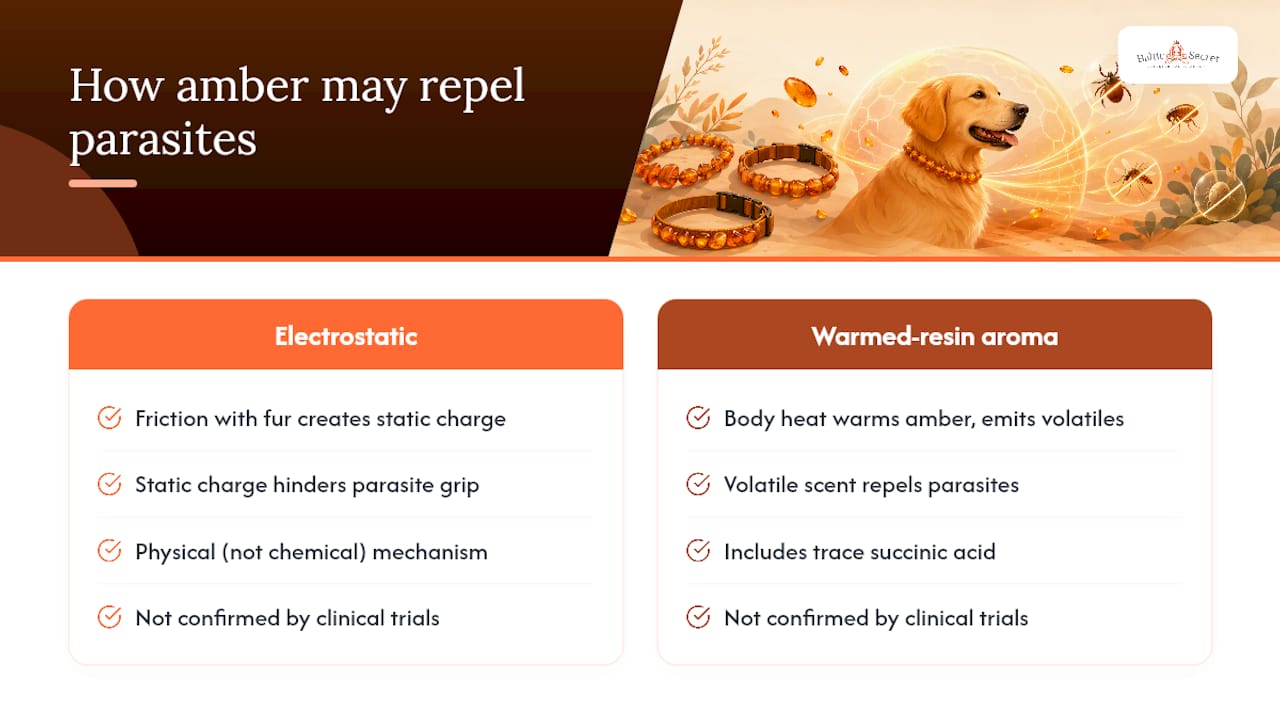
Two main theories circulate among vendors and enthusiasts. Neither has been confirmed by controlled clinical trials.
The first is the electrostatic theory: amber rubbing against fur generates a static charge that makes it difficult for ticks and fleas to grip the hair shaft. The second is the warmed-resin aroma theory: body heat warms the amber, releasing trace volatile compounds, including succinic acid, that create a scent parasites find unattractive. Some vendors also point to the general resinous smell of Baltic amber as a natural deterrent.
Anecdotal reports vary widely, and that variation makes sense. A dog that spends weekends in tall grass in the Northeast is in a completely different risk environment than an indoor cat in an apartment. Concurrent pest-control measures, grooming habits, and even the pet’s coat type all influence whether an owner notices fewer ticks, regardless of what the collar is doing.
What do vets and the evidence actually say?
The honest answer is that the evidence for amber collars is thin. Investigative reporting and veterinary commentary consistently caution that amber collars should not replace vet-recommended parasite prevention, particularly for pets in tick-prone or flea-prone environments.
That said, not every situation carries the same risk level. Here is a practical framework:
- Low-risk, indoor-primary pets: an amber collar as a chemical-free supplement is a reasonable, low-stakes choice when combined with regular grooming checks and a clean home environment.
- Outdoor dogs in tick-endemic areas: amber alone is not adequate. Lyme disease, Rocky Mountain spotted fever, and ehrlichiosis are real risks. Use vet-prescribed prevention as the primary layer.
- Cats with outdoor access: same principle. Flea infestations in cats can escalate quickly. A breakaway amber collar may be worn alongside, not instead of, vet-recommended treatment.
- Pets with flea allergy dermatitis: do not rely on amber. One flea bite triggers a reaction. This is a situation for proven pharmaceutical prevention.
The American Veterinary Medical Association (AVMA) recommends discussing parasite prevention with your vet based on your pet’s specific lifestyle and geographic risk. That conversation should happen before you decide whether amber is appropriate as a supplement.
Safety checklist: choking, chewing, and red flags
Amber collars carry real physical hazards that have nothing to do with whether they repel parasites.
- Loose or small beads: any bead small enough to swallow is a choking hazard. Check bead diameter against your pet’s mouth size.
- Non-breakaway clasps on cat collars: a hard stop. Never put a barrel or buckle clasp on a cat without a breakaway mechanism.
- Glued beads or unknown finishes: chemical treatments on beads can irritate skin. If a listing does not specify “untreated” or “natural finish,” ask before buying.
- Puppies and kittens: bead collars should not be worn unsupervised by very young animals. Puppies chew everything; kittens are escape artists. Introduce any collar with direct supervision first.
- Chewer dogs: a dog that mouths its own collar will eventually break the cord and ingest beads. Full-bead collars are not appropriate for confirmed chewers.
- Skin checks: inspect the neck weekly for redness, hair loss, or irritation where beads contact skin. Amber is generally inert, but cord materials and clasps can cause contact reactions.
- Allergy watch: if your pet shows scratching, swelling, or behavioral changes after wearing a new collar, remove it and consult your vet.
For a thorough guide to buying an amber collar safely, Baltic Secret’s buyer resource covers construction red flags in detail.
How to measure your pet and choose the right size
Getting the fit right is straightforward if you follow a consistent method.
- Measure neck girth: use a soft tape measure around the base of the neck, where the collar will actually sit. Not the throat, not the shoulders.
- Add the finger gap: add 1–2 finger widths (roughly 1–2 inches) to that measurement. This is your target collar length.
- Account for bead weight: for pets under 10 lbs, choose a collar with smaller, lighter beads. Heavier beads on a small neck create downward drag that causes the collar to shift and rub.
- Check the sizing chart: reputable sellers, including marketplace listings for amber collars, map collar lengths to neck girth ranges. Collar lengths correspond to matching neck girth ranges for proper fit. Always verify the specific seller’s chart.
As a puppy or kitten grows, recheck the fit every few weeks. A collar that fit at 8 weeks can become dangerously tight by 12 weeks. Restringing to a longer length is often possible with knotted-cord collars, which is one reason that construction style is worth paying for.
Pro Tip: For a partner perspective on general collar fit and strap materials across different dog sizes, Petbite’s dog collar guide covers sizing principles that apply whether you’re choosing amber or a standard collar.
How long do amber collars last, and when should you replace them?
Sellers commonly recommend replacing amber collars every 6–12 months, or sooner if the beads become noticeably smooth or the cord shows wear. That guidance aligns with what product listings for amber collars typically state: once raw chips polish down from friction, the texture that supposedly drives the electrostatic effect diminishes.
Cleaning steps:
- Remove the collar from your pet.
- Wipe beads with a damp cloth and mild soap. Do not soak.
- Rinse with clean water and air-dry completely before putting it back on.
- For leather straps, apply a small amount of leather conditioner every 1–2 months to prevent cracking.
- Store in a dry, cool place away from direct sunlight, which can fade amber color over time.
Replacement triggers to watch for:
- Frayed or discolored cord
- Loose knots that slide rather than hold position
- Cracked or chipped beads with sharp edges
- Missing authenticity tag (if the collar was sold with one)
- Beads that have become glassy-smooth on a collar originally sold as raw
Baltic Secret’s pet collar wear monitoring guide walks through daily and weekly checks in detail, including what cord degradation looks like before it becomes a safety issue.
What to look for when buying an amber collar
A practical checklist cuts through vague product listings fast.
Buying checklist:
- Origin: confirm Baltic amber, sourced from Lithuania or the Baltic Sea region. “Baltic amber” from unspecified origins is a common mislabeling issue.
- Bead type: raw chip or polished bead, clearly stated. Not “natural stone” or “resin.”
- Stringing method: knotted cord between each bead. If the listing does not say this, ask.
- Clasp type: barrel or buckle for dogs; breakaway only for cats.
- Authenticity certificate: a real certificate of origin, not a generic “certified natural” sticker.
- Bead size and weight: stated in the listing, not estimated from photos.
- Strap material: leather, nylon, or elastic, with the finish or treatment specified.
Questions to ask the seller before buying:
- Can you provide a certificate of Baltic origin?
- What adhesive or finish, if any, is used on the beads?
- Is restringing available if the cord breaks?
- What is the return policy if the collar does not fit?
Red flags in listings:
- No country of origin stated
- “Amber-colored” rather than “Baltic amber”
- No product images showing bead-to-bead knots or clasp construction
- No customer Q&A or reviews mentioning fit and durability
One practical note: pair any amber collar with your vet’s recommended prevention for high-risk pets. Think of it as a supplement layer, the way you might use a flea comb alongside a topical treatment, not as a standalone solution.
Why Baltic Secret stands out for authentic amber collars
Baltic Secret sources directly from Lithuania, the heart of Baltic amber production, and provides authenticity documentation with its collars. That matters because the market has a real counterfeiting problem: pressed amber, copal (young resin), and dyed plastic are all sold as “Baltic amber” by less scrupulous sellers.
- Raw and polished options: both styles are available, so owners can choose based on the repellent theory preference or aesthetic preference without switching brands.
- Bead size selection: multiple sizes are offered to match small cats and large dogs without forcing a one-size compromise.
- Cat breakaway options: cat-specific collars include breakaway clasps as a standard safety feature, not an add-on.
- Leather and strap choices: strap-based designs are available for owners who prefer adjustable fit over a full-bead slip-on.
- Aftercare guidance: Baltic Secret publishes detailed care and monitoring content, and restringing support is part of the brand’s service model.
Pro Tip: Before purchasing, read the full raw vs. polished comparison on Baltic Secret’s site. It covers authenticity signals, construction differences, and what to look for in photos — the kind of detail most sellers do not publish.
A practical note on amber collars worth saying plainly
The appeal of amber collars is real. Owners who want to reduce their pet’s chemical load have a legitimate reason to explore natural options, and for low-risk indoor pets, a well-made amber collar from a verified Baltic source is a reasonable, low-stakes addition to a grooming and monitoring routine.
Where the logic breaks down is when amber becomes the only line of defense for a dog hiking through tick-heavy woods in New England or a cat with outdoor access in a flea-endemic climate. The evidence gap is not a minor caveat — it is the central fact about these products. No controlled study has shown consistent efficacy. That does not mean they do nothing, but it does mean you cannot know whether they are working for your specific pet.
The practical approach: use a verified collar from a sourced brand, check knots and fit daily, combine it with environmental controls like regular vacuuming and yard treatment, and keep your vet in the loop on parasite prevention. That combination gives you the chemical-free supplement you want without leaving your pet exposed.
Baltic Secret’s amber pet collars: where to start
Baltic Secret’s amber tick collar for dogs is the clearest entry point for first-time buyers. It lists materials, bead sizes, and safety recommendations directly on the product page, so you are not guessing about construction. Raw chip and polished bead variants are both available, with sizing guidance to match your dog’s neck measurement.
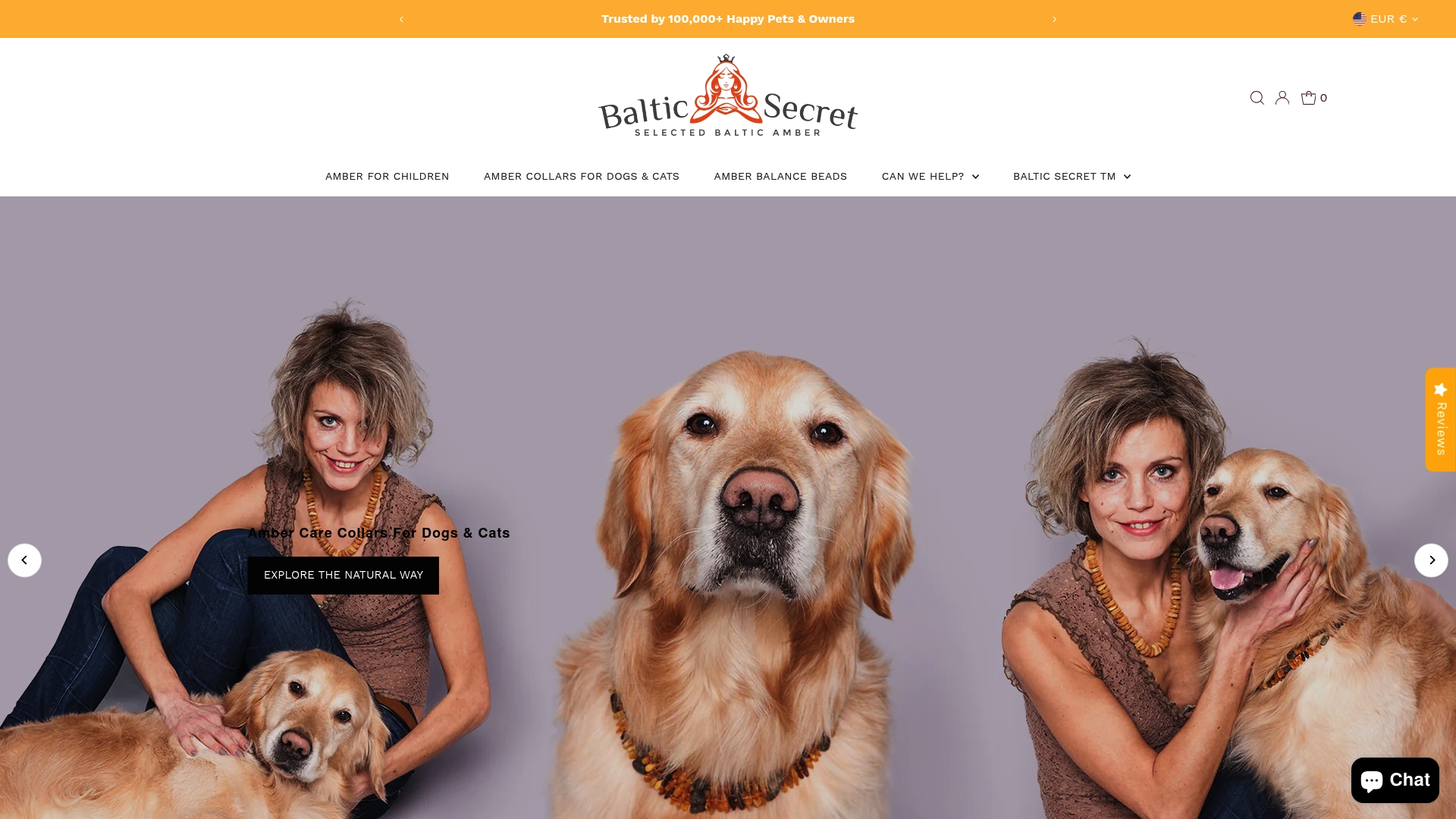
For cats, look for the breakaway-clasp options specifically. The Baltic Secret storefront lists both dog and cat collar variants with authenticity certificates included. If you have questions about sizing, restringing, or the return policy, the product pages include contact options and care documentation. Start with the size chart, measure your pet’s neck before you order, and check the authenticity certificate details before checkout.
Sources
- You shouldn’t get an amber collar to protect your pet from ticks.
For pets in high-risk tick or flea environments, consult your veterinarian before relying on any natural supplement, including amber, as a primary prevention method.